Ultrasonic Cleaning 101: How Piezoelectric Transducers Drive Industrial Cleaners
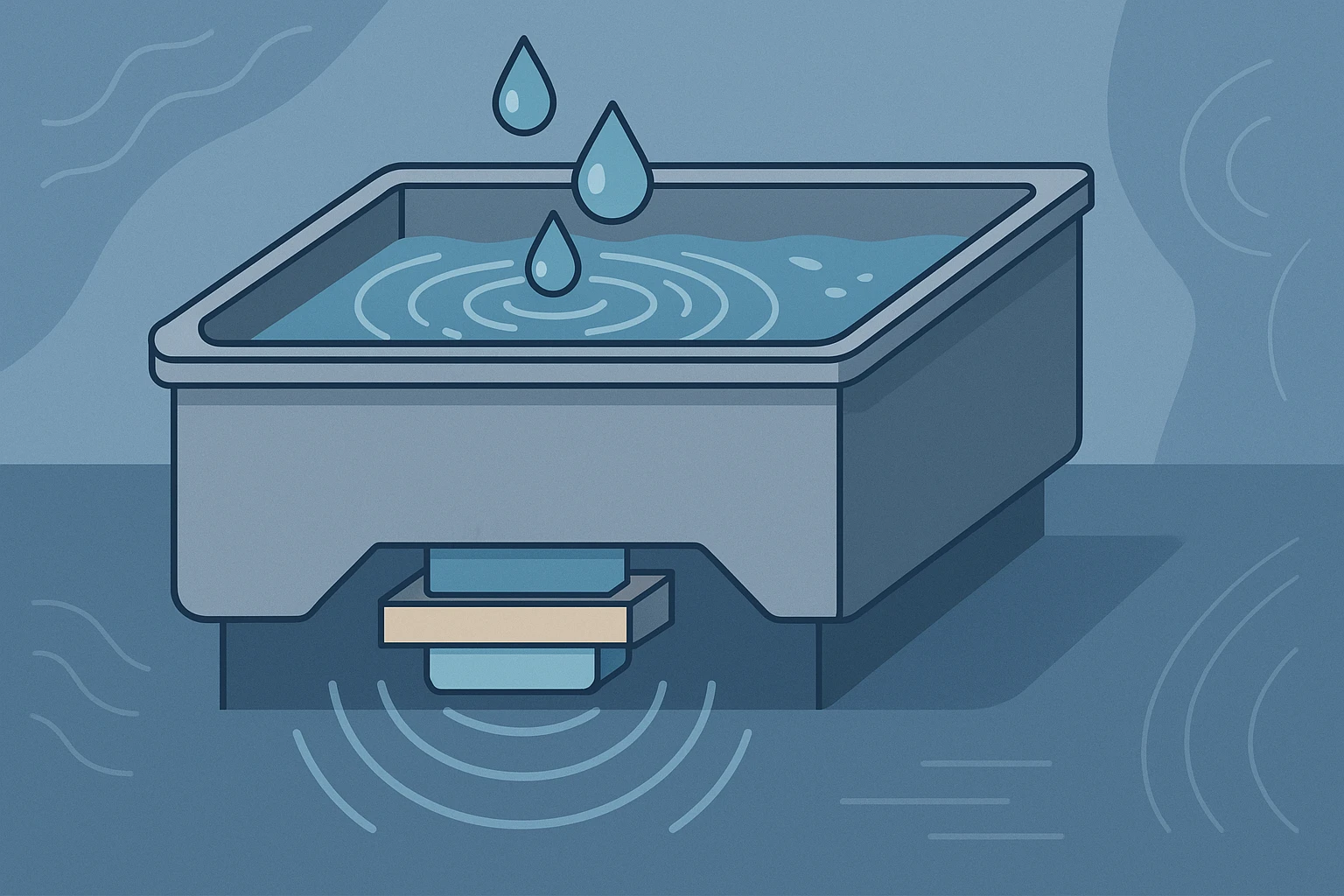
Ultrasonic cleaning has become an indispensable process across various industries, from electronics to medical instruments, automotive parts, aerospace components, and precision optics. At the heart of this powerful cleaning technology lies a core component: the ultrasonic cleaning transducer. These devices play a critical role in converting electrical energy into ultrasonic waves, enabling fast, uniform, and residue-free cleaning.
In this guide, we'll dive into the science behind ultrasonic cleaning, explain how piezoelectric transducers function, examine their role in industrial ultrasonic cleaner systems, and outline the key advantages of piezo cleaner technology for commercial applications.
What Is Ultrasonic Cleaning?
Ultrasonic cleaning is a process that uses high-frequency sound waves (typically between 20 kHz and 80 kHz) to create microscopic cavitation bubbles in a liquid solution. These bubbles form and collapse rapidly, releasing energy that dislodges contaminants from the surfaces of submerged objects. The process can remove everything from oil, grease, and particulate matter to complex biofilms and solder flux, even in hard-to-reach crevices and narrow cavities.
Compared to manual scrubbing or chemical soaking, ultrasonic cleaning provides superior speed, consistency, and effectiveness—especially in industries requiring high levels of cleanliness and precision. It is widely adopted for delicate and complex parts where mechanical cleaning could cause damage.
The Role of Piezoelectric Transducers
At the heart of every ultrasonic cleaning system is the ultrasonic transducer—a component responsible for converting electrical signals into physical vibrations. Most modern ultrasonic cleaners use piezoelectric transducers, which rely on the unique properties of piezoelectric ceramics—materials that deform when subjected to an electric field and generate high-frequency mechanical oscillations.
How It Works
Electric Signal Input: The system's ultrasonic generator sends alternating electrical currents to the transducer.. Piezoelectric Effect: Inside the transducer, piezoelectric ceramic discs expand and contract in response to the electric field.. Ultrasonic Vibration: These mechanical oscillations are transferred to a metal diaphragm or tank wall, producing high-frequency ultrasonic waves in the cleaning solution.. Cavitation Action: The ultrasonic waves create and collapse millions of microscopic bubbles, scrubbing surfaces clean with incredible precision.
This physical process is non-invasive and environmentally friendly, often requiring only water or mild detergents to achieve excellent results.
Types of Ultrasonic Cleaning Transducers
There are generally two main types of ultrasonic transducers used in industrial cleaners:
Bonded Plate Transducers: These consist of piezoelectric elements bonded directly to the bottom or sides of a cleaning tank. They are integrated during manufacturing and offer a space-efficient, cost-effective solution.. Immersible Transducers: Housed in sealed stainless steel enclosures, immersible transducers are installed inside existing tanks. They are ideal for retrofitting traditional cleaning systems, upgrading frequency capabilities, or enhancing overall power density without replacing the entire tank.
Advanced systems may even use arrays of transducers placed strategically within large tanks to ensure uniform cavitation across the entire cleaning area.
Why Use Piezoelectric Transducers?
The rise of piezo cleaner technology has revolutionized ultrasonic cleaning systems by delivering a blend of performance, durability, and flexibility. Here's why they are favored across industries:
High Efficiency: Piezo ceramics offer rapid and stable frequency response with minimal energy loss.. Precision Cleaning: Ability to fine-tune frequency and amplitude settings ensures tailored cleaning for different contaminants and materials.. Extended Lifespan: Excellent resistance to thermal, chemical, and mechanical stresses makes them ideal for continuous operation.. Compact and Customizable: Available in various shapes, sizes, and configurations to suit standard or custom equipment.. Low Noise Operation: Compared to magnetostrictive alternatives, piezoelectric units operate more quietly.
Their ability to maintain consistent ultrasonic output over long periods translates to cleaner results, reduced downtime, and lower maintenance costs.
Applications of Industrial Ultrasonic Cleaners
The use of ultrasonic cleaning transducers spans a wide range of industries, including:
Medical and Dental: Sterilizing surgical tools, dental scalers, orthopedic implants, and endoscopes.. Electronics and Semiconductors: Cleaning PCBs, microchips, and wafer substrates without damaging sensitive components.. Automotive and Aerospace: Removing carbon deposits, grease, and machining oils from engine parts, nozzles, and fuel injectors.. Jewelry and Watchmaking: Polishing intricate items without abrasive contact, preserving delicate finishes.. Manufacturing and Tooling: Cleaning molds, dies, and assembly components prior to coating or precision assembly.. Optics and Laboratory Equipment: Cleaning lenses, glassware, pipettes, and analytical instruments to submicron levels of cleanliness.
With their unmatched ability to reach internal channels and blind holes, ultrasonic cleaners are often the only viable solution for thoroughly cleaning complex geometries.
Key Considerations for Choosing a Transducer
To select the right ultrasonic cleaning transducer for your application, several factors should be evaluated:
Operating Frequency: Lower frequencies (20-40 kHz) produce larger cavitation bubbles for heavy-duty cleaning, while higher frequencies (60-130 kHz) are gentler, suited for delicate or highly polished surfaces.. Power Output and Density: Determines cleaning intensity; higher power ensures deeper cleaning but must be balanced with part fragility.. Tank Size and Geometry: The transducer should be compatible with your existing tank's dimensions and material.. Cleaning Solution Compatibility: Ensure chemical resistance and durability of the transducer's housing and adhesives.. Mounting Method: Whether you need bonded or immersible types, mounting options affect ease of integration and service.. Customization Requirements: For OEMs, customized transducer arrays, shapes, and frequency combinations may be necessary.
Yujie: Your Trusted Supplier for Piezo Transducer Solutions
With over 20 years of expertise in piezoelectric materials and ultrasonic technologies, Yujie is a global supplier of high-performance components for industrial ultrasonic cleaner systems. We offer a wide selection of piezoelectric ceramic discs, rings, and complex assemblies tailored to your application needs.
Our piezoelectric transducers are trusted by manufacturers, OEMs, and integrators across sectors such as medical, automotive, electronics, and precision engineering. Whether you're developing a new ultrasonic cleaning system or upgrading existing equipment, we provide:
Standard and Custom Designs. Application-Specific Engineering Support. Fast Prototyping and Production Turnaround. Rigorous Testing and Quality Assurance
We understand the critical nature of cleanliness in your production process—and we are committed to delivering solutions that meet the highest performance standards.
Conclusion
Ultrasonic cleaning transducers, especially those built with advanced piezoelectric ceramics, form the backbone of modern industrial cleaning systems. They enable efficient, non-invasive, and eco-friendly cleaning processes that are essential in today's high-tech manufacturing environments.
Whether you're cleaning surgical tools, fuel injectors, optical lenses, or electronic circuits, the right transducer can make all the difference. And with Yujie's technical strength and customizable solutions, you can be confident your ultrasonic system will deliver consistent and powerful results.
Need help with a custom ultrasonic cleaning transducer? Contact us today to discuss your application needs. Our engineers are ready to support your next innovation.