Advanced Ultrasonic Transducer Design Fundamentals: Materials, Resonance, and Integration Limits
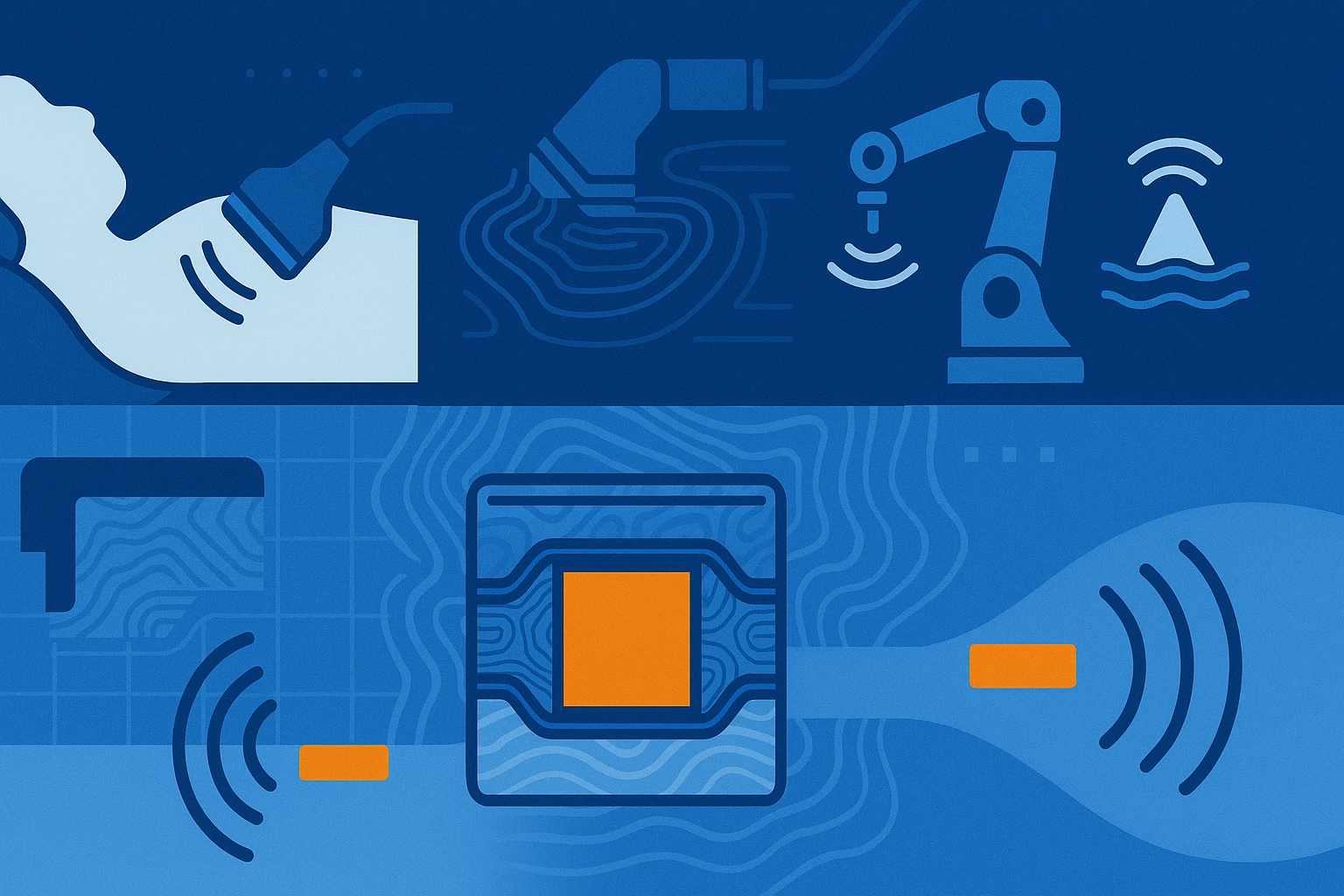
Ultrasonic transducers represent specialized electromechanical devices engineered to interconvert electrical energy and ultrasonic acoustic waves—sound frequencies exceeding the auditory perception limits of humans. These transducers occupy a pivotal role in critical domains such as medical imaging, industrial non-destructive evaluation (NDE), and precision manufacturing processes. A profound comprehension of the theoretical principles, material characteristics, and engineering considerations related to ultrasonic transducers is indispensable for researchers and practicing engineers aiming to optimize their system's efficacy and precision.
Advanced Fundamentals: Operating Physics and Integration Boundaries
Ultrasonic transducers operate primarily through the direct and inverse piezoelectric phenomena. Upon the application of an alternating electrical voltage, piezoelectric elements oscillate at ultrasonic frequencies, generating mechanical waves. Conversely, these materials generate an electrical signal upon the reception of ultrasonic waves. Ultrasonic transducers exploit multiple acoustic wave modes—including longitudinal, shear, and surface acoustic waves—tailored to specific application contexts.