
Boosting Cleaning Efficiency with Ultrasonic Cleaning Transducers
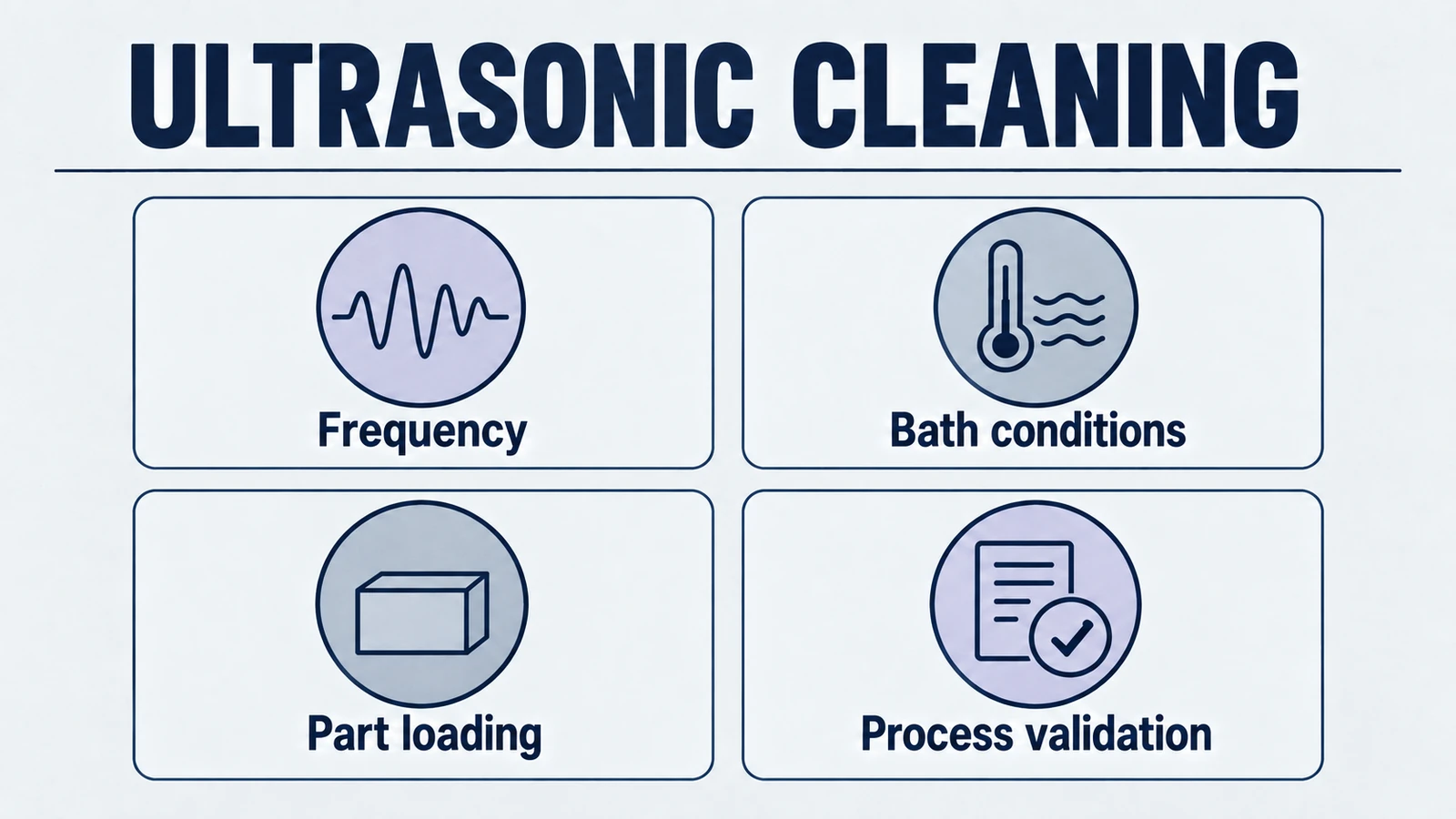
In industries requiring precise, deep cleaning, ultrasonic cleaning transducers are game-changers, providing efficient, thorough cleaning for complex parts. This article explores how ultrasonic cleaner transducers work, the science behind their efficiency, and key considerations for selecting the right transducer for your cleaning system.
What is an Ultrasonic Cleaning Transducer?
An ultrasonic cleaning transducer converts electrical energy into high-frequency ultrasonic waves, which create cavitation bubbles in a cleaning solution. When these bubbles collapse, they generate localized high-energy jets that dislodge contaminants from surfaces, even in microscopic crevices, without damaging the substrate.
There are typically two types:
Product path for this search intent
Match the article topic to the right YJ Piezo product page
Use this article when cleaning performance depends on cavitation strength, tank coupling, frequency selection, and long-run thermal behavior. For "Boosting Cleaning Efficiency with Ultrasonic Cleaning Transducers", the practical value is in turning the topic into a measurable selection or sourcing decision.
- Ultrasonic Cleaning Transducers
Cleaning models for tank and precision cleaning systems
- Piezoelectric Ring Series
Ring ceramics used in high-power transducer stacks
- Piezoelectric Ceramics
PZT material and geometry options for acoustic output
- Piezoelectric Ultrasonic Cleaning Transducers: Using piezoelectric ceramics to produce ultrasonic vibrations.
- Magnetostrictive Transducers: Utilizing magnetic fields and materials that expand and contract under magnetic influence.
Piezoelectric types are widely used in precision cleaning due to their high efficiency, frequency stability, and energy efficiency. Our ultrasonic cleaner transducers exemplify this technology with robust performance.
How Ultrasonic Cleaning Transducers Enhance Cleaning Efficiency
1. Microscopic Cleaning Power
The ultrasonic cavitation process enables removal of contaminants like oils, dust, flux residues, and fine particles from intricate surfaces that traditional cleaning methods cannot reach. This makes ultrasonic cleaning transducers ideal for precision manufacturing applications.
2. Uniform Cleaning
Tank field distribution depends on transducer placement, frequency, power, chemistry, geometry and load. Validate coverage and cleaning results; piezoelectric ring elements alone do not guarantee a uniform field or complete cleaning of every part.
3. Reduced Cleaning Time and Labor
Ultrasonic cleaning significantly reduces cleaning cycle times and the need for manual scrubbing, boosting operational efficiency in manufacturing and maintenance processes.
4. Gentle on Parts
While aggressive on contaminants, ultrasonic cleaning is non-abrasive on parts, making it suitable for precision instruments, electronic components, medical devices, and delicate mechanical parts.
5. Environmentally Friendly
Ultrasonic cleaning reduces the need for harsh chemicals, using water-based or mild cleaning solutions, contributing to safer and greener industrial processes.
Key Factors When Choosing an Ultrasonic Cleaning Transducer
Frequency Selection
- Low frequencies (20-40 kHz): Better for heavy, coarse contaminants.
- High frequencies (60-130 kHz and above): Ideal for delicate, fine cleaning where precision is critical. Consider our high-frequency transducers for these applications.
Power Requirements
Adequate power is essential to generate effective cavitation without damaging parts. Power levels must match the tank size, load, and cleaning requirements. Our piezoelectric tube elements provide excellent power density for compact transducer designs.
Transducer Bonding Quality
Strong bonding between the transducer and tank surface ensures efficient ultrasonic energy transfer, directly impacting cleaning effectiveness. Quality piezoelectric materials are crucial for reliable bonding performance.
Durability and Reliability
Selecting transducers made from high-quality piezoelectric ceramics and robust construction ensures long service life and stable performance under continuous operation.
Applications of Ultrasonic Cleaner Transducers
- Medical and Dental Instruments: Removing blood, tissue, and contaminants from surgical tools and dental equipment.
- Electronics: Cleaning only components qualified for the chemistry and acoustic exposure; ultrasonic cleaning can damage incompatible electronics.
- Automotive and Aerospace: Cleaning carburetors, fuel injectors, and precision parts.
- Jewelry and Watches: Removing dirt and polishing residues from intricate pieces.
- Industrial Manufacturing: Degreasing, particle removal, and surface preparation for coating processes.
The Science Behind Cavitation Cleaning
When ultrasonic cleaning transducers generate high-frequency vibrations in a liquid, they create alternating zones of compression and rarefaction. During rarefaction, microscopic bubbles form due to reduced pressure. These bubbles rapidly collapse during compression phases, creating powerful micro-jets that impact surfaces at extremely high velocities, effectively removing even stubborn contaminants.
Optimizing Your Ultrasonic Cleaning System
To maximize the efficiency of your ultrasonic cleaner transducers, consider these factors:
- Solution Temperature: Select the cleaner/part-approved temperature and validate the process; 40–60°C is not universally optimal
- Cleaning Solution Chemistry: Match the solution to your specific contaminants
- Transducer Placement: Ensure uniform energy distribution throughout the tank
- Degassing: Degas fresh solutions according to the cleaner procedure; do not assume complete removal of all dissolved gas universally optimizes cavitation
Why Partner with a Reliable Supplier
Working with an experienced ultrasonic cleaning transducer manufacturer ensures that you receive high-quality, stable, and customized solutions for your cleaning systems. A good supplier will provide technical support, integration guidance, and consistent quality to maximize your cleaning process efficiency.
At Yujie, we offer comprehensive support from initial design consultation to ongoing technical assistance, ensuring your ultrasonic cleaning systems deliver optimal performance. Our extensive range of piezoelectric components can be customized for your specific cleaning applications.
Conclusion
Ultrasonic cleaning transducers are essential components in modern cleaning systems, providing efficient, uniform, and environmentally friendly cleaning for a wide range of applications. By understanding their working principles and selection considerations, engineers and procurement teams can enhance operational efficiency, reduce labor, and maintain high-quality cleaning standards in their operations.
The future of industrial cleaning lies in the continued advancement of ultrasonic technology, with innovations in transducer design, materials science, and system integration driving even greater efficiency and effectiveness.
Looking for high-quality ultrasonic cleaner transducers for your system? Contact us to explore Yujie's reliable piezoelectric ultrasonic cleaning transducers and how we can help optimize your cleaning processes with our proven technology and expertise.
Engineering decision notes
Ultrasonic cleaning and cavitation
Use this article when cleaning performance depends on cavitation strength, tank coupling, frequency selection, and long-run thermal behavior. For "Boosting Cleaning Efficiency with Ultrasonic Cleaning Transducers", the practical value is in turning the topic into a measurable selection or sourcing decision.
YJ Piezo evaluates cleaning transducers by acoustic output, impedance stability, ceramic loss, bonding quality, and how the assembly couples into the tank.
Selection checks
- Choose frequency from the cleaning target, part geometry, and contamination type rather than from price alone.
- Review ceramic material, bonding area, impedance, and tank mounting as one acoustic chain.
- Ask whether the transducer is intended for intermittent cleaning, continuous industrial operation, or precision cleaning.
Failure risks
- A transducer can heat water but still produce weak useful cavitation if it is poorly matched to the tank.
- High output without thermal margin can shorten ceramic, adhesive, or cable lifetime.
- Mixing 28 kHz and 40 kHz assumptions can create poor cleaning uniformity or excessive noise.
RFQ details
- What tank size, liquid, duty cycle, and cleaning target are involved?
- Which frequency and power range are currently used or being replaced?
- Do you need impedance records, bonding guidance, or sample validation before production?
Relevant YJ Piezo pages
- Ultrasonic Cleaning Transducers
Cleaning models for tank and precision cleaning systems
- Piezoelectric Ring Series
Ring ceramics used in high-power transducer stacks
- Piezoelectric Ceramics
PZT material and geometry options for acoustic output
Application FAQ
- Why can a cleaning transducer heat liquid but clean poorly?
- Heat only proves energy is entering the system. Useful cleaning needs controlled cavitation, correct frequency, good tank coupling, and stable impedance under load.
- What should I provide for a cleaning transducer quotation?
- Provide tank dimensions, liquid type, target material, duty cycle, desired frequency, current transducer model if replacing one, and whether the system needs continuous industrial operation.