YJ Piezo Air Acoustic Transducers
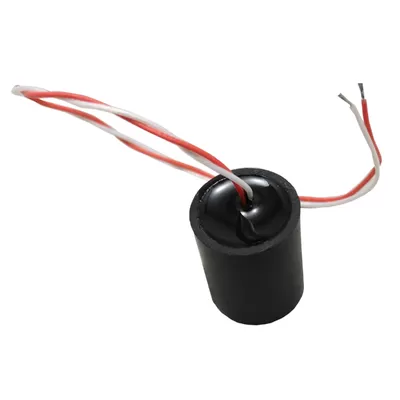
YJ Piezo air acoustic transducers are engineered for distance measurement, obstacle detection, level sensing, and automation systems, delivering precise ultrasonic performance across frequencies from 40 kHz to 230 kHz with detection ranges up to 10 meters.
Features & Applications
YJ Piezo's Precision Airborne Ultrasonic Sensors for Industrial Applications
Product Range
Choose from our selection of air acoustic transducers optimized for different detection ranges and precision requirements
KQ-230KH
Frequency: 230 kHz ± 5%
Detection Range: 8 cm - 2.5 m
Beamwidth: 15° ± 2°
KQ-200KH-2
Frequency: 200 kHz ± 3%
Detection Range: 12 cm - 2 m
Beamwidth: 7° ± 2°
KQ-112KH
Frequency: 112 kHz ± 5%
Detection Range: 20 cm - 6 m
Beamwidth: 20° ± 2°
KQ-40KH-P
Frequency: 40 kHz ± 2%
Detection Range: 30 cm - 10 m
Beamwidth: 45° ± 5°
Why Choose YJ Piezo Air Acoustic Transducers
YJ Piezo's transducers are engineered for demanding industrial and commercial applications
High Precision
Accurate distance measurement with minimal interference for reliable sensing
Wide Temperature Range
Operates reliably from -40°C to 80°C for harsh environments
Compact Design
Small form factor enables easy integration into existing systems
Multiple Frequencies
Choose 40 kHz, 112 kHz, or 230 kHz based on application needs
YJ Piezo Air Acoustic Transducer Applications
YJ Piezo air acoustic transducers power innovative sensing solutions across multiple industries worldwide
Recommended Sensor Application Guides
These guides give the acoustic category stronger context for short-range sensing, beam geometry, and robotics use cases, including the precision window where KQ-200KH-2 fits best.
- Distance Accuracy GuideUse this when range stability, alignment, and target-surface effects drive the spec.
- Robotics and AGV Sensor GuideUse this when the application is collision avoidance, docking, or robotic perception.
- Beam Angle and Mounting GeometryUse this when the detection cone and installation envelope matter more than nominal range.
How to Shortlist an Air-Coupled Ultrasonic Transducer
Start from the measurement task, not the datasheet. Longer detection ranges favour lower operating frequencies, because air attenuates ultrasound rapidly as frequency rises; finer resolution and smaller target discrimination pull in the opposite direction. That trade-off — range against resolution — is the first axis on which every air-acoustic shortlist should be built.
The second axis is the environment. Open-structure transducers offer sensitivity advantages in clean, dry conditions, while enclosed types trade a little sensitivity for resistance to dust, splash, and wash-down — the deciding factor in food plants, agriculture, and outdoor installations. Match the beam angle to the mounting geometry as well: a wide beam simplifies alignment on short throws, a narrow beam rejects side echoes in cluttered scenes such as conveyor gaps and narrow tanks.
Last, check drive and decay behaviour with your electronics. Transducers keep ringing briefly after each excitation burst, which defines the short-range blind zone; if your application must detect close targets, ask for the ring-down characteristics during sample evaluation and pair the part with an appropriate drive circuit. Our engineering team reviews these parameters against your schematic on request.
Need Custom Specifications?
YJ Piezo offers OEM customization services for air acoustic transducers. Contact YJ Piezo's engineering team to discuss your specific requirements for frequency, detection range, or form factor.