
Qualifying a New PZT Powder Supplier: A Comparative Firing Trial Plan
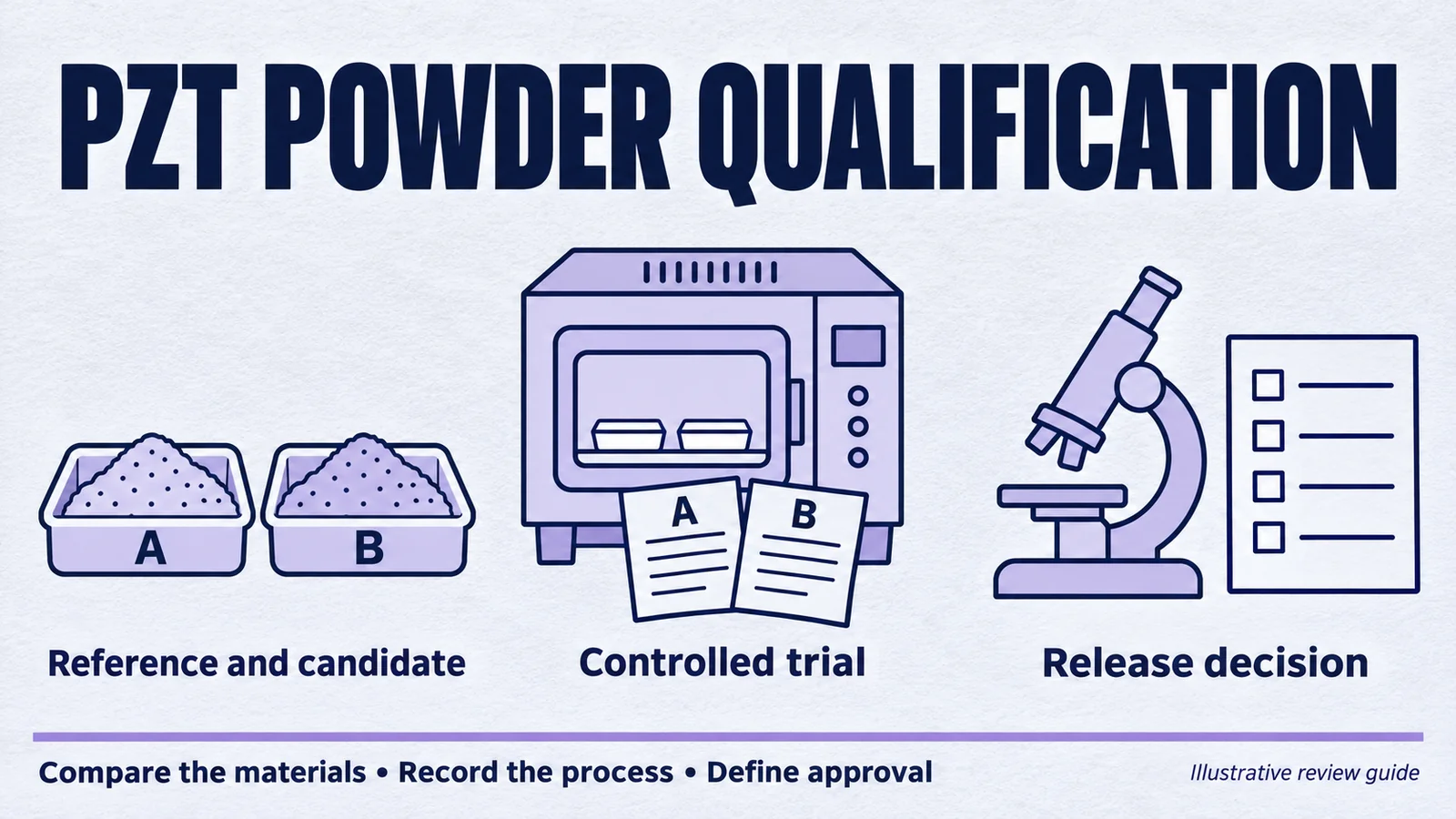
Changing a powder supplier creates two separate questions for a ceramic factory. Can the proposed powder work within the existing process? If process changes are allowed, can it meet the required component specification through a different, acceptable route?
A trial should identify which question it is answering. Otherwise, one team may report a successful material evaluation while another expects an unchanged production process.
The following framework is a proposed purchasing and engineering record. It is not a universal firing recipe, a prescribed sample size or a statement that YJ performs every listed test.
Define the approval before running the trial
Write a short decision statement with your process and quality teams. For example: “Evaluate the proposed powder for this drawing revision using the current process, with deviations documented separately.” Alternatively, authorize an optimization study and state which process settings may change.
Define the specimen geometry, required output properties, acceptance methods and person responsible for the decision. Decide whether a successful trial permits another experiment, a pilot batch or a production release. Those are different outcomes.
For quantities and supply feasibility, begin with YJ's PZT powder inquiry path. Keep commercial discussions connected to the material and process version being evaluated.
Establish what is comparable
First confirm that the candidate's supplied form is understood. Binder-containing granules and a powder requiring further preparation should not enter a supposedly identical trial without recording that difference.
Review binder removal and sintering as part of the compatibility assessment. Identify the candidate's supplied condition, the specimen geometry and the thermal or shrinkage information available to the process team. State which existing process assumptions need to be checked before the trial.
Use your approved procedures to establish safe and suitable conditions. If a candidate requires a different preparation or firing route, identify it as a separate trial branch rather than quietly changing the baseline.
| Trial branch | Purchasing question | What stays identifiable | What the result can support |
|---|---|---|---|
| Existing material reference | Can the established result be reproduced in this trial? | Reference lot, specimen and approved process | A comparison baseline |
| Candidate under the agreed baseline | Is the candidate compatible with the permitted process? | Candidate lot and every deviation from the reference route | A compatibility decision for that configuration |
| Candidate with authorized changes | Can a revised process satisfy the specification? | Each changed setting and resulting specimen group | A decision about the revised process, not drop-in equivalence |
Where practical, include the reference material in the same evaluation campaign and record furnace location and loading. If that is impossible, document the differences rather than describing the comparison as identical.
Follow each specimen through the process
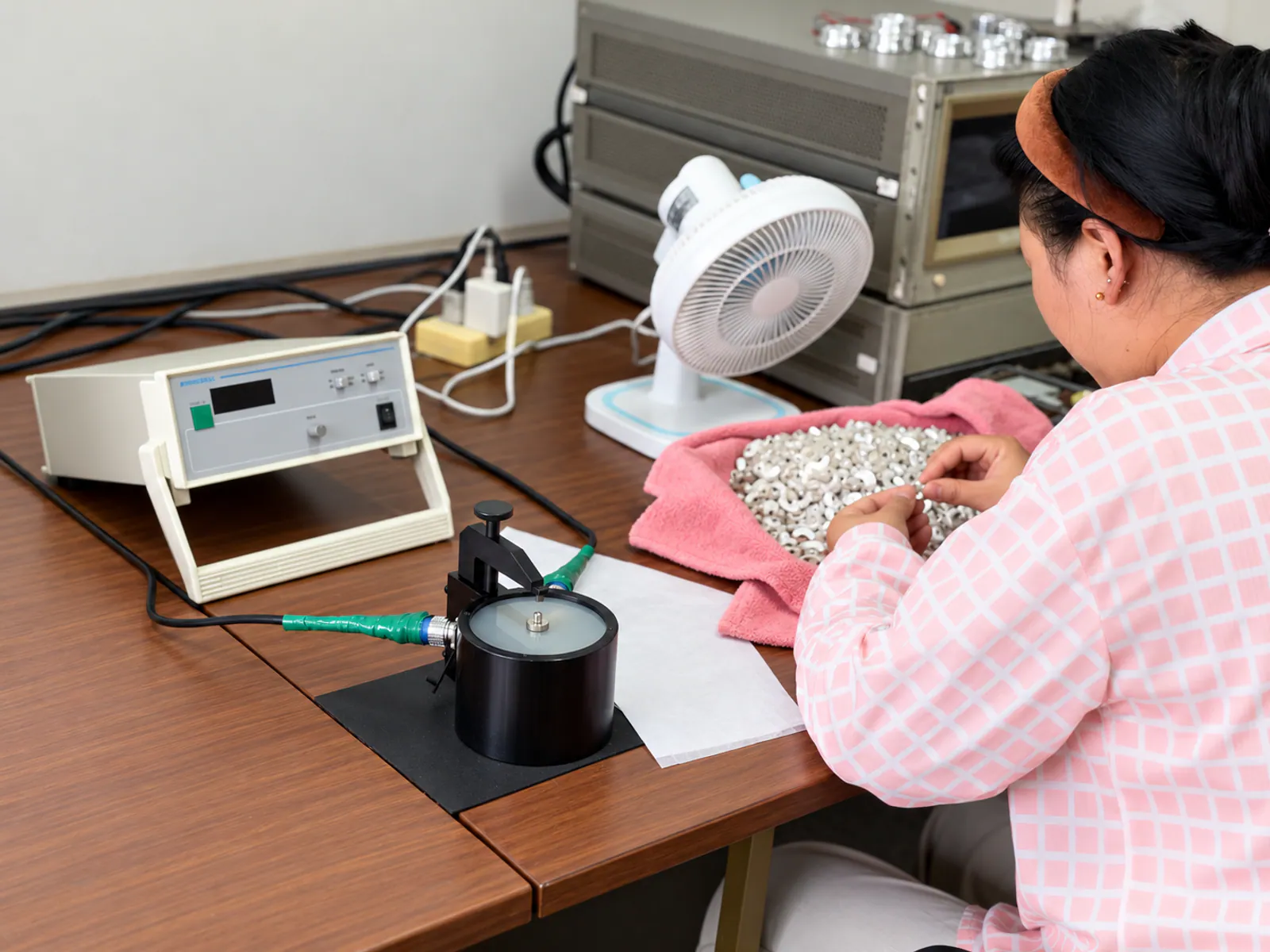
A final electrical measurement is easier to interpret when its earlier processing history is available. Give each specimen group an identifier that follows it through forming, firing, finishing, electrodes and poling, as applicable.
An evaluation record can use the following fields. Your team should choose the methods and limits appropriate to the component.
| Stage | Record to retain | Question for review |
|---|---|---|
| Incoming powder | Lot, supplied condition, available documents, receipt condition | Did the material match the trial request? |
| Preparation and forming | Additions, preparation route, tooling and specimen identity | Was the planned starting condition achieved? |
| Firing | Approved schedule, loading, location and deviations | Which specimens experienced which conditions? |
| Fired body | Dimensions, shrinkage method, density method and visible defects | Is further processing justified? |
| Finished and poled specimen | Geometry, electrode and poling records; electrical test conditions | Are results being compared on the same basis? |
| Disposition | Accepted limits, exclusions and next authorized step | What exactly has been approved? |
Interpret a failed result before rejecting the supply route
Suppose an illustrative candidate group misses a final dimension. The result identifies a failure against that trial requirement, but it does not by itself isolate the cause. Review the supplied form, forming record, firing history and finishing allowance before deciding what to change.
Likewise, a good electrical result from a small set of specimens does not establish production consistency. Determine whether a later pilot should include different lots, production tooling or a representative furnace load. The scope should reflect the risk and the manufacturing decision, not an arbitrary universal sample count.
If the process was optimized for the candidate, compare the resulting manufacturing route as well as the final component. Additional steps, inspection requirements and changes to production planning belong in the approval decision.
Turn the result into a usable purchase specification
The output should be a named material and supplied condition tied to an approved route and acceptance record. List unresolved issues explicitly. Keep the evaluation quantity separate from the expected recurring batch and annual forecast.
YJ can review a powder supply request and discuss the technical and shipment information required for that project. Availability of specific reports or testing services is confirmed in the quotation. The ceramic manufacturing overview provides process context, while the material reference supports grade discussions; neither replaces your trial approval.
Send the requirement for your next trial
Request a PZT powder supply review with your current material reference, required supplied form, intended component and shareable process constraints. Include the properties you need to evaluate, evaluation quantity, prospective production batch and destination.
State whether you need compatibility with the current process or are willing to evaluate a revised route. That single distinction makes the supplier's response substantially easier to assess.
Related Products
Related Guides
Plan Your Powder Evaluation Order
Describe the current material, intended trial, required documentation, evaluation quantity and repeat-order forecast.
Discuss Your Powder Trial