How our piezoelectric ceramic components are made
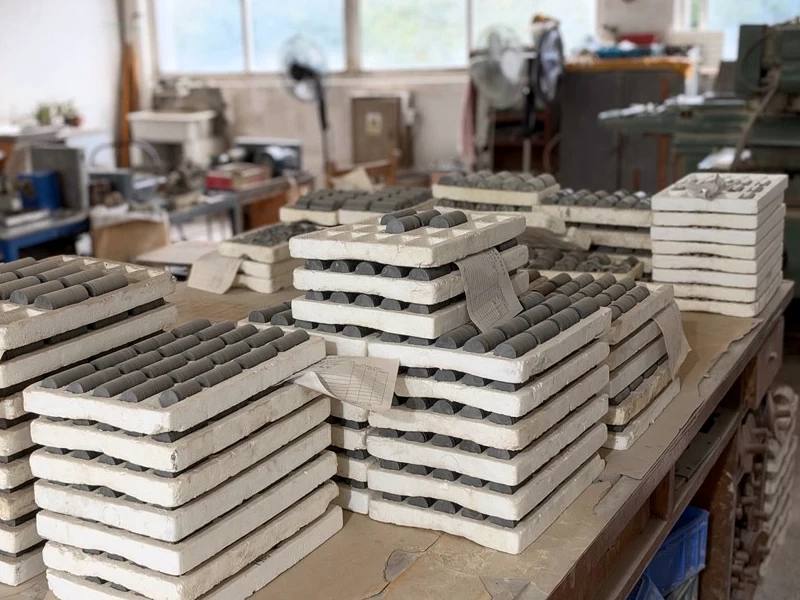
The detailed process route depends on the part. This overview follows the main stages; the photographs show selected operations.
Features & Applications
Powder → ceramic → component
The main production stages
- 01Binder addition & granulationBinder is added and the powder is granulated to prepare it for pressing.Prepared powder
- 02PressingThe prepared powder is pressed into a compact with the initial shape of the ceramic part.Pressed ceramic compact
- 03Debinding & sinteringThe compact goes through binder removal and sintering. The tunnel-type electric resistance furnace used for this route includes both stages.Fired ceramic body
- 04Surface & thickness grindingAfter firing, the flat surfaces are ground to adjust the thickness and surface geometry of the ceramic part.Machined faces and thickness
- 05Outer-diameter grindingFor round parts, outer-diameter grinding is a separate machining operation that adjusts the outside profile.Machined outer diameter
- 06Electrode applicationConductive electrodes are applied to the ceramic surfaces. The electrode pattern forms part of the component design.Electroded ceramic
- 07PolingAn electric field establishes a preferred polarization in the ceramic. This stage gives the part its useful piezoelectric response.Polarized ceramic component
- 08Quality inspectionThe parts proceed to inspection. Measurements, acceptance limits and documentation are agreed for the component and order.Inspection against the agreed specification
Binder addition & granulation
Binder is added and the powder is granulated to prepare it for pressing.
Pressing
The prepared powder is pressed into a compact with the initial shape of the ceramic part.
Pressed ceramic compact
Debinding & sintering
The compact goes through binder removal and sintering. The tunnel-type electric resistance furnace used for this route includes both stages.
Fired ceramic body
Surface & thickness grinding
After firing, the flat surfaces are ground to adjust the thickness and surface geometry of the ceramic part.
Machined faces and thickness
Outer-diameter grinding
For round parts, outer-diameter grinding is a separate machining operation that adjusts the outside profile.
Machined outer diameter
Electrode application
Conductive electrodes are applied to the ceramic surfaces. The electrode pattern forms part of the component design.
Electroded ceramic
Poling
An electric field establishes a preferred polarization in the ceramic. This stage gives the part its useful piezoelectric response.
Polarized ceramic component
Quality inspection
The parts proceed to inspection. Measurements, acceptance limits and documentation are agreed for the component and order.
Inspection against the agreed specification
Selected operations
A closer look at the work
Ceramic discs, the screen frame and the operator's hands at the electrode workstation.
Inspection tools and ceramic parts at the workstation. The required checks are defined for each order.
Have a ceramic part in mind?
Send the shape, dimensions, quantity and any material or electrical requirements you already have. We will review the part and the appropriate supply scope.