
Ultrasonic Atomizing Transducers: Fine Mists for Industrial and Medical Use
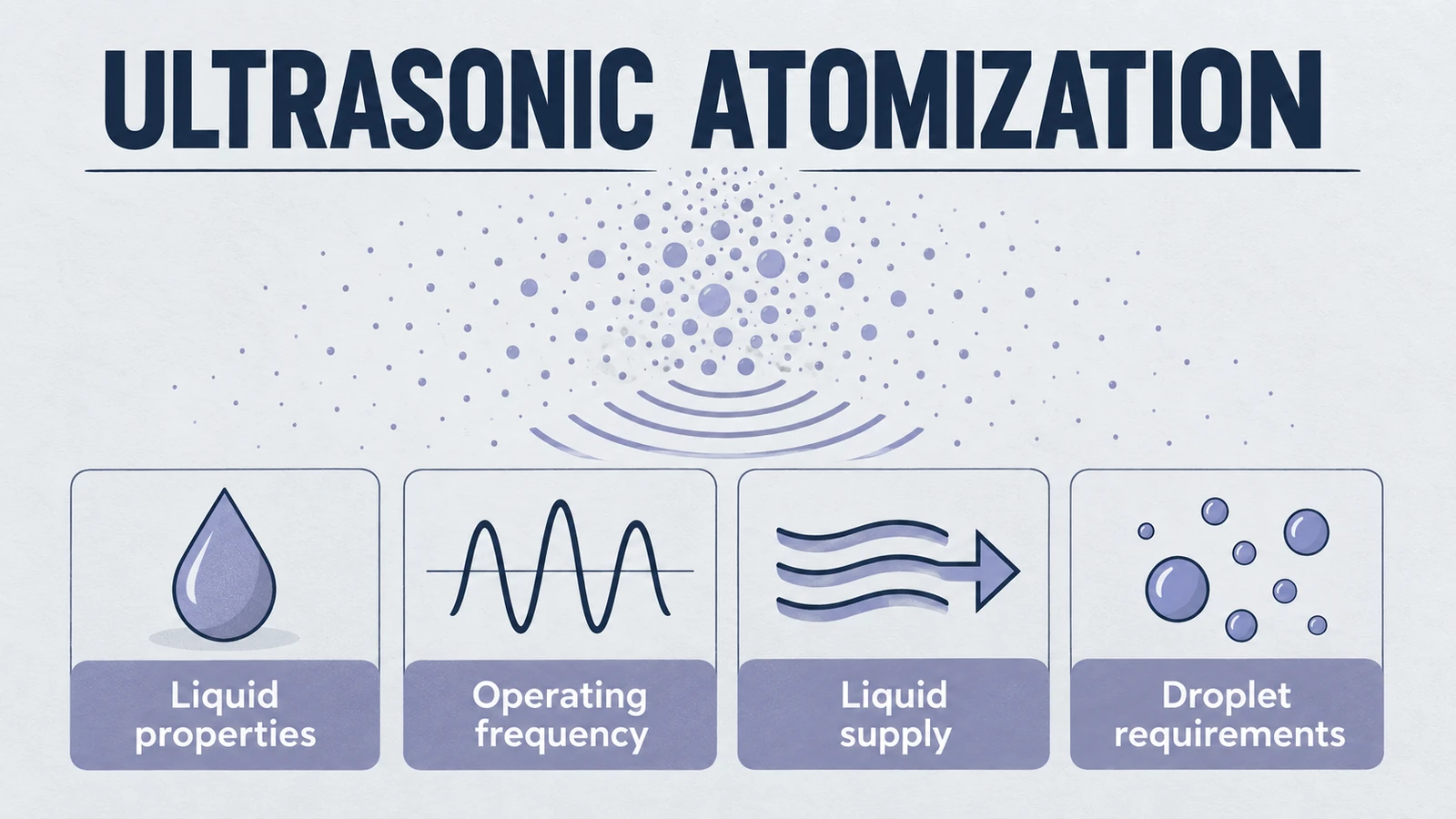
In a world increasingly reliant on precise fluid delivery and micro-droplet generation, ultrasonic atomizing transducers play a pivotal role. These devices are the core of many ultrasonic atomizer systems, transforming liquid into ultra-fine mist through high-frequency mechanical vibrations. From humidification and disinfection to medical nebulization and fuel injection, their applications span numerous industries. In this blog, we delve deep into how ultrasonic atomizing transducers work, their benefits, and their expanding role in industrial and medical fields.
What Is an Ultrasonic Atomizing Transducer?
An ultrasonic atomizing transducer is a type of piezoelectric transducer that uses high-frequency vibration to break liquid into tiny droplets. The core mechanism involves converting electrical energy into mechanical motion via piezoelectric ceramics. These vibrations are then transmitted to a liquid film, membrane, or atomizing surface depending on the system design.
The final droplet size depends on frequency, liquid properties, membrane design, flow rate, and the way the PZT ceramic element is mounted and driven.
Product path for this search intent
Match the article topic to the right YJ Piezo product page
Use this article when the choice is not just a shape, but a material tradeoff between sensitivity, loss, coupling, stability, and operating field. For "Ultrasonic Atomizing Transducers: Fine Mists for Industrial and Medical Use", the practical value is in turning the topic into a measurable selection or sourcing decision.
- PZT Material Hub
Material grades and application tradeoffs
- Piezoelectric Ceramics
Shapes and ceramic manufacturing options
- PZT Material Supplier Hub
Material control, grade selection, and sourcing support
How Ultrasonic Atomizers Work
Ultrasonic atomizers integrate the transducer into a system that usually includes:
- A liquid feed system (wicking or gravity-fed)
- A resonating surface or membrane
- A piezoelectric transducer
When an alternating electrical signal is applied, the piezoelectric disc element responds at the applied drive frequency; resonance can enhance motion. In a free-surface architecture, capillary-wave breakup can produce droplets. Mesh architectures instead involve liquid passing through vibrating or driven apertures; identify the actual mechanism. The result is a low-velocity, high-uniformity mist.
Benefits of Ultrasonic Atomizing Transducers
- Lower Thermal Load: Many ultrasonic atomizers can operate without the high heat associated with thermal atomization, though the finished assembly still needs thermal validation.
- Fine, Consistent Droplets: Stable ceramic vibration can support uniform misting in coating, humidification, aerosol, and nebulizer device designs.
- Low Power Consumption: Compare complete systems at the same liquid, output rate, size distribution and duty. Piezoelectric actuation alone does not establish a universal efficiency ranking.
- Quiet Operation: Ideal for medical and consumer environments where noise is a concern.
- Compact and Modular Design: Easily integrated into portable and battery-operated systems.
Applications in Industry
1. Environmental and Climate Control
Ultrasonic atomizers are widely used in humidifiers, greenhouse misting systems, and evaporative cooling.
2. Validated Liquid Application
Fine mists can support even distribution of liquids in public spaces, cleanrooms, and industrial environments when the liquid chemistry and system design are appropriate.
3. Electronics Manufacturing
Used for fluxing and coating PCBs with protective layers, requiring ultra-fine and precise liquid dispersion.
4. Beauty and Skincare Devices
Integrated into facial misters and atomizing beauty tools to hydrate and deliver active ingredients.
Medical Use Cases
1. Nebulizers for Respiratory Therapy
Ultrasonic nebulizers may use atomizing transducers as part of a finished aerosol device. The device manufacturer validates aerosol output, material contact, cleaning, and regulatory requirements; the piezo supplier supports the ceramic element, material traceability, and vibration consistency. Learn more about piezoelectric ceramic components.
2. Controlled Aerosol Device Programs
Controlled aerosol device programs may evaluate ultrasonic atomizers when repeatable mist generation is part of the design, but dosage and regulatory performance must be verified by the finished-device team.
3. Finished-Device Clinical Applications
Misting systems may be considered for moisture, cleaning, or hydrotherapy concepts where the complete device design and liquid path are properly validated.
Considerations for Choosing an Ultrasonic Atomizing Transducer
When selecting an ultrasonic atomizer, consider:
- Droplet size requirements: Match the frequency to the desired mist size.
- Flow rate capacity: Ensure it supports the required liquid throughput.
- Power input and efficiency: Critical for battery-operated or mobile systems.
- Material compatibility: Choose ceramic, electrode, coating, and housing materials according to the liquid environment.
- Traceability: Ask for PZT material records, batch control, and electrical test data when scaling beyond prototypes.
Why Yujie?
At Yujie, we specialize in the piezoelectric ceramic elements used inside atomizing, sensing, and ultrasonic cleaning transducer systems. With in-house PZT material development, we support discs, rings, rectangular plates, custom shapes, electrodes, and batch testing for OEM designs.
Ready to specify the PZT ceramic element inside your next atomization system?
Contact us today to discuss PZT ceramic material, disc, ring, rectangular, or custom element requirements for misting, cleaning, sensing, or other ultrasonic assemblies.
Engineering decision notes
PZT material and ceramic selection
Use this article when the choice is not just a shape, but a material tradeoff between sensitivity, loss, coupling, stability, and operating field. For "Ultrasonic Atomizing Transducers: Fine Mists for Industrial and Medical Use", the practical value is in turning the topic into a measurable selection or sourcing decision.
YJ Piezo coordinates PZT ceramic projects with manufacturing support, so material formulation, sintering, polarization, electrode process, and outgoing inspection can be reviewed against the final application.
Selection checks
- Separate sensing needs from high-power actuation needs before comparing d33 or coupling values.
- Check dielectric loss, Qm, Curie temperature, aging behavior, and operating field against the real duty cycle.
- Confirm whether the application needs standard PZT grades or a custom formulation and geometry.
Failure risks
- Choosing only the highest d33 can create heat, drift, or depolarization risk in power ultrasonics.
- A ceramic that performs well in free measurement can fail once bonded, clamped, or loaded.
- Material substitutions without batch testing can change capacitance, resonance, and system tuning.
RFQ details
- Is the part used for sensing, actuation, atomization, cleaning, welding, or measurement?
- What field strength, temperature, duty cycle, and mechanical load will the ceramic see?
- Which values must be controlled: d33, capacitance, resonance, impedance, Qm, or dimensional tolerance?
Relevant YJ Piezo pages
- PZT Material Hub
Material grades and application tradeoffs
- Piezoelectric Ceramics
Shapes and ceramic manufacturing options
- PZT Material Supplier Hub
Material control, grade selection, and sourcing support
Application FAQ
- Is the highest d33 always the best PZT choice?
- No. High d33 can be useful for sensitivity, but high-power ultrasonic systems often need lower loss, higher Qm, better thermal stability, and safer operation under field and stress.
- What makes PZT material selection different from catalog buying?
- The right PZT choice depends on geometry, load, drive field, duty cycle, temperature, and inspection targets. A catalog value is only useful when it is tied to the final assembly conditions.