
Bonded Rectangular Piezo Plates: What to Verify Before and After Assembly
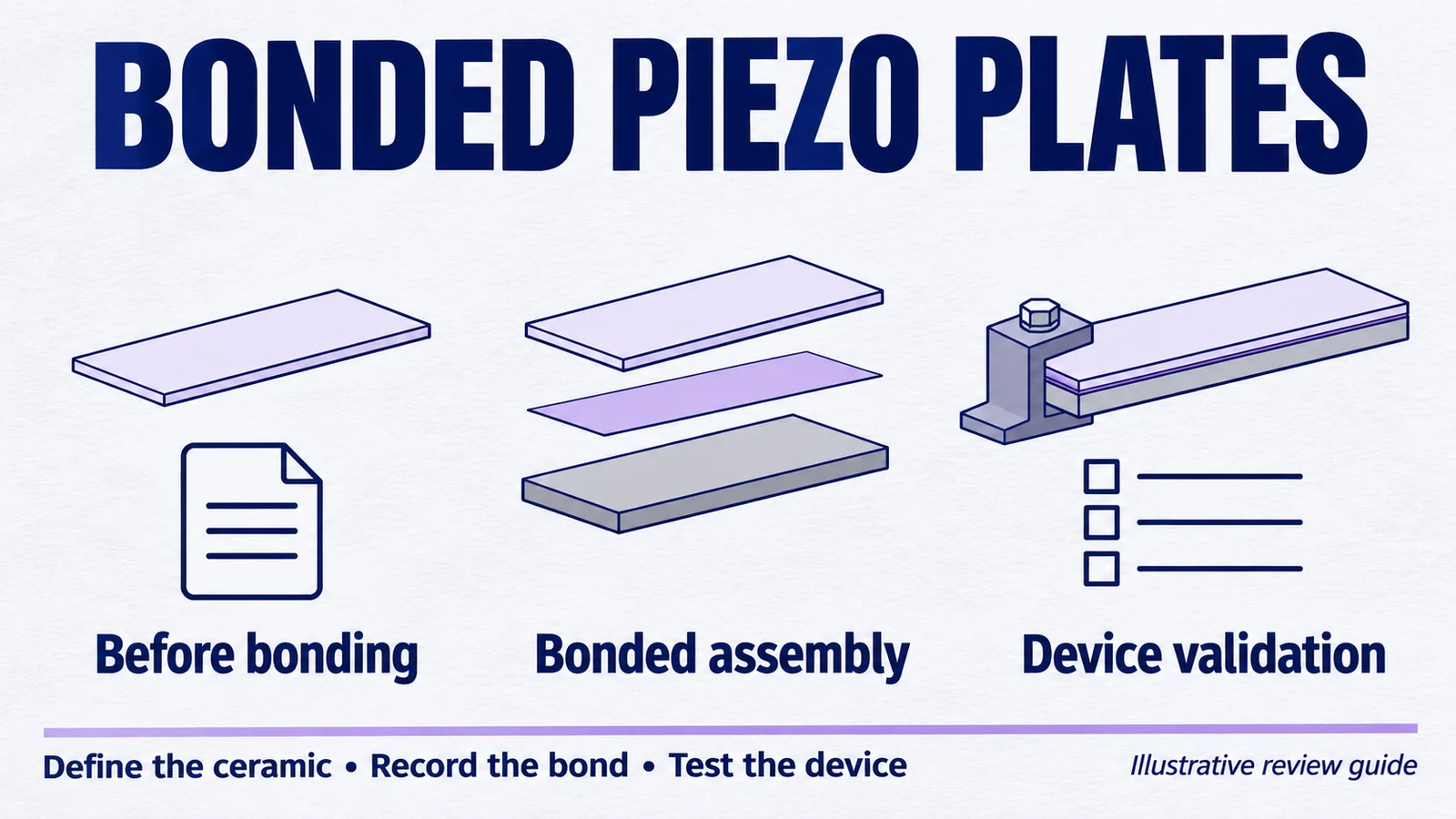
A rectangular piezo plate may arrive within its dimensional and electrical limits, then behave differently after it is bonded to a metal substrate. The first task is to identify which specification belongs to the ceramic and which belongs to the resulting assembly.
That distinction matters for micro-pumps, vibration devices and precision mechanisms. It also determines what a supplier can quote: a ceramic plate, a wired element or a component bonded to customer-defined hardware.
The practical solution is to connect the ceramic drawing, assembly process and final test in one record while keeping their acceptance decisions distinct.
Define the assembly that will actually be tested
Treat the adhesive and curing conditions as part of the assembly specification. Define the required resonance and stability for the bonded unit in its intended fixture, then identify the measurements that will establish whether it meets those requirements.
Start with an assembly drawing. Show the plate, substrate, bond area, electrical contacts, support points and the direction of the required motion or sensing response. If the device uses a free end or a particular clamping arrangement, make that condition visible.
A plate drawing on its own cannot communicate the entire test arrangement.
Build a record with three checkpoints
The table below is a suggested review structure. Set actual values and procedures using the device requirements. It does not prescribe an adhesive, cure temperature or acceptance threshold.
| Checkpoint | Information to retain | Decision supported |
|---|---|---|
| Before bonding | Ceramic identity, dimensions, electrode/poling information and agreed electrical baseline | Whether the ceramic is acceptable for assembly |
| After bonding and the specified conditioning | Substrate revision, adhesive/process reference, bond coverage, fixture and assembly measurements | Whether the bonded configuration meets its specification |
| In the device | Mounting, drive, load, operating environment and functional results | Whether the component is suitable in that device |
Maintain the specimen identity across the checkpoints. If the part cannot be marked directly, identify its tray location or another agreed tracking method. The objective is to connect the before-and-after data to the same component.
Make the bond and support conditions repeatable
For each assembly, record the adhesive identity and relevant preparation and curing procedure. Define how the bond area and layer are controlled and inspected. A process engineer should select the suitable method; an article cannot establish the correct bonding procedure for an unspecified stack.
Record the substrate dimensions and material with the same care as the ceramic. Include the fixture used for testing and any electrical lead restraint. If a test uses a different support arrangement from the finished device, label that difference.
When comparing results, keep the excitation and measurement setup consistent where the comparison requires it. A shift measured after bonding needs interpretation against the assembled-component requirement. It should not automatically be judged against a loose ceramic's resonance limit.
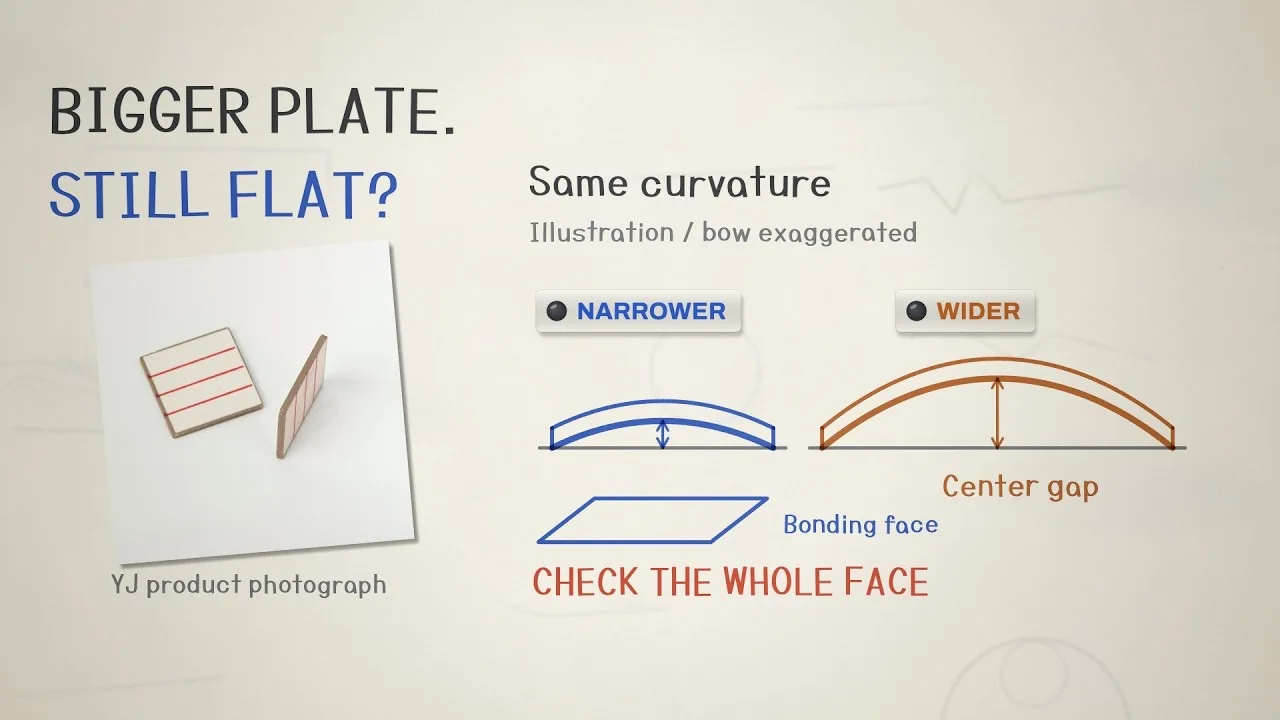
Why large PZT plates are harder to keep flat
Review the reference surface, measurement points and support conditions before comparing flatness on unbonded plates.
A useful before-and-after comparison
Imagine an OEM evaluating two bonding procedures on the same approved plate and substrate drawings. This is a hypothetical test design, not a YJ customer case.
The team records the bare-plate measurements, divides the parts into identified groups, applies the two approved procedures and measures each group using the same assembly fixture. It then checks the selected configuration in the device under the required drive and load.
This comparison can help the team investigate the bonding procedure. It cannot isolate the adhesive if the substrate, support points and measurement settings also change between groups. Preserve those differences in the record and design the next comparison around the unresolved question.
The final decision should name the ceramic, substrate and assembly-process revisions. “Plate approved” is too broad when only one bonded configuration has been evaluated.
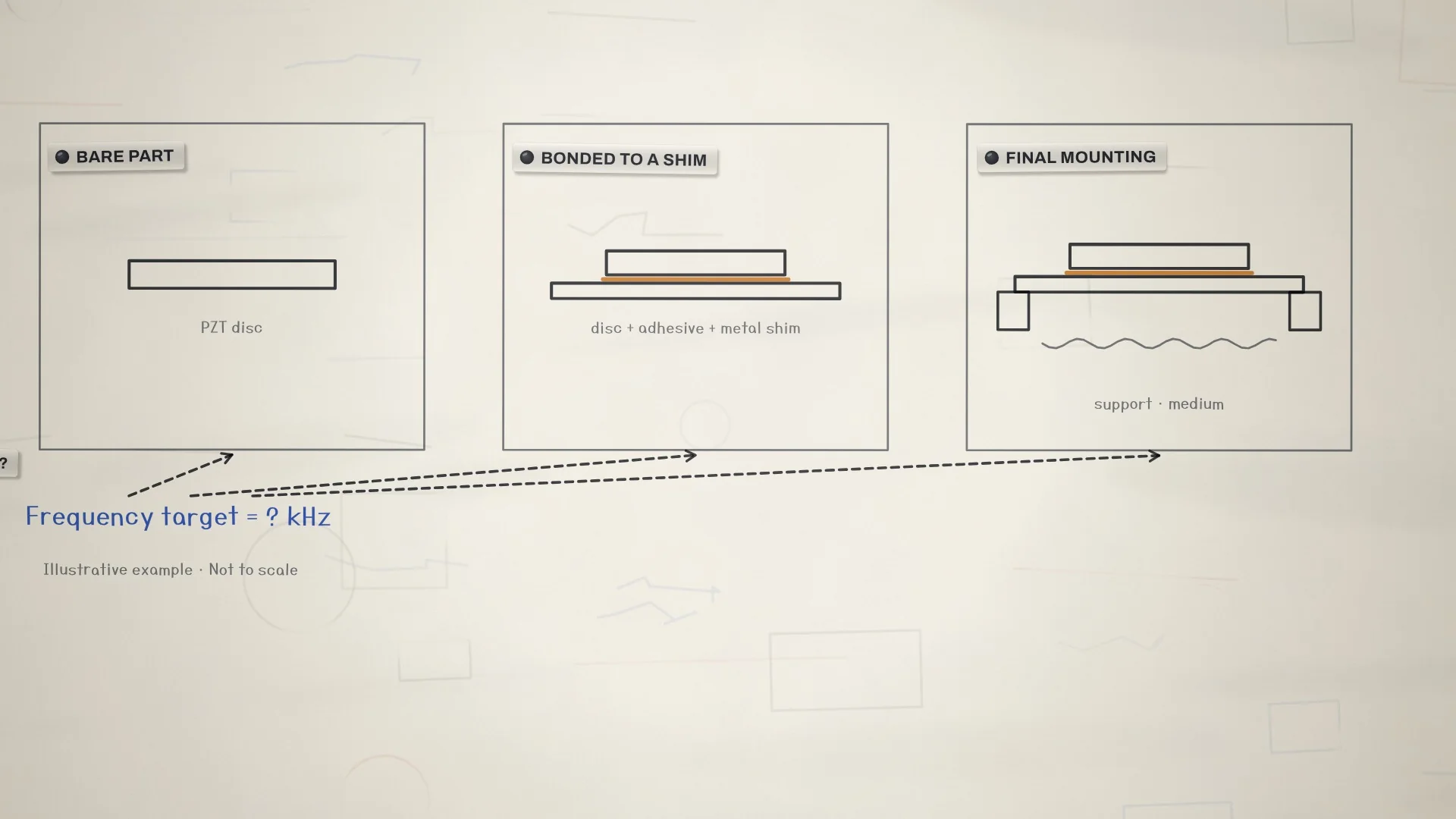
Video: Why Resonance Changes After Bonding
A free ceramic measurement is not the same as the response after bonding. Compare the free part and bonded assembly under documented test conditions before changing the ceramic specification.
English video · Watch on YouTube
Review rectangular PZT plate requirements. Share the drawing, bond arrangement, support conditions and before-and-after test plan.
Specify the purchased item clearly
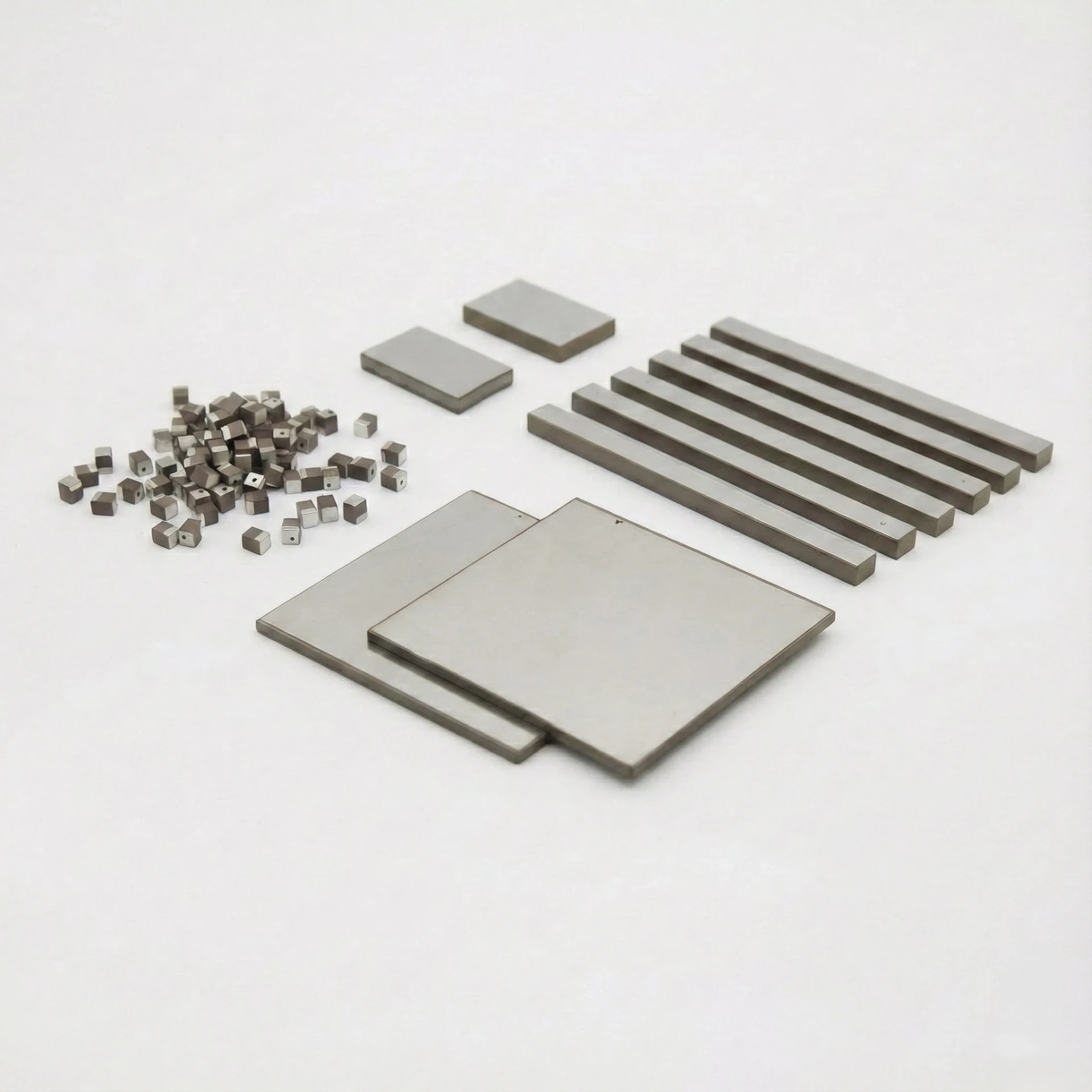
YJ's rectangular piezo plates and strips support inquiries based on length, width, thickness, material and electrode requirements. The material reference provides grade information for discussion. The available combination is confirmed for the part.
If your team performs the bonding, ask for the ceramic condition and electrode/contact arrangement required by that process. The electrode design guide can help prepare that portion of the drawing.
If you want a bonded component, provide the complete assembly requirement for a separate feasibility review. A quotation for a bare plate does not include a validated actuator, an approved adhesive process or guaranteed device displacement.
Ask for a plate or assembly review
Send your rectangular piezo requirement to YJ. Include the ceramic and substrate drawings, electrode and poling details, bond area and proposed process, drive and load, and the functional result you need.
Identify which operations your team will perform and which you want included in the supply quotation. Add evaluation quantities, expected batch sizes and annual demand. This makes it possible to discuss a practical manufacturing boundary before committing to sample work.
Should the bonded assembly retain the bare plate's resonance? Set the assembled target from the device requirement. The change in boundary conditions means the two measurements should be identified separately.
Can I request only the ceramic initially? Yes. State that the first evaluation concerns the ceramic in your own assembly, and share enough interface information for the proposed part to be reviewed.
Related Products
Related Guides
Discuss Your Rectangular Ceramic Requirement
Send the plate dimensions, electrode needs, bonding conditions and quantities. Identify whether you need bare ceramics or an assembly feasibility review.
Request a Plate Supply Review