
Double-Sheet Detection After a Material Change: A Validation Matrix for OEMs
A feeder runs reliably on the approved paper stock. Purchasing then introduces a different coating, thickness or supplier. The machine settings remain the same, but the material presented to its double-sheet detector has changed.
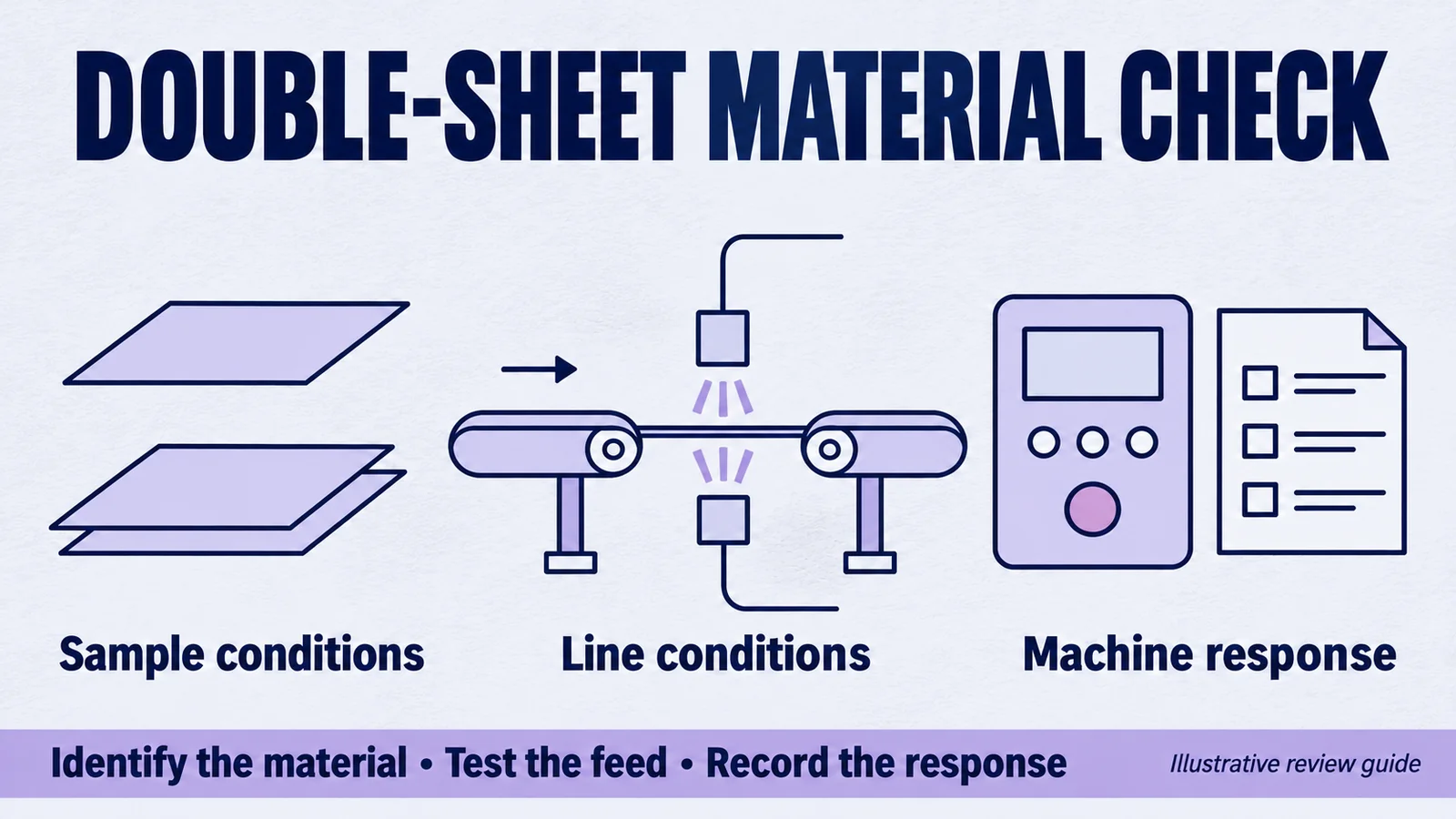
Before accepting the new stock, the OEM needs evidence that the line still distinguishes the required conditions. The useful deliverable is a material-specific test record: what passed through the sensing position, what the sensor reported and what the machine did next.
This article proposes that record for paper, film and thin-metal projects. Suitability for any particular material must be evaluated with the selected sensor and installation.
Define the material change precisely
Do more than replace the material name in a spreadsheet. Record supplier and material reference, thickness or basis weight as applicable, coating or laminate structure, and the condition of the samples. Include the previous approved stock as a comparison where it remains available.
Describe what counts as a double feed in your machine. Two loose sheets, two sheets adhering over part of their area and a folded edge are different test specimens. A production defect that never crosses the sensing position cannot be assessed by placing a convenient sample somewhere else.
For film, labels or layered stock, draw the intended material structure. A legitimate multilayer product and an accidental extra sheet may contain the same number of nominal layers while requiring different machine decisions.
Confirm the sensor and controller interface
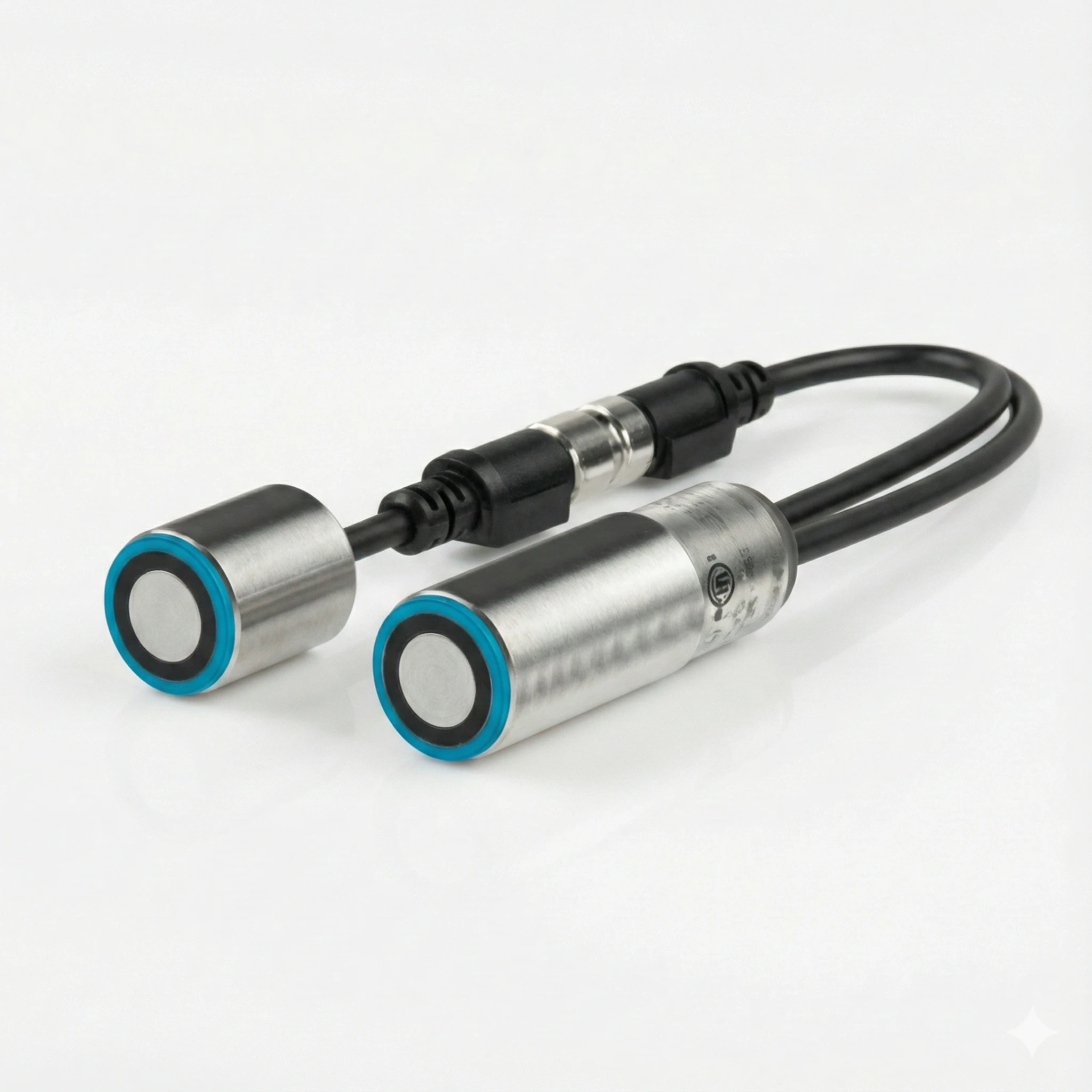
YJ's MDC double-sheet detection series is a starting point for paper and thin-metal handling inquiries. Its current page lists 400 kHz and 255 kHz transducer frequencies and switching-output options. Confirm the exact order configuration, wiring and output behavior for your controller.
Do not use a generic product description to select a response time or guaranteed production speed. Those requirements need to be stated and checked in the actual machine. Film and unfamiliar material combinations should be submitted with representative samples for an application review.
Build a sample matrix before changing settings
Use identifiable samples and define their expected classification before the test. Choose the test count and pass criteria with the OEM's quality and controls teams; the table does not prescribe a universal sample size.
| Test specimen | Expected classification | Conditions to record | Failure to count separately |
|---|---|---|---|
| Empty sensing path | No sheet | Machine background and relevant cycle state | False material indication |
| Approved reference stock, one sheet | Single sheet | Stock identity, orientation and position | False double-sheet or missing-sheet indication |
| New stock, one sheet | Single sheet | New material identity and surface condition | False rejection of valid stock |
| Two sheets of the new stock | Double sheet | Overlap, separation/contact condition and sensing position | Double feed reported as acceptable |
| A production-relevant edge or partial overlap | Defined by the machine requirement | Exact defect location relative to the sensing path | Required defect missed by the installed arrangement |
| Other intended products on the same line | Their specified classification | Product changeover and configuration | A setting that fixes one product but rejects another |
Retain photographs or sketches of the specimens. “Two sheets tested” is insufficient when the overlap and presentation cannot be reproduced.
Separate a static check from a moving-line check
A stationary sample can establish a useful starting observation. The next question is whether the complete detection and control chain works at the required operating conditions.
Record the sensor mounting, spacing and alignment using the model's approved installation information. Then document the actual feed speed, sheet spacing, motion and presentation used in the evaluation. Keep any intentional adjustment visible in the record.
Where the equipment allows, capture the sensor output and the corresponding PLC input or event. Check the machine response against the intended action, such as rejecting a sheet or stopping a feed. This separates a classification problem from an input-timing or control-sequence problem.
Do not infer that an indicator changing on the sensor proves that the controller will act at production speed. Evaluate the complete chain at the conditions the OEM needs to approve.
Report missed double feeds and false rejects separately
For each specimen class, retain the number of presentations and the observed classifications. Report a missed double feed separately from a valid single sheet rejected as a double. Combining them into a single percentage can hide the failure that matters most to the process.
Keep a description of any invalid or interrupted test. If a mounting or controller change is made, identify the revised configuration and repeat the affected comparisons. A successful retest should remain connected to the change that produced it.
The release record should name the approved material, sensor configuration, installation and machine program. It should also state which future changes trigger another evaluation. This gives purchasing a clearer basis for alternate-stock approval and recurring sensor orders.
Send YJ a material-specific inquiry
Request an MDC application review. Share material references and representative samples, thickness or basis weight, coating details, and examples of the single-sheet and double-feed conditions to distinguish.
Include the installation sketch, feed speed and sheet spacing, required controller interface, expected machine action and any existing failure record. Add sensors per machine, evaluation quantity, planned equipment batches and estimated annual sensor demand.
You can begin with the materials and problem description if the installation is still being designed. A defined sample set gives the review a practical starting point and helps establish what the final acceptance test must demonstrate.
Related Products
Related Guides
Review Your Double-Sheet Detection Application
Describe the actual material samples, feed arrangement, output interface, acceptance cases and planned purchasing quantities.
Discuss Your Material Detection Project