
Ultrasonic Sensor Accuracy Protocol: Temperature Compensation, Calibration, and Acceptance Testing
Introduction
Ultrasonic sensors, due to their intrinsic capacity for non-invasive measurement and broad applicability, are now ubiquitous across domains such as advanced automotive driver assistance systems, robotics, precision manufacturing, biomedical monitoring, and process automation. The epistemic reliability of the data they provide, however, is rarely absolute, since their measurement precision is conditioned by multiple environmental variables. Among these, ambient temperature remains the most influential, producing significant perturbations in the propagation velocity of acoustic waves through gaseous media. To uphold the stringent demands of ultrasonic sensor accuracy, especially in safety-critical or research-intensive contexts, practitioners must embrace comprehensive strategies encompassing both temperature compensation and rigorous calibration protocols.
The following treatise offers a detailed analysis of thermoacoustic dependencies, articulates diverse compensation architectures, and situates ultrasonic sensor calibration as a central metrological safeguard. Beyond presenting technical mechanisms, this discussion engages with the philosophical underpinnings of measurement reliability, examining how accuracy functions as a precondition for operational trust in sensor-mediated systems.
Thermoacoustic Dependence of Sound Propagation
Product path for this search intent
Match the article topic to the right YJ Piezo product page
Use this article when sensor performance depends on target distance, beam angle, housing material, liquid behavior, or false echo control. For "Ultrasonic Sensor Accuracy Protocol: Temperature Compensation, Calibration, and Accepta...", the practical value is in turning the topic into a measurable selection or sourcing decision.
- Ultrasonic Sensors
Distance, level, and detection sensor portfolio
- Flow Measurement Transducers
Bubble and flow-related ultrasonic sensing paths
- Air Acoustic Transducers
Air-coupled transducers for range and presence detection
At the heart of ultrasonic sensing lies the measurement of time-of-flight (ToF) for high-frequency acoustic pulses. Conceptually, the calculation is represented by:
Yet this deceptively simple expression belies a profound complexity: the velocity of sound in air is not a fixed constant but rather a thermodynamic variable dependent upon the kinetic behavior of air molecules. From the perspective of molecular kinetic theory, the mean free path and average molecular energy are both strongly affected by ambient temperature.
Empirical approximations reveal the sensitivity:
- 0°C → ~331 m/s
- 20°C → ~343 m/s
- 40°C → ~355 m/s
The resultant 0.6 m/s change per °C imposes a significant burden upon high-resolution measurements. When sub-centimeter or sub-millimeter precision is desired—as is common in biomedical imaging or micro-robotics—the influence of even minor temperature shifts becomes amplified.
Illustrative Error Propagation
Consider a sensor designed with a reference standard of 20°C, subsequently deployed at 30°C without thermal correction. The increase in sound velocity (~6 m/s) introduces an underestimation of distance by approximately 1.7%, or about 17 mm at a 1 m path distance. In applications such as surgical navigation, aerospace instrumentation, or high-throughput industrial inspection, this error margin could precipitate deleterious outcomes, from compromised safety to systemic inefficiency. The case exemplifies the inescapable imperative for compensation mechanisms.
Temperature Compensation Methods for Production Systems
The technical community has devised multiple strategies to mitigate thermally induced distortions, ranging from embedded hardware to sophisticated software algorithms.
1. Embedded Thermometric Sensing
Next-generation ultrasonic modules frequently embed thermistors, resistance temperature detectors (RTDs), or semiconductor-based temperature sensors. Such integration allows for synchronous acquisition of thermal data, enabling real-time adjustments of acoustic velocity parameters within the device firmware. High-frequency ultrasonic transducers like the KQ-230KH incorporate advanced temperature compensation features for precise acoustic measurements.
2. Algorithmic Compensation Frameworks
Mathematical models, embedded within sensor firmware or external processing units, apply correction factors based on empirical relationships. The most canonical approximation is:
where c designates the velocity of sound. Advanced implementations further refine this baseline by incorporating humidity and barometric pressure data, thereby expanding the robustness of the correction. Mid-range transducers like the KQ-112KH utilize sophisticated algorithms for environmental compensation.
3. Contextual Environmental Calibration
In climate-regulated environments such as semiconductor fabs, precision laboratories, or pharmaceutical clean rooms, temperature compensation can be simplified by calibrating against stable baselines. Such domain-specific optimization reduces computational load while ensuring contextual fidelity. Industrial cleaning transducers benefit from controlled environment calibration for consistent performance.
4. Redundancy and Cross-Verification
For high-reliability infrastructures—autonomous vehicles, aerospace navigation, or nuclear monitoring—redundancy is a key safeguard. Deploying arrays of sensors with overlapping fields of observation allows cross-validation. Divergent readings can be algorithmically reconciled, minimizing the probability of uncorrected error propagation. Specialized detection sensors often employ redundant measurement strategies.
5. Hybrid Approaches
A growing trend is the integration of hardware and software paradigms: embedded thermometry provides raw compensation, while adaptive machine learning algorithms refine correction models over time based on empirical usage data. Such hybrid systems epitomize the current trajectory toward cyber-physical intelligence.
Calibration as a Metrological Imperative
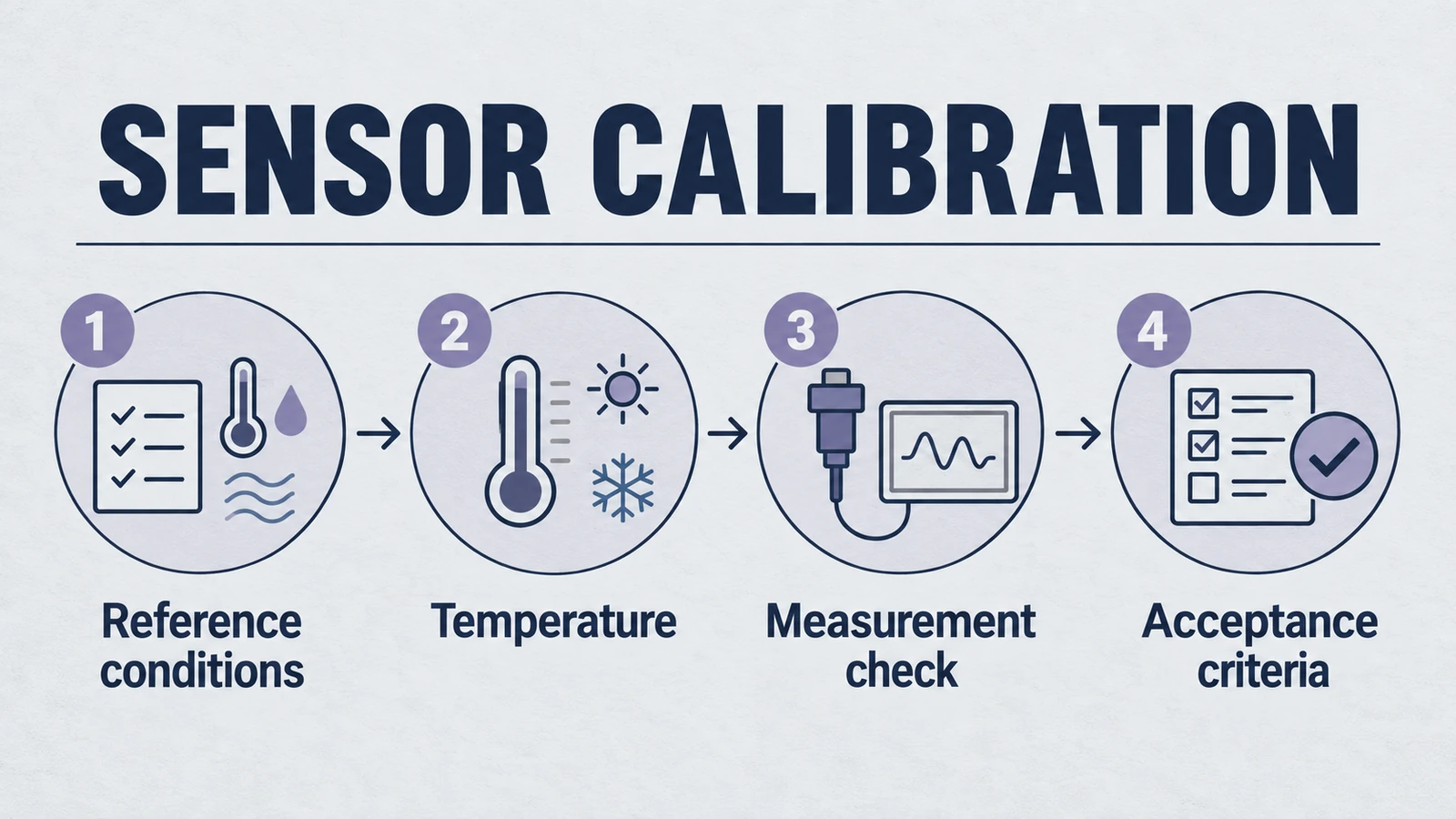
Temperature compensation addresses dynamic fluctuations, but calibration serves as the epistemic anchor, ensuring that measurements remain trustworthy across extended temporal horizons. Calibration compensates not only for external environmental variables but also for intrinsic systemic drift. These include material fatigue within piezoelectric transducers, polarization degradation, and mounting stressors.
1. Factory Calibration Protocols
Sensors typically undergo initial calibration in laboratory-controlled contexts. This process establishes a conformity baseline aligned with international standards such as ISO/IEC 17025. However, factory calibration is inherently provisional, since it does not account for subsequent cumulative wear or unanticipated environmental heterogeneity.
2. In-Situ Field Calibration
Periodic recalibration within the sensor's actual operational milieu is essential. Such procedures involve reference benchmarking, iterative parameter refinement, and validation across environmental gradients. In industries such as petrochemical processing or aeronautics, field calibration is often codified by regulatory bodies as a matter of compliance. Flow measurement transducers require regular field calibration for accurate readings.
3. Automated Self-Calibration Systems
Emergent paradigms increasingly emphasize autonomy. Self-calibrating sensors incorporate internal feedback loops that periodically evaluate measurement drift and execute corrective adjustments without human intervention. These closed-loop systems represent a significant advance toward sustainable accuracy in distributed IoT ecosystems.
4. Comparative Multi-Sensor Calibration
An alternative approach leverages inter-sensor consensus. Networks of sensors within a deployment can iteratively calibrate themselves against each other, identifying outliers and converging on shared baselines. This method is particularly powerful in large-scale deployments such as smart cities or industrial IoT networks.
Best Practices for Sustained Precision
To sustain operational integrity across diverse deployments, practitioners should institutionalize the following practices:
- Deploy multi-layered compensation mechanisms, integrating hardware thermometry, algorithmic models, and contextual calibration simultaneously.
- Institute recalibration cycles based on environmental volatility, device usage intensity, and regulatory compliance standards.
- Maintain archival records of baseline data, ensuring that long-term drift can be empirically tracked and remediated.
- Shield devices from exogenous perturbations such as dust particulates, chemical vapors, mechanical shock, and moisture ingress.
- Incorporate validation protocols involving routine comparison with external metrological references.
- Adopt predictive maintenance frameworks, where performance analytics preemptively indicate calibration needs before functional degradation emerges.
Industry-Specific Applications
Different industries require tailored approaches to ultrasonic sensor accuracy and calibration:
Medical and Healthcare
Medical ultrasonic transducers demand the highest precision standards. Temperature compensation is critical in diagnostic imaging where sub-millimeter accuracy affects diagnostic workflow. medical-device ultrasonic devices also require precise calibration to ensure consistent device-output outcomes.
Industrial Manufacturing
In manufacturing environments, ultrasonic welding transducers benefit from robust temperature compensation to maintain consistent joint quality. Industrial cleaning systems require accurate calibration to optimize cleaning efficiency and prevent damage to delicate components.
Flow Measurement
Liquid flow transducers must account for temperature variations in both the fluid and the ambient environment. Gas flow measurement systems are particularly sensitive to temperature effects due to the compressible nature of gases.
Underwater and Marine Applications
Underwater ultrasonic sensors face unique calibration challenges due to pressure and temperature variations with depth. Deep-water transducers require specialized compensation algorithms to account for changing acoustic properties with depth and temperature.
Advanced Calibration Techniques
Modern ultrasonic sensor calibration techniques employ sophisticated methodologies:
Multi-Point Calibration
Rather than single-point calibration, multi-point approaches establish calibration curves across the entire operational range. This is particularly important for wide-range acoustic transducers that operate across diverse measurement distances.
Dynamic Calibration
Static calibration may not capture all operational nuances. Dynamic calibration involves continuous adjustment based on real-time performance metrics and environmental feedback. This approach is essential for precision beauty devices and facial treatment transducers.
Statistical Process Control
Implementing statistical process control (SPC) methods helps identify calibration drift before it affects measurement accuracy. This proactive approach is particularly valuable in high-volume manufacturing environments using industrial welding transducers.
Future Trends in Sensor Accuracy
The future of ultrasonic sensor accuracy lies in intelligent, adaptive systems that combine multiple compensation strategies:
- AI-powered calibration: Machine learning algorithms that continuously optimize calibration parameters based on operational data
- Edge computing integration: Real-time processing capabilities that enable immediate compensation adjustments
- Wireless calibration networks: Distributed sensor networks that share calibration data and collectively improve accuracy
- Predictive maintenance: Systems that anticipate calibration needs before accuracy degradation occurs
Conclusion
The maintenance of ultrasonic sensor accuracy constitutes both a technical and epistemological challenge. Compensation strategies counteract the vicissitudes of ambient conditions, while calibration fortifies the trustworthiness of measurements against the inevitability of systemic drift. When combined, these dual strategies provide a scaffold upon which reliable, high-precision measurement infrastructures may be built.
As industries transition toward hyper-automation, cyber-physical systems, and data-centric governance, the precision of ultrasonic sensing assumes a foundational role. To neglect compensation or calibration is not merely a technical oversight but a structural vulnerability that jeopardizes operational reliability. Conversely, to invest in robust compensation and calibration infrastructures is to affirm a commitment to scientific rigor, systemic safety, and epistemic trustworthiness.
In conclusion, the dialectic between compensation and calibration should not be construed as ancillary but rather as constitutive of the very possibility of trustworthy ultrasonic sensing. For stakeholders across domains—engineers, metrologists, regulators, and industrial leaders—the imperative is clear: the future of precision sensing rests upon the unremitting pursuit of accuracy through deliberate compensation and disciplined calibration.
Ready to implement precision ultrasonic sensing? Yujie Technology specializes in advanced ultrasonic sensor solutions with comprehensive temperature compensation and calibration services. Contact our technical team to discuss your specific accuracy requirements and explore our complete range of high-precision ultrasonic transducers designed for demanding applications.
Acceptance-Test Notes
For production programs, teams usually need an acceptance-test layer that connects temperature compensation to model screening, validation planning, and supplier change control.
Application-to-Model Mapping
- Short-range high-repeatability checks: MU18
- Multi-meter warehouse validation: MU30
- Outdoor and long-range drift checks: SR80
RFQ Checklist
- Target range and acceptable blind-zone limit.
- Environment details: dust, foam, vapor, washdown, or chemicals.
- Output interface: PNP/NPN, relay, analog, or RS485 requirements.
- Power and duty profile for continuous or intermittent operation.
- Annual quantity, sample timing, and delivery expectations.
Start model screening at the ultrasonic sensor hub, review supplier capabilities on ultrasonic transducer supplier technical hub, and send your requirements through engineering RFQ contact.
Engineering decision notes
Ultrasonic sensing and detection
Use this article when sensor performance depends on target distance, beam angle, housing material, liquid behavior, or false echo control. For "Ultrasonic Sensor Accuracy Protocol: Temperature Compensation, Calibration, and Accepta...", the practical value is in turning the topic into a measurable selection or sourcing decision.
YJ Piezo treats ultrasonic sensing as an acoustic interface problem: transducer frequency, beam shape, housing, drive electronics, and target environment are reviewed together.
Selection checks
- Define target range, dead zone, beam angle, and mounting geometry before choosing the sensor family.
- Check the medium, target surface, temperature swing, foam, vapor, and side-wall risk.
- Separate detection repeatability from ideal lab accuracy when the sensor will operate in a tank, tube, or moving line.
Failure risks
- A sensor can pass bench distance tests and still fail in tanks with foam, agitation, vapor, or narrow geometry.
- Changing only frequency without reviewing beam angle and mounting can increase false echoes.
- Ignoring housing material or sealing requirements can shorten lifetime in washdown or chemical environments.
RFQ details
- What is the minimum and maximum detection distance?
- Is the target liquid, solid, sheet material, air flow, or a moving object?
- What temperature, humidity, IP rating, and output signal does the system require?
Relevant YJ Piezo pages
- Ultrasonic Sensors
Distance, level, and detection sensor portfolio
- Flow Measurement Transducers
Bubble and flow-related ultrasonic sensing paths
- Air Acoustic Transducers
Air-coupled transducers for range and presence detection
Application FAQ
- What makes an ultrasonic sensor page useful for procurement?
- It should connect range, beam angle, output signal, housing, mounting, and environmental limits to a concrete use case. A model name alone is not enough for reliable supplier comparison.
- Which information speeds up an ultrasonic sensor RFQ?
- Send the target material, distance range, installation geometry, output interface, temperature range, IP rating, and whether the application involves foam, vapor, liquid, or moving objects.