
Piezoelectric vs Traditional Sensors in Industrial Automation: Model Mapping and Decision Rules
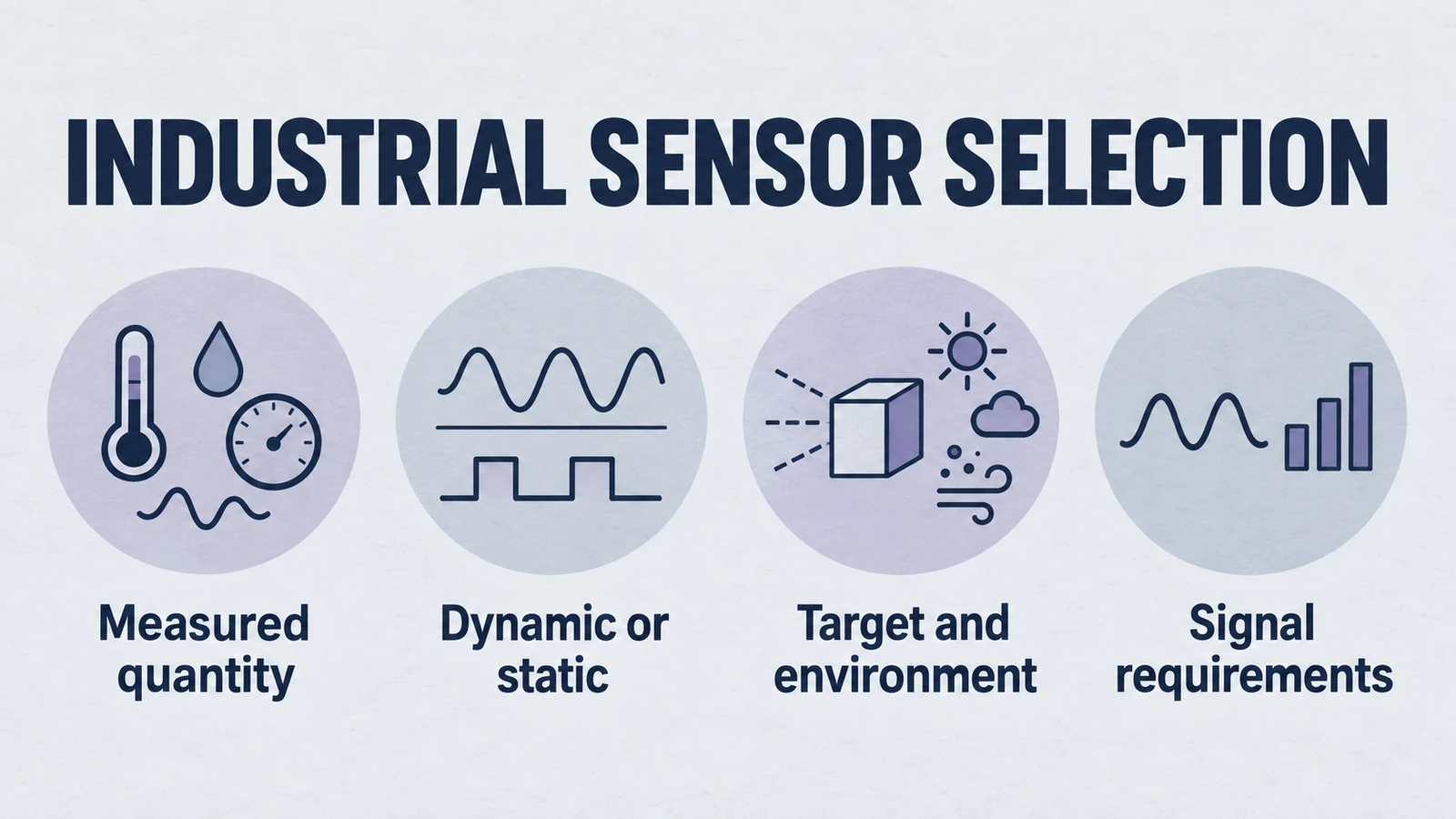
When selecting sensors for industrial, automotive, or consumer electronics applications, engineers must choose between piezoelectric sensors and traditional sensors. Understanding their distinct characteristics is essential for making the optimal choice for your specific needs.
Engineering Decision Context for Piezoelectric Sensors
Piezoelectric sensors operate on the piezoelectric effect—generating an electric charge in response to mechanical stress and vice versa. This characteristic makes them exceptionally effective for precise and dynamic measurement tasks.
Operational Principle
Product path for this search intent
Match the article topic to the right YJ Piezo product page
Use this article when sensor performance depends on target distance, beam angle, housing material, liquid behavior, or false echo control. For "Piezoelectric vs Traditional Sensors in Industrial Automation: Model Mapping and Decisi...", the practical value is in turning the topic into a measurable selection or sourcing decision.
- Ultrasonic Sensors
Distance, level, and detection sensor portfolio
- Flow Measurement Transducers
Bubble and flow-related ultrasonic sensing paths
- Air Acoustic Transducers
Air-coupled transducers for range and presence detection
Piezoelectric materials, typically ceramics like Lead Zirconate Titanate (PZT), convert mechanical stress directly into electrical energy. This direct conversion enables rapid, accurate measurements with minimal latency, ideal for dynamic applications.
Our bubble detection sensors utilize this principle for high-precision detection.
Key Advantages
- Superior Sensitivity and Accuracy: Excellent for detecting minute vibrations and rapid changes, crucial for applications like flow measurement.
- Fast Response Time: Ideal for real-time monitoring and high-frequency applications such as acoustic measurements.
- Energy Efficiency: Perfect for energy harvesting and low-power sensor networks.
- Environmental Durability: Resistant to extreme conditions, suitable for underwater applications.
- Compact Design: Facilitates integration into portable and space-constrained devices.
Limitations
- Static Measurement Challenges: Direct piezoelectric charge sensing has static/very-low-frequency drift from leakage. An actively driven ultrasonic ranger can repeatedly measure a stationary target; these are different architectures.
- Initial Investment: Generally higher upfront cost compared to traditional sensors.
Ideal Applications
- Condition monitoring and predictive maintenance
- Dynamic pressure and acoustic measurements
- Ultrasonic distance sensing and medical imaging
- Structural health monitoring
- Energy harvesting systems
Exploring Traditional Sensors
Traditional sensors include capacitive, resistive, inductive, and optical types. They rely on changes in electrical properties, making them effective for steady-state and slowly varying measurements.
Operational Principles
- Capacitive Sensors: Measure variations in capacitance due to changes in distance or environmental factors.
- Resistive Sensors: Detect resistance changes with temperature, strain, or gas concentration.
- Inductive Sensors: Measure inductance changes due to proximity of metallic objects.
- Optical Sensors: Use light transmission and reflection for detection.
Key Advantages
- Cost-Effective Solutions: Generally more affordable, especially for large deployments.
- Static Measurement Reliability: Excellent accuracy in constant or slowly changing conditions.
- Integration Simplicity: Compatible with standard electronics and straightforward to implement.
- Wide Variety: Multiple types available for nearly any common sensing need.
Limitations
- Dynamic Performance Constraints: Less suitable for rapid, high-frequency events.
- Environmental Sensitivity: May require additional protection in harsh conditions.
Ideal Applications
- Temperature and humidity monitoring
- Steady-state pressure and flow measurements
- Level sensing in containers
- Proximity and displacement detection
- Gas and chemical detection
Selection Factors for Your Application
When evaluating sensor options, consider these critical factors:
Measurement Dynamics
For dynamic, rapidly changing environments, choose piezoelectric sensors like our high-frequency transducers.
Energy Requirements
Piezoelectric sensors offer superior performance in low-power applications, ideal for remote or battery-operated systems.
Environmental Conditions
Piezoelectric sensors excel in challenging environments, while traditional sensors may need additional protection.
Budget Considerations
Traditional sensors typically offer more cost-effective solutions for general monitoring needs.
Recommendations for Engineers
- Choose Piezoelectric Sensors when precision, high-frequency response, dynamic measurement, and environmental durability are critical. Our Disc Series and Ring Series offer excellent performance for these applications.
- Select Traditional Sensors for cost-sensitive projects, static measurement conditions, or when integration simplicity is paramount.
Conclusion
The choice between piezoelectric and traditional sensors depends on your application's specific requirements, environmental conditions, and budget constraints. Understanding the detailed strengths and limitations of each sensor type ensures an optimal choice, enhancing system efficiency, reliability, and cost-effectiveness.
For personalized sensor selection guidance, contact our technical team or explore our complete product range.
Selection Notes for Automation Projects
When this comparison turns into a live automation project, teams usually need a quick way to connect the sensing principle to candidate models and RFQ details.
Application-to-Model Mapping
- Compact fixture and station measurement: MU18
- General industrial distance measurement: MU30
- Outdoor relay-output integration: SR55
RFQ Checklist
- Target range and acceptable blind-zone limit.
- Environment details: dust, foam, vapor, washdown, or chemicals.
- Output interface: PNP/NPN, relay, analog, or RS485 requirements.
- Power and duty profile for continuous or intermittent operation.
- Annual quantity, sample timing, and delivery expectations.
Start model screening at the ultrasonic sensor hub, review supplier capabilities on piezoelectric supplier portal, and send your requirements through engineering RFQ contact.
Engineering decision notes
Ultrasonic sensing and detection
Use this article when sensor performance depends on target distance, beam angle, housing material, liquid behavior, or false echo control. For "Piezoelectric vs Traditional Sensors in Industrial Automation: Model Mapping and Decisi...", the practical value is in turning the topic into a measurable selection or sourcing decision.
YJ Piezo treats ultrasonic sensing as an acoustic interface problem: transducer frequency, beam shape, housing, drive electronics, and target environment are reviewed together.
Selection checks
- Define target range, dead zone, beam angle, and mounting geometry before choosing the sensor family.
- Check the medium, target surface, temperature swing, foam, vapor, and side-wall risk.
- Separate detection repeatability from ideal lab accuracy when the sensor will operate in a tank, tube, or moving line.
Failure risks
- A sensor can pass bench distance tests and still fail in tanks with foam, agitation, vapor, or narrow geometry.
- Changing only frequency without reviewing beam angle and mounting can increase false echoes.
- Ignoring housing material or sealing requirements can shorten lifetime in washdown or chemical environments.
RFQ details
- What is the minimum and maximum detection distance?
- Is the target liquid, solid, sheet material, air flow, or a moving object?
- What temperature, humidity, IP rating, and output signal does the system require?
Relevant YJ Piezo pages
- Ultrasonic Sensors
Distance, level, and detection sensor portfolio
- Flow Measurement Transducers
Bubble and flow-related ultrasonic sensing paths
- Air Acoustic Transducers
Air-coupled transducers for range and presence detection
Application FAQ
- What makes an ultrasonic sensor page useful for procurement?
- It should connect range, beam angle, output signal, housing, mounting, and environmental limits to a concrete use case. A model name alone is not enough for reliable supplier comparison.
- Which information speeds up an ultrasonic sensor RFQ?
- Send the target material, distance range, installation geometry, output interface, temperature range, IP rating, and whether the application involves foam, vapor, liquid, or moving objects.