
Key Factors to Consider When Selecting a Piezoelectric Ceramic OEM Partner
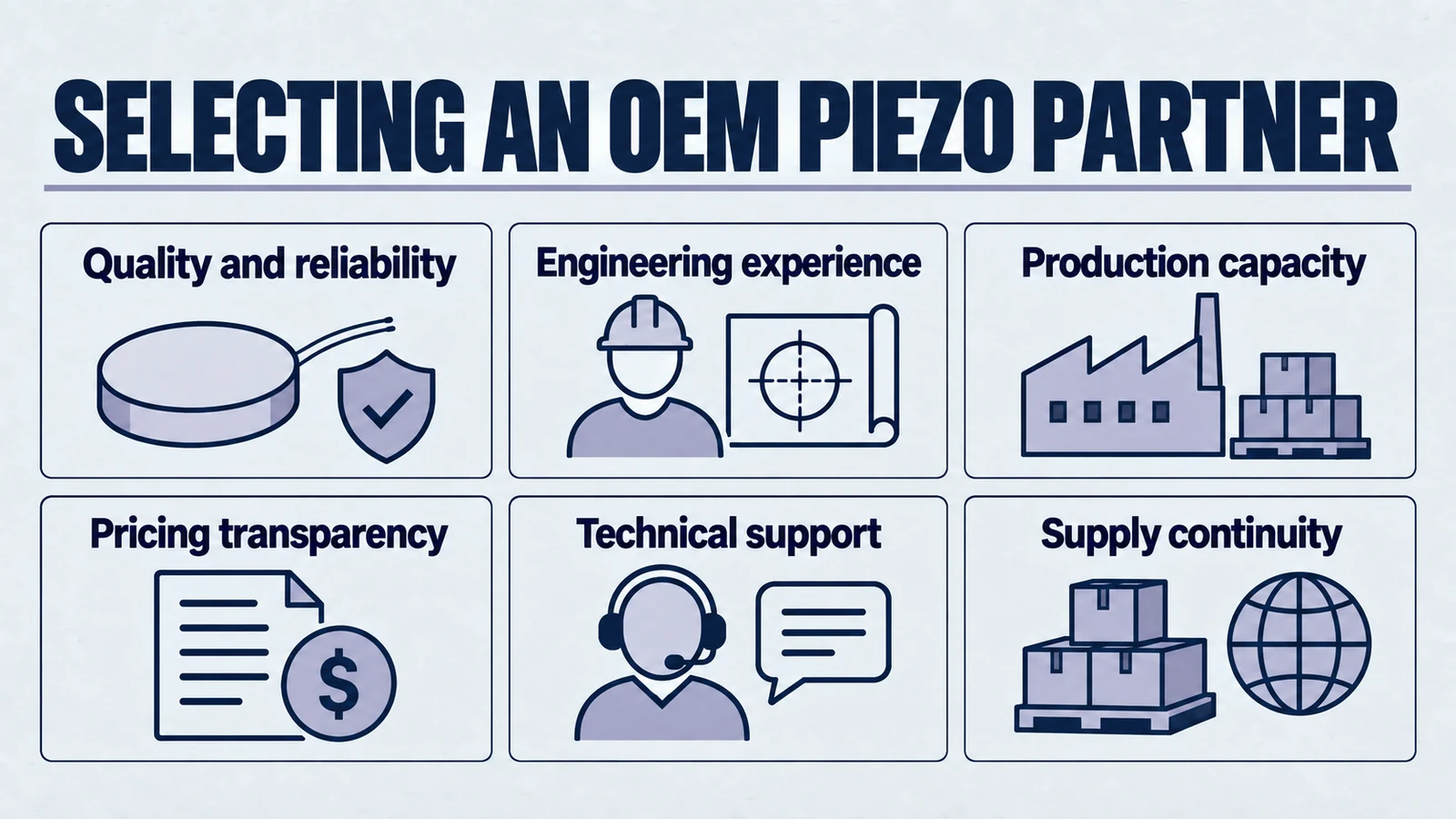
Selecting the right OEM partner for piezoelectric ceramic components is critical for ensuring product quality, market competitiveness, and long-term success. From a buyer's perspective, several essential factors must be thoroughly evaluated to make a strategic and informed decision. In this comprehensive article, we explore key considerations buyers should prioritize when choosing a piezoelectric ceramic OEM partner. Additionally, we emphasize Yujie's established reliability, extensive industry experience, and robust delivery capabilities, making it a preferred partner for many leading enterprises.
1. Product Quality and Reliability
The primary factor influencing the choice of an OEM partner is the quality and consistency of products. Piezoelectric ceramics are integral components used in precision instruments, medical diagnostic devices, ultrasonic systems, and industrial sensors—fields where reliability, precision, and consistent performance are non-negotiable. Buyers should prioritize OEM manufacturers with rigorous and transparent quality management systems.
Yujie's Approach: Established in 1996, Yujie brings long-standing experience in piezoelectric and ultrasonic applications. Testing, traceability, and documentation are defined for the selected component and order so that quality evidence matches the customer's actual requirements.
Product path for this search intent
Match the article topic to the right YJ Piezo product page
Use this article when the risk is supplier selection, engineering support, validation evidence, integration reliability, and whether the manufacturer can scale from sample to production. For "Key Factors to Consider When Selecting a Piezoelectric Ceramic OEM Partner", the practical value is in turning the topic into a measurable selection or sourcing decision.
- Ultrasonic Transducer Supplier Hub
OEM sourcing and engineering collaboration
- PZT Material Supplier Hub
Material control and grade selection
- Piezoelectric Ceramics
Ceramic manufacturing and custom shapes
2. Technical Expertise and Industry Experience
An OEM partner's technical expertise and depth of industry experience significantly impact their ability to meet customized application requirements. An ideal OEM provider does more than supply standard components; they offer tailored engineering solutions, addressing unique challenges to optimize performance and functionality.
Yujie's Advantage: Yujie excels in providing highly customized solutions, backed by a dedicated research and development (R&D) team. This expert team promptly understands customer-specific needs, offering personalized technical consulting, tailored designs, and reliable product innovation.
3. Production Capacity and Delivery Reliability
Buyers must evaluate an OEM's production capacity and ability to deliver consistently and reliably. Capacity flexibility and punctuality in delivery ensure minimal disruptions in supply chain management and support seamless operational continuity, particularly when managing fluctuating market demands and scaling production volumes.
Yujie's Advantage: Equipped with advanced manufacturing facilities and scalable production capabilities, Yujie ensures the flexibility to fulfill varying order sizes and complex production schedules. Renowned for precise and punctual delivery, the company effectively safeguards client production timelines and operational reliability.
4. Cost Efficiency and Pricing Transparency
Competitive pricing combined with transparent and predictable cost structures form an essential aspect of procurement decisions. OEM partners who communicate costs clearly and proactively help buyers avoid unforeseen expenses and hidden costs, ensuring sustainable budgeting and long-term procurement effectiveness.
Yujie's Advantage: Yujie prioritizes pricing transparency and cost-efficiency through ongoing optimization of manufacturing processes and effective cost management strategies. Clients benefit from competitive pricing structures without compromising the quality and performance of the products delivered.
5. Technical Support and After-Sales Service
Effective technical support and dependable after-sales services are vital components for sustained successful partnerships. A strong technical support system helps quickly resolve technical issues, minimize downtime, and enhance overall customer satisfaction and operational performance.
Yujie's Advantage: Yujie maintains a professional technical support team offering comprehensive services from initial product design to rigorous testing and continuous post-sales optimization. This dedicated approach ensures smooth project implementation, long-term functionality, and ongoing product enhancements.
6. Long-Term Stability, Reputation, and Industry Trust
Considering an OEM partner's long-term market reputation, financial stability, and established track record significantly reduces procurement risks. Companies with robust industry credentials and stable operations ensure the longevity and consistency required for strategic, enduring partnerships.
Yujie's Advantage: Yujie has built longstanding relationships with leading global enterprises, earning widespread industry recognition and customer trust. The company's reputation for integrity, reliability, and consistent performance underscores its capability to serve as a dependable long-term partner.
7. Innovation and Future-Proof Solutions
In rapidly evolving technological environments, the capacity for continuous innovation and adaptability is critical. OEM partners who invest in ongoing research, innovation, and product development enable buyers to stay competitive, future-proofing their product lines and market strategies.
Yujie's Advantage: Yujie actively invests in research and development, constantly improving existing products and exploring new technologies and materials. This proactive innovation approach ensures customers remain ahead of market trends and technological advancements.
8. Regulatory Compliance and Sustainability
Increasing global regulatory requirements and sustainability goals necessitate OEM partners' adherence to environmental standards and compliance frameworks. Buyers should assess OEM manufacturers based on their environmental certifications, sustainability practices, and regulatory compliance.
Yujie's Advantage: Yujie maintains stringent adherence to environmental standards and global compliance regulations. Their commitment to sustainability and eco-friendly manufacturing practices aligns closely with the evolving regulatory landscapes faced by customers globally.
Conclusion
Considering these comprehensive factors when selecting a piezoelectric ceramic OEM partner ensures optimized product performance, stable supply chains, and enhanced competitive advantage. Yujie, with its demonstrated commitment to exceptional quality control, deep technical expertise, reliable delivery capabilities, and consistent innovation, represents a reliable and strategic long-term OEM partner.
For those interested in understanding what makes our piezoelectric ceramic materials exceptional, explore our detailed material specifications page to see how we achieve outstanding performance metrics that exceed industry standards.
Additionally, you might find our recent article on The Strategic Advantages of Collaborating with an OEM Manufacturer valuable for understanding the broader benefits of OEM partnerships in the piezoelectric industry.
Ready to explore how Yujie can elevate your product performance? Contact us today to discuss customized solutions tailored to your specific business requirements and competitive challenges.
Engineering decision notes
OEM integration and supplier qualification
Use this article when the risk is supplier selection, engineering support, validation evidence, integration reliability, and whether the manufacturer can scale from sample to production. For "Key Factors to Consider When Selecting a Piezoelectric Ceramic OEM Partner", the practical value is in turning the topic into a measurable selection or sourcing decision.
YJ Piezo combines direct project coordination with ceramic manufacturing support, so procurement and engineering teams can evaluate material control, application review, sample validation, and production consistency together.
Selection checks
- Ask whether the supplier controls ceramic manufacturing or only assembles purchased elements.
- Review sample policy, inspection records, engineering response quality, and production lead-time stability.
- Compare suppliers and integration paths by validation evidence, not only by unit price and datasheet similarity.
Failure risks
- A low-price sample can pass early tests but fail when batch variation, thermal load, or assembly stress appears.
- A supplier without material control may not explain why impedance, capacitance, or resonance drift occurs.
- Weak RFQ information leads to quotes that are fast but not technically comparable.
RFQ details
- What application, operating environment, and failure cost should the supplier design around?
- Which sample tests and outgoing records are required before pilot production?
- What customization, MOQ, tooling, and delivery constraints must be known before quotation?
Relevant YJ Piezo pages
- Ultrasonic Transducer Supplier Hub
OEM sourcing and engineering collaboration
- PZT Material Supplier Hub
Material control and grade selection
- Piezoelectric Ceramics
Ceramic manufacturing and custom shapes
Application FAQ
- How should an OEM compare piezoelectric suppliers?
- Compare material control, engineering support, test evidence, customization ability, sample policy, and batch consistency. Unit price matters, but only after the technical risk is understood.
- What makes an RFQ technically useful?
- A useful RFQ includes application, dimensions, target frequency, electrical limits, duty cycle, operating medium, environment, expected quantity, required reports, and current failure or replacement context.