
Smart Home Innovations: Ultrasonic Sensors in Security and Automation
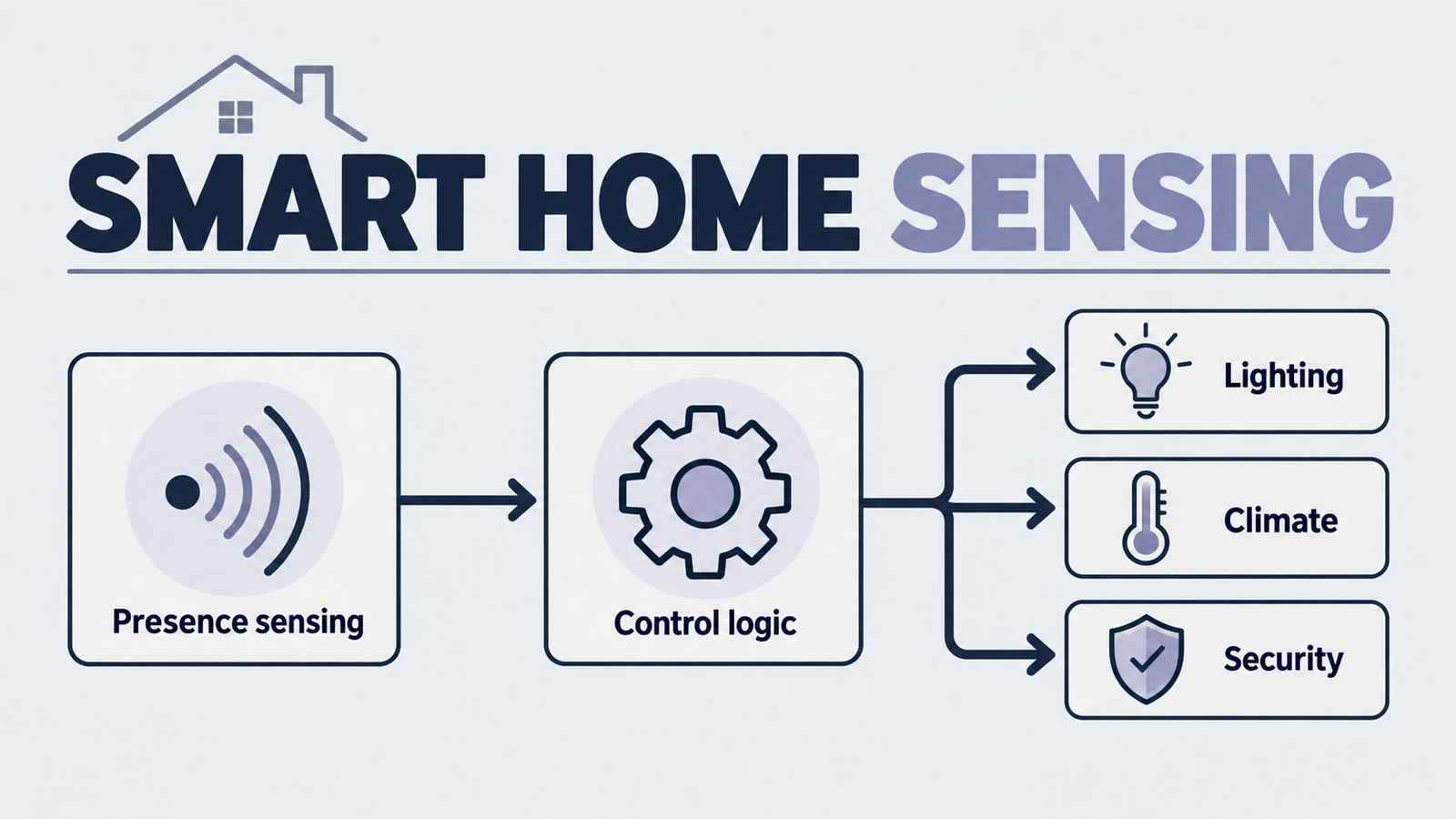
In the world of smart homes, we often focus on the devices we can see and talk to—the vibrant displays, the intelligent speakers, and the sleek thermostats. But behind the scenes, a quieter revolution is taking place, powered by invisible waves of sound. Ultrasonic sensors are the unsung heroes of modern smart homes, providing a level of environmental awareness that is making our homes more intuitive, secure, and efficient than ever before.
This article explains the ultrasonic motion sensor, how it works, its role in ultrasonic sensor home automation, and why it can be useful in selected security and presence-detection systems.
How Do Ultrasonic Sensors Work? The Science of Sound 🔊
At its core, an ultrasonic sensor operates on a principle found throughout nature, most famously used by bats for echolocation. It's a simple yet brilliant concept called the "time-of-flight" (ToF) measurement.
Product path for this search intent
Match the article topic to the right YJ Piezo product page
Use this article when sensor performance depends on target distance, beam angle, housing material, liquid behavior, or false echo control. For "Smart Home Innovations: Ultrasonic Sensors in Security and Automation", the practical value is in turning the topic into a measurable selection or sourcing decision.
- Ultrasonic Sensors
Distance, level, and detection sensor portfolio
- Flow Measurement Transducers
Bubble and flow-related ultrasonic sensing paths
- Air Acoustic Transducers
Air-coupled transducers for range and presence detection
- Emit: The sensor contains a piezoelectric transducer that emits a short burst of high-frequency sound, far above the range of human hearing (typically over 40 kHz).
- Reflect: This sound wave travels outward until it hits an object—a person walking into a room, a pet jumping on the couch, or a door opening.
- Receive: The wave bounces off the object and returns to a receiver on the sensor.
The sensor's internal clock measures the precise time it took for the sound wave to travel to the object and back. Since the speed of sound is a known constant (approximately 343 meters per second in dry air), the sensor can calculate the distance to the object with remarkable accuracy using the formula:
The round-trip formula applies to pulse-echo ranging under a characterized propagation path. Ultrasonic occupancy sensors may instead detect motion-related signal changes, including Doppler methods, without reporting distance. Use the method and uncertainty of the actual product rather than treating every presence switch as a rangefinder.
Smarter Living: Ultrasonic Sensors in Home Automation
While simple motion detection is useful, the real magic of ultrasonic sensor home automation lies in its ability to provide nuanced "presence detection." This goes beyond just sensing movement to understanding if a space is truly occupied, unlocking a new level of intelligence and efficiency.
Presence-Based Lighting and Climate Control
Unlike traditional motion sensors that might turn off lights when you're sitting still reading a book, an ultrasonic motion sensor's high sensitivity can detect even micro-movements like breathing or turning a page. This allows it to accurately determine that a room is still occupied, keeping the lights and HVAC system running. When you finally leave the room, it detects the absence and signals the systems to power down, leading to significant energy savings.
Enhanced Smart Device Interaction
You may already be using this technology without realizing it. Major smart home players have integrated ultrasonic sensors directly into their flagship products:
- Google Nest Devices: The Google Nest Hub and newer Nest Mini speakers use ultrasound to sense when you're nearby. As you approach the display, touch controls may appear, or the font size of a timer might increase so you can see it from across the room.
- Amazon Echo Devices: Recent generations of Amazon Echo and Echo Dot speakers use ultrasonic motion detection to trigger Alexa Routines. For example, your Echo device can sense when you enter a room and automatically turn on the lights and start your morning news briefing, or detect when the room is empty and turn everything off.
The key advantage here is precision. Ultrasonic sensors are not affected by ambient light, the color of your clothes, or even transparent objects like glass, making them incredibly reliable for these subtle, context-aware automations. Learn more about the fundamental technology behind these sensors in our article about PZT piezoelectric ceramics.
Fortifying Your Castle: The Ultrasonic Motion Sensor in Home Security 🛡️
When it comes to security, every second and every inch counts. The ultrasonic motion sensor offers distinct advantages over the more common Passive Infrared (PIR) sensor found in many basic alarm systems. While both detect intruders, they do so in fundamentally different ways.
Here's a head-to-head comparison:
| Feature | Ultrasonic Motion Sensor | PIR Motion Sensor |
|---|---|---|
| Detection Method | Active: Emits sound waves and measures the echo. Detects any object that disrupts the sound field. | Passive: Measures changes in infrared (heat) energy emitted by objects. |
| What It Detects | Any object or movement, regardless of temperature. | Heat signatures, primarily from people and animals. |
| Coverage | Fills an entire space with sound waves, capable of "seeing" around corners and behind obstacles. | Requires a direct line of sight and works by detecting movement across predefined "zones." |
| Strengths | Highly sensitive to all types of motion. Unaffected by ambient light or rapid temperature changes. | Extremely low power consumption. Very low rate of false alarms from inanimate objects. |
| Weaknesses | Higher power consumption (as it's an active sensor). Can sometimes be falsely triggered by strong air currents. | Can be fooled by direct sunlight. May not detect a person moving slowly or directly toward it. |
The Best of Both Worlds: Dual-Technology Sensors
Dual-technology devices combine PIR and ultrasonic sensing with a documented decision rule. Under strict AND logic, an ultrasound-only event cannot rescue a missed PIR detection. Some products use different turn-on and hold-on rules; identify the actual configuration and validate coverage and false-alarm behavior.
For industrial applications requiring similar precision, our ring transducers and tube transducers provide reliable performance in challenging environments.
The Future is Sound: Emerging Trends in Ultrasonic Sensing ✨
The innovation doesn't stop at presence detection. Researchers and engineers are pushing the boundaries of what ultrasonic sensors can do, paving the way for a future of seamless, non-contact interaction with our homes.
- Gesture Recognition: Because ultrasound can map nearby objects with high resolution, it's a perfect candidate for gesture control. Imagine adjusting the volume of your stereo with a simple wave of your hand, or swiping in the air to dismiss a notification on your smart display—no screen-touching required.
- Advanced Indoor Positioning: The precise distance-measuring capabilities could be harnessed to create a highly accurate indoor "GPS," allowing your home to know exactly where people and objects (like robotic vacuums or smart pets) are located.
- Potential for Health Monitoring: The sensitivity of these sensors is so great that future applications could include non-contact health monitoring. A sensor placed near a bed could potentially monitor the subtle movements of a person's chest to track breathing patterns and sleep quality, all without any wearable devices.
These advances build upon the same principles used in industrial applications like ultrasonic flowmeter transducers, where precision measurement is critical. For insights into sensor accuracy optimization, explore our guide on factors affecting piezoelectric sensor sensitivity.
Implementation Considerations for Smart Homes
Power Management
While ultrasonic sensors are more power-hungry than passive PIR sensors, modern implementations use intelligent power management. Sensors can operate in low-power standby modes and activate full scanning only when initial movement is detected.
Integration with Existing Systems
Modern ultrasonic sensor home automation systems are designed to integrate seamlessly with popular smart home platforms like Home Assistant, SmartThings, and Hubitat. This ensures compatibility with existing devices and automation routines.
Environmental Factors
Temperature, humidity, and air pressure can affect ultrasonic wave propagation. Quality sensors incorporate compensation algorithms to maintain accuracy across varying environmental conditions. For more information on environmental considerations, check our article on maximizing transducer lifespan.
The Unsung Hero of the Smart Home
From saving energy by intelligently managing our lights to providing an extra layer of security that sees what other sensors can't, ultrasonic sensors are a foundational technology for the truly smart home. They are the invisible force that enables our devices to move beyond simple commands and develop a genuine awareness of our presence and needs.
So the next time your smart display wakes up as you approach or your lights turn off automatically after you leave a room, take a moment to appreciate the silent, sophisticated dance of sound waves that makes it all possible.
The integration of ultrasonic motion sensors into smart home ecosystems represents just the beginning of what's possible when we combine advanced sensor technology with intelligent automation. As these systems continue to evolve, they promise to make our homes not just smarter, but truly intuitive partners in our daily lives.
Interested in exploring ultrasonic sensor solutions for your smart home or automation project? Contact us to learn more about our high-performance ultrasonic transducer products and how they can enhance your automation systems.
Engineering decision notes
Ultrasonic sensing and detection
Use this article when sensor performance depends on target distance, beam angle, housing material, liquid behavior, or false echo control. For "Smart Home Innovations: Ultrasonic Sensors in Security and Automation", the practical value is in turning the topic into a measurable selection or sourcing decision.
YJ Piezo treats ultrasonic sensing as an acoustic interface problem: transducer frequency, beam shape, housing, drive electronics, and target environment are reviewed together.
Selection checks
- Define target range, dead zone, beam angle, and mounting geometry before choosing the sensor family.
- Check the medium, target surface, temperature swing, foam, vapor, and side-wall risk.
- Separate detection repeatability from ideal lab accuracy when the sensor will operate in a tank, tube, or moving line.
Failure risks
- A sensor can pass bench distance tests and still fail in tanks with foam, agitation, vapor, or narrow geometry.
- Changing only frequency without reviewing beam angle and mounting can increase false echoes.
- Ignoring housing material or sealing requirements can shorten lifetime in washdown or chemical environments.
RFQ details
- What is the minimum and maximum detection distance?
- Is the target liquid, solid, sheet material, air flow, or a moving object?
- What temperature, humidity, IP rating, and output signal does the system require?
Relevant YJ Piezo pages
- Ultrasonic Sensors
Distance, level, and detection sensor portfolio
- Flow Measurement Transducers
Bubble and flow-related ultrasonic sensing paths
- Air Acoustic Transducers
Air-coupled transducers for range and presence detection
Application FAQ
- What makes an ultrasonic sensor page useful for procurement?
- It should connect range, beam angle, output signal, housing, mounting, and environmental limits to a concrete use case. A model name alone is not enough for reliable supplier comparison.
- Which information speeds up an ultrasonic sensor RFQ?
- Send the target material, distance range, installation geometry, output interface, temperature range, IP rating, and whether the application involves foam, vapor, liquid, or moving objects.