
The Unyielding Eye: A Comprehensive Engineering Analysis of Stainless Steel Housing Ultrasonic Sensors for Harsh Industrial Frontiers
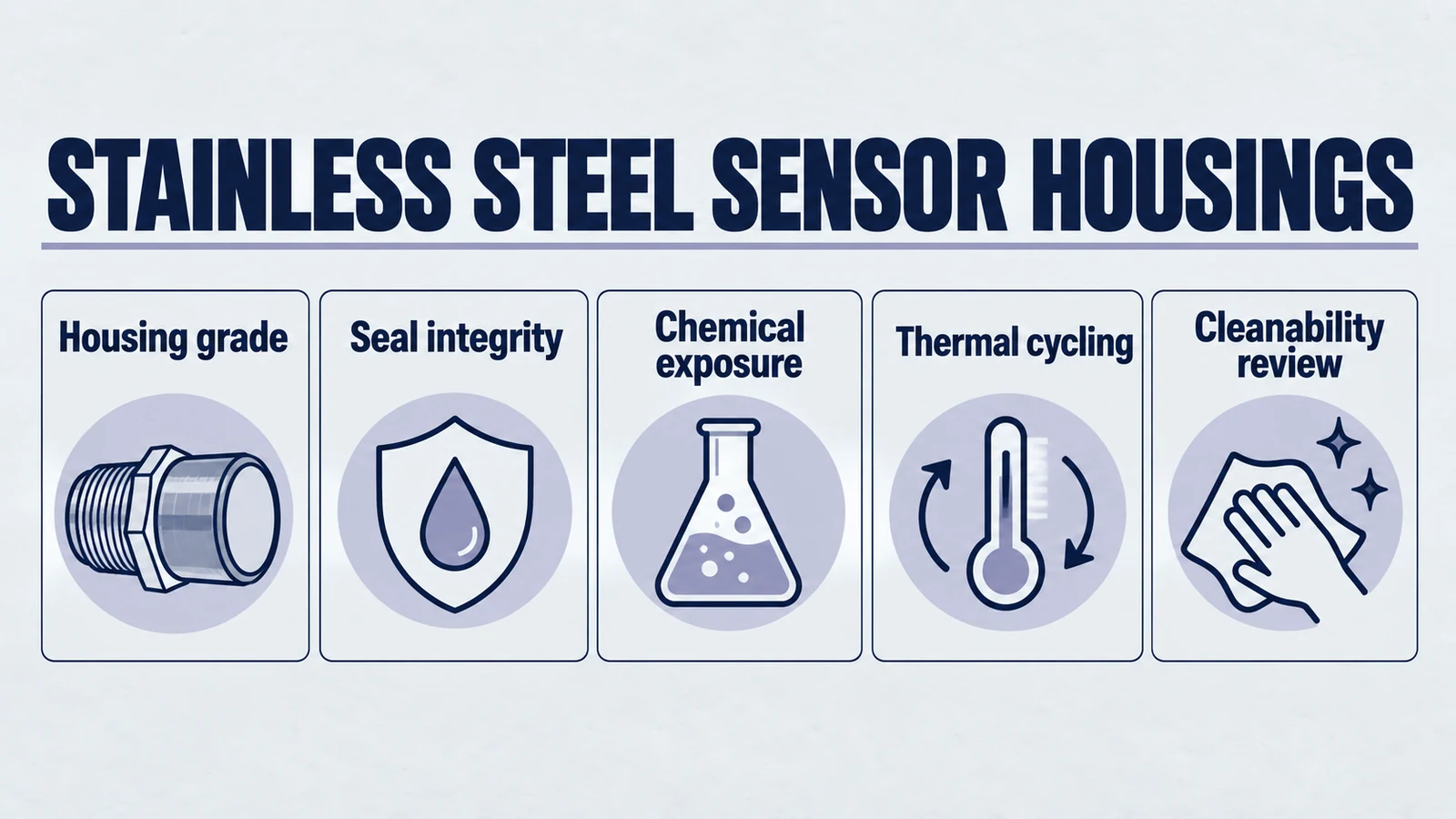
Executive Summary: The Imperative of Reliability in Industry 4.0
In the contemporary landscape of industrial automation, the margin for error has vanished. As manufacturing paradigms shift toward Industry 4.0, the interconnectivity of systems means that a single component failure can trigger a cascading halt in production, incurring costs that dwarf the initial investment in hardware. Nowhere is this more acute than in "harsh environments"—a classification that encompasses the caustic washdowns of food processing, the corrosive atmospheres of chemical storage, and the sterile rigors of pharmaceutical manufacturing. In these domains, the standard plastic sensor is not merely a weak link; it is a liability.
This technical guide covers the Stainless Steel Housing Ultrasonic Sensor, with a focus on engineering philosophy, material selection, and manufacturing controls at Yujie Piezo Technology. It explains why a 316L stainless steel chassis and controlled piezoelectric ceramics can matter in washdown and corrosive environments. We cover acoustic propagation in variable densities, pitting-corrosion resistance, hygienic design, and high-pressure sanitation considerations.
Through this deep dive, we aim to demonstrate why Yujie Piezo's approach—integrating vertical manufacturing capabilities from the ceramic powder to the finished steel assembly—provides the requisite durability for the world's most demanding industries. This is not just a discussion of a component; it is an analysis of resilience engineered at the molecular level.
Product path for this search intent
Match the article topic to the right YJ Piezo product page
Use this article when sensor performance depends on target distance, beam angle, housing material, liquid behavior, or false echo control. For "The Unyielding Eye: A Comprehensive Engineering Analysis of Stainless Steel Housing Ult...", the practical value is in turning the topic into a measurable selection or sourcing decision.
- Ultrasonic Sensors
Distance, level, and detection sensor portfolio
- Flow Measurement Transducers
Bubble and flow-related ultrasonic sensing paths
- Air Acoustic Transducers
Air-coupled transducers for range and presence detection
Part I: The Acoustic Foundation of Ultrasonic Sensing
To understand the necessity of a stainless steel housing, one must first master the physics of the sensor itself. The ultrasonic sensor is a marvel of timing and electromechanical conversion, operating on principles that remain robust where optical and capacitive technologies fail.
1.1 The Time-of-Flight (ToF) Principle in Industrial Applications
At its core, the ultrasonic sensor operates on the Time-of-Flight (ToF) principle. The device acts as a transceiver, emitting a burst of high-frequency sound waves—typically between 20 kHz and 400 kHz—into a medium, usually air. These sound waves propagate as longitudinal pressure waves, compressing and rarefying the air molecules until they encounter an acoustic impedance mismatch—an object or a liquid surface.
Upon striking this target, a portion of the acoustic energy is reflected back toward the source. The sensor switches from transmit mode to receive mode, acting as a microphone to detect this returning echo. The distance (d) is calculated using the time interval (t) and the speed of sound (c) in the medium:
While elementary in theory, the industrial application of this formula is fraught with complexity. The speed of sound is not a constant; it is a function of temperature, humidity, and gas composition. In a chemical tank where vapors may be present, or a food processing line where steam creates thermal gradients, the sensor must account for these variables.
Yujie Piezo sensors address this through integrated temperature compensation and the use of piezoelectric materials that maintain stable performance characteristics across wide thermal ranges. The precision of the measurement is directly tied to the distinctness of the echo, which brings us to the critical component: the transducer.
1.2 The Piezoelectric Effect: The Heartbeat of the Sensor
The conversion of electrical energy into mechanical vibration (sound) and vice versa is achieved through the piezoelectric effect. This is the technological cornerstone of Yujie Piezo Technology. Unlike competitors who purchase generic ceramic discs, Yujie formulates and manufactures its own Lead Zirconate Titanate (PZT) ceramics, specifically the "soft" PZT materials P-51 and P-52.
1.2.1 The Physics of PZT Ceramics
The performance of an ultrasonic sensor is dictated by the electromechanical coupling coefficient (k) and the piezoelectric charge constant (d33) of the ceramic material.
- Sensitivity (d33): This parameter defines how much mechanical displacement is produced per unit of applied voltage (transmission) and how much charge is generated per unit of mechanical stress (reception). Yujie's PZT-5H materials are engineered for an exceptionally high d33, meaning they can generate powerful acoustic bursts and detect faint echoes returning from soft or angled surfaces.
- Dielectric Loss (tan δ): Energy efficiency is critical. In a sealed stainless steel sensor, heat dissipation is limited. High dielectric loss in the ceramic leads to internal heating, which can depole the ceramic and degrade sensitivity. Yujie's materials achieve a dielectric loss as low as 0.004, ensuring that the electrical energy is converted efficiently into acoustic energy rather than waste heat.
1.3 Acoustic Impedance Matching and the Steel Interface
The greatest challenge in designing a stainless steel ultrasonic sensor is the Acoustic Impedance Mismatch. Sound travels differently through solids and gases. The acoustic impedance (Z) of a material is the product of its density (ρ) and the speed of sound (v) within it ().
- Air: Z ≈ 400 Rayls
- Stainless Steel: Z ≈ 45,000,000 Rayls
- PZT Ceramic: Z ≈ 30,000,000 Rayls
When sound attempts to pass from the PZT ceramic directly into air, the massive mismatch causes nearly all the energy to reflect back into the sensor, with very little leaving the face. Standard sensors use a matching layer (often a composite or epoxy) with an impedance between that of PZT and air to bridge this gap.
However, a Stainless Steel Housing Sensor presents a unique engineering hurdle: the sound must transmit through the metal face of the sensor to achieve the fully sealed, hygienic robustness required. The steel face itself acts as a membrane.
- Resonance Tuning: Yujie engineers must precisely machine the thickness of the stainless steel face to correspond to a half-wavelength (λ/2) of the resonant frequency. This allows the steel face to vibrate sympathetically with the PZT element, effectively becoming transparent to the sound wave at that specific frequency.
- Manufacturing Precision: If the steel thickness varies by even a few microns, the resonance is lost, and the sensor becomes "deaf." Yujie's machining capabilities, holding tolerances to ±0.01 mm, are essential to producing stainless steel sensors that rival the sensitivity of plastic ones.
Part II: The Fortress – Metallurgy of 316L Stainless Steel
In the target industries—Food & Beverage, Pharmaceutical, and Chemical—the sensor housing is the first line of defense. Standard materials like PBT plastic or nickel-plated brass are fundamentally unsuited for the chemical and mechanical aggression of these environments. The industry standard, and the material of choice for Yujie's premium line, is AISI 316L Stainless Steel.
2.1 The Chemistry of Corrosion Resistance
To understand why 316L is superior to the more common 304 stainless steel, we must look at the atomic composition.
- AISI 304: Contains ~18% Chromium and ~8% Nickel. It relies on a passive chromium oxide layer for protection. In the presence of chlorides (salt water, brine, cleaning solutions), the chloride ions can penetrate this layer, leading to pitting corrosion—small, deep holes that compromise the housing integrity.
- AISI 316L: The crucial addition is Molybdenum (2-3%). Molybdenum drastically increases the stability of the passive film in the presence of chlorides and acids. It acts as a stabilizer, repairing the atomic structure of the oxide layer faster than chlorides can attack it.
2.1.1 The Significance of "L"
The "L" in 316L stands for "Low Carbon" (max 0.03%). In standard 316 steel, high temperatures (such as those during the welding of the sensor face) can cause chromium to combine with carbon, forming chromium carbides at the grain boundaries. This depletes the chromium available for corrosion protection, leading to intergranular corrosion. By using 316L, Yujie ensures that even after the laser welding process used to seal the sensor face, the steel maintains its full corrosion-resistant properties.
2.2 Thermal and Mechanical Superiority
Beyond corrosion, 316L offers mechanical advantages critical for sensor longevity.
- Thermal Expansion: Plastics have a high coefficient of thermal expansion. In a dairy plant, a sensor might experience a rapid shift from 4°C (cold milk) to 85°C (CIP cleaning). This expansion can cause plastic housings to crack or pull away from the potting material, creating leak paths. Stainless steel has a much lower and more predictable expansion rate, maintaining seal integrity during thermal shock.
- Impact Resistance: In heavy industrial environments, sensors are often struck by tools, moving parts, or high-pressure hoses. A plastic housing will fracture; a stainless steel housing might dent but will likely remain functional and sealed.
2.3 Surface Topography and Cleanability
For the food and pharmaceutical sectors, the surface roughness (Ra) of the steel is a critical specification. Bacteria such as Listeria and Salmonella are approximately 0.5 to 2 microns in size. If the steel surface has microscopic valleys (roughness) larger than this, bacteria can hide there, protected from sanitation chemicals.
- The Yujie Standard: High-quality hygienic sensors typically target an Ra value of < 0.8 μm. This level of smoothness, often achieved through electropolishing, ensures that the surface is "self-draining." Water and chemicals bead up and roll off, leaving no residue for bacterial growth.
Part III: The Yujie Piezo Difference – Vertical Integration in Sensor Manufacturing
While many sensor brands are merely integrators—buying a ceramic disc from Vendor A, a housing from Vendor B, and assembling them—Yujie Piezo Technology stands apart as a fundamental manufacturer of the piezoelectric core. This vertical integration is the source of their quality and customization capabilities.
3.1 From Powder to Product: The Manufacturing Chain
The journey of a Yujie sensor begins with the raw oxide powders.
- Formulation: Yujie engineers mix lead, zirconium, and titanium oxides with specific dopants (like niobium or lanthanum) to create PZT-5A or PZT-5H formulations tailored for sensing applications.
- Sintering and Grain Control: The powder is pressed and sintered at high temperatures. The selected manufacturing route should define the sintering profile and the inspection used to assess density, dimensions, and electrical behavior. Batch consistency must be demonstrated against agreed data, not inferred from a general certificate.
- Dicing and Shaping: Unlike standard suppliers who may only offer circular discs, Yujie's facility includes precision dicing saws capable of cutting PZT into bars, rectangles, or piezo shapes comparison. This allows for the creation of sensors with unique beam patterns—for example, a rectangular beam for scanning a conveyor belt without detecting the side rails.
3.2 The Assembly: Engineering the Stack
The "stack" inside a stainless steel sensor is a complex laminate of materials.
- The Backing Layer: Behind the PZT crystal lies a backing material (often a heavy, loaded epoxy). Its job is to absorb the sound waves emitted from the back of the crystal. If these waves were to reflect off the back of the housing and return to the crystal, they would create noise and extend the "ringing" time (dead zone). Yujie optimizes this backing mass to dampen resonance quickly, allowing for a shorter minimum sensing distance.
- The Bonding Layer: Attaching the PZT to the stainless steel face requires an adhesive that is rigid enough to transfer high-frequency vibration but flexible enough to handle thermal expansion mismatches. Yujie uses specialized conductive epoxies and precise curing cycles to ensure this bond never delaminates, even under high vibration.
3.3 Customization as a Standard
Because Yujie controls the ceramic production, they can offer customization that integrators cannot.
- Frequency Tuning: Standard sensors might operate at 40 kHz. However, if an application involves high background noise or requires higher resolution, Yujie can manufacture a 200 kHz or 400 kHz element and a matching stainless housing.
- Voltage/Drive Characteristics: Use the exact model’s supply, electrical loading and approved operating limits. Low-voltage or low-power operation alone does not establish intrinsic safety, and a material formulation does not certify the finished sensor or circuit.
Part IV: Hygienic Design and Food Safety Applications
In the food and beverage industry, the sensor is not just a measurement device; it is a component of the food contact surface. The consequences of poor design are severe: product contamination, recalls, and legal liability. Yujie's stainless steel sensors are engineered to align with the principles of Hygienic Design.
4.1 The Biofilm Threat
Biofilms are complex communities of microorganisms that adhere to surfaces and secrete a protective extracellular matrix. Once established, they are incredibly difficult to remove with standard cleaning. They thrive in crevices, threads, and on rough surfaces.
- Thread-Free Design: Standard sensors often have threaded barrels. In a "Splash Zone" or "Food Zone," threads are bacterial traps. Yujie offers smooth-barrel stainless steel housings or housings with hygienic mounting adapters that seal the threads away from the process environment.
4.2 Chemical Resistance to CIP Protocols
Clean-in-Place (CIP) processes subject sensors to a daily chemical assault.
- Caustics: Sodium Hydroxide (NaOH) is used to remove fats and proteins. It is highly alkaline (pH 13-14) and hot (80°C).
- Acids: Nitric or Phosphoric acid is used to remove mineral scale (milkstone).
- Sanitizers: Peracetic acid (PAA) and Hypochlorite are oxidizers used to kill bacteria.
Plastic sensors (even those rated "chemical resistant") will eventually degrade. They absorb chemicals, leading to swelling, crazing, and embrittlement. A Yujie 316L Stainless Steel sensor is chemically inert to these concentrations. The passivation layer protects the metal, ensuring that the sensor does not leach material into the food or degrade over years of cleaning cycles.
4.3 Use Case: Dairy Tank Level Monitoring
In the dairy industry, measuring the level of milk in storage silos is critical.
- The Challenge: Milk tanks are humid, cold, and often have foam on the surface. During cleaning, they are subjected to intense hot chemical washdowns.
- The Yujie Solution: A stainless steel ultrasonic sensor mounted at the top of the tank.
- Hygiene: The stainless face can be spray-balled (cleaned) along with the tank walls.
- Foam Penetration: Yujie's high-power PZT elements can be tuned to either detect the liquid surface through light foam or detect the top of the foam layer, depending on the customer's need.
- Condensation: The high thermal conductivity of the steel housing helps the sensor face temperature track the tank temperature, reducing condensation buildup which can block the signal.
Part V: The Crucible of Ingress Protection – Chemical-Resistant IP67
The label "waterproof" is subjective. In the industrial world, the Ingress Protection (IP) scale defines reality. While IP67 (temporary submersion) is a common standard, not all IP67 sensors are created equal. For the food and beverage industry, the sensor must withstand not just water, but chemical aggression.
5.1 Beyond Standard IP67: Chemical Robustness
Standard IP67 testing involves submerging the device in 1 meter of water for 30 minutes. However, it does not account for the chemicals often present in that water during industrial cleaning.
- The Standard IP67 Flaw: A plastic sensor might pass the water submersion test but fail when exposed to the caustic soda or acidic sanitizers used in washdowns. The plastic degrades, cracks, and eventually leaks.
- The Yujie Stainless Advantage: Yujie's IP67 rating is backed by the metallurgical superiority of 316L stainless steel. It offers the same water tightness but with immunity to the chemical attack that destroys lesser sensors. It is designed to survive the daily reality of industrial sanitation, provided the pressure limits of IP67 are respected.
5.2 Seal Integrity and Thermal Shock
A major cause of sensor failure is thermal shock during cleaning. Hot water causes rapid expansion of the housing.
- Thermal Stability: Yujie's 316L housings are rigid and thermally stable. The sealing mechanisms (often Viton or EPDM O-rings compressed by the steel) maintain their integrity even under thermal shifts. Unlike plastic which might warp and break the seal, the steel housing ensures the IP67 rating holds true over years of service.
5.3 Venting and "Breathing"
A truly sealed sensor faces a physics problem: internal pressure. As the sensor heats up (from internal electronics or external environment), the air inside expands. If the sensor is perfectly sealed, this pressure builds up on the sensor face (the membrane), potentially dampening its vibration and affecting the measurement.
- Advanced Engineering: Yujie employs potting compounds that fill the void space almost entirely, minimizing the volume of air that can expand. This "solid state" construction makes the sensor incredibly robust against pressure cycling and prevents the "pumping" effect that can suck moisture in through cable glands during cooling cycles.
Part VI: Chemical Industry Applications and Hazardous Zones
Beyond hygiene, stainless steel is the armor required for the chemical processing industry. Here, the threats are strong acids, solvents, and explosive atmospheres.
6.1 Acid Resistance: The Limits and Solutions
While 316L is excellent, it is not magic. It resists sulfuric acid (H2SO4) well at low concentrations and temperatures but can corrode at high concentrations. It resists phosphoric acid and acetic acid excellently.
- The PTFE/PVDF Hybrid: For chemicals that attack steel (like Hydrochloric Acid or highly concentrated Sulfuric Acid), Yujie can provide a hybrid solution: a stainless steel body for structural strength and mounting, but with a PVDF (Kynar) or PTFE (Teflon) face or coating on the transducer. This combines the mechanical ruggedness of steel with the chemical inertness of fluoropolymers.
- Vapor Resistance: Chemical tanks often contain corrosive vapors that can attack the sensor's cable entry or connector. A stainless steel sensor with a hermetically sealed M12 connector offers superior long-term resistance compared to a plastic gland that might embrittle and crack in solvent fumes.
6.2 Non-Contact Safety in Hazardous Zones
In Oil & Gas and Petrochemical sectors, "Intrinsically appropriate" (IS) components are required to prevent explosions.
- Spark Risks: Aluminum housings can spark if struck by rusty steel (thermite reaction). Plastic housings can build up static electricity, discharging a spark.
- Hazardous-Area Selection: A stainless housing and grounding do not establish non-sparking, intrinsically safe or explosion-protected equipment. Select the complete equipment and circuit using the applicable Ex documentation, area classification, gas/dust group, temperature class and installation conditions. Intrinsic safety is one protection technique; it is not the only permitted approach for every oil or gas application.
6.3 Application: Polymerization Reactor Level
In the production of plastics or resins, the reactor environment is hot, viscous, and agitated.
- Why Ultrasonic? A float sensor would get stuck in the viscous resin. A pressure sensor might get clogged.
- Why Stainless? The reactor is often cleaned with aggressive solvents to remove the resin. A Yujie stainless steel sensor withstands both the solvent cleaning and the process heat, providing continuous level data to control the reaction feed.
Part VII: Comparative Technology Analysis
To appreciate the value of the Yujie Stainless Steel Ultrasonic Sensor, it must be contextualized against alternative sensing technologies. Why choose ultrasonic over radar or optical in these harsh environments?
7.1 Ultrasonic vs. Optical (Photoelectric)
| Feature | Ultrasonic (Stainless) | Optical (Laser/Infrared) |
|---|---|---|
| Principle | Sound Waves | Light Waves |
| Harsh Environment | Excellent: Sound passes through dust, fog, and steam | Poor: Lens gets obscured by dust, water droplets, or oil mist |
| Target Color | Color Blind: Detects clear glass, black rubber, shiny metal equally | Color Sensitive: Struggles with clear or black objects |
| Washdown | Robust: Steel face withstands scrubbing | Fragile: Plastic lens scratches easily |
| Yujie Advantage | Stainless face vibrates to shed water/dust (self-cleaning effect) | Requires constant manual cleaning of lens |
7.2 Ultrasonic vs. Radar (Microwave)
| Feature | Ultrasonic | Radar (Guided & Free Air) |
|---|---|---|
| Cost | Moderate: High performance/price ratio | High: Significantly more expensive |
| Foam | Can struggle with heavy foam, but Yujie high-gain PZT helps | Penetrates foam better (measures liquid below) |
| Dielectric Constant | Independent: Works on water, oil, plastic pellets equally | Dependent: Fails on low-dielectric materials |
| Dead Zone | Small dead zone (can be <50mm with proper damping) | Larger dead zone close to antenna |
| Yujie Advantage | Ideal for "short range" precision (tanks <5m) where radar is overkill | — |
7.3 Ultrasonic vs. Capacitive/Float
- Float Sensors: Mechanical parts jam with solids or viscous liquids (e.g., honey, glue, wastewater). Ultrasonic is non-contact—no jamming.
- Capacitive: Requires calibration for the specific medium. If the fluid changes (e.g., from water to oil), the sensor must be recalibrated. Ultrasonic measures distance to any surface, requiring no recalibration for media changes.
Part VIII: Installation, Maintenance, and Troubleshooting
The durability of a Yujie sensor reduces maintenance, but proper installation ensures performance.
8.1 Installation Best Practices
- Mounting Geometry: The sensor face must be parallel to the liquid surface. Misalignment deflects the echo away.
- The Nozzle Problem: When mounting on a tank nozzle, the nozzle must not be longer than the sensor's dead zone (blanking distance). If the nozzle is too long, the sensor will detect the nozzle walls. Yujie sensors should be mounted so the face protrudes slightly into the tank or used with a flush-mount adapter.
- Cross-Talk: If multiple sensors are used in the same tank, their pulses can interfere. Yujie sensors can be synchronized (multiplexed) via wire connections to fire sequentially, preventing cross-talk.
8.2 Maintenance in Harsh Environments
While "maintenance-free" is the goal, reality dictates some care.
- Cleaning: In stickier applications (like tomato paste or glue), material may build up on the face. The stainless steel face can be scraped with a plastic tool or scrubbed with a brush—something that would destroy a plastic sensor lens.
- Visual Inspection: Regularly check the connector seal. Even if the sensor is 316L, a loose cable connector is a water ingress point.
8.3 Troubleshooting Common Issues
- Symptom: Unstable Reading.
- Cause: Turbulence or agitator blades.
- Solution: Enable the sensor's averaging filter (via IO-Link or push-button) to smooth out wave motion. Use a stilling well.
- Symptom: Sensor reads "Minimum Distance" constantly.
- Cause: Condensation on the face.
- Solution: Wipe the face. Ensure the sensor is mounted where air can circulate, or insulate the tank top to prevent thermal bridging. Yujie's high-drive PZT can often "burn through" light condensation.
- Symptom: No Echo.
- Cause: Heavy Foam.
- Solution: Re-orient the sensor or adjust sensitivity (Gain) to maximum.
Conclusion: The Strategic Value of Resilience
The selection of an industrial sensor is often treated as a commodity purchase, driven by the lowest initial price. However, in the unforgiving arenas of food processing, chemical manufacturing, and pharmaceutical production, this logic is flawed. A plastic sensor that fails after three months of hot chemical sanitation is not cheap; it is a recurring tax on efficiency.
Yujie Piezo Technology offers stainless-steel sensor options for projects where housing material, sealing, temperature, and chemical exposure need to be reviewed together. The suitability of 316L and the complete sensor construction should be confirmed against the actual medium and cleaning process.
- For the Quality Manager: It means passing hygiene audits with ease, knowing the equipment is free of biofilms and rust.
- For the Maintenance Manager: It means fewer late-night calls to replace water-logged sensors.
- For the Process Engineer: It means reliable data from the most corrosive and challenging parts of the plant.
From the atomic lattice of the molybdenum-enriched steel to the crystalline structure of the piezoelectric ceramic, every aspect of a Yujie Stainless Steel Ultrasonic Sensor is optimized for one purpose: Survival. In a world that stops for nothing, Yujie sensors ensure your process doesn't stop for them.
Appendix: Technical Data Reference (Representative)
| Specification | Yujie Stainless Steel Series | Standard Plastic Sensor |
|---|---|---|
| Housing Material | AISI 316L (1.4404) | PBT / ABS Plastic |
| Sensing Face | 316L Stainless Steel | Epoxy / Composite |
| Protection Rating | IP67 | IP67 |
| Chemical Resistance | Excellent (Acids, Caustics) | Limited (No Solvents) |
| Operating Temp | -25°C to +85°C (Custom to 150°C) | -20°C to +60°C |
| Sanitization | Chemical Washdown, Hot Water | Wipe down only |
| Roughness (Ra) | < 0.8 μm (Hygienic) | N/A (Textured) |
| Applications | Food, Pharma, Chemical, Offshore | Conveyors, Warehousing |
In harsh-environment sensing, the real differentiators are controlled materials, enclosure design, signal handling, and verification under the actual chemical, thermal, and mechanical load.
Related Articles
- The Definitive Guide to Industrial Precision: The MU30 Ultrasonic Distance Sensor
- The Invisible Ruler: MU18 Ultrasonic Sensor Engineering Deep Dive
- What is PZT? A Comprehensive Guide to Lead Zirconate Titanate
- Piezoelectric Ceramic Shapes Guide
- Understanding PZT Material Types: A Complete Technical Comparison
Engineering decision notes
Ultrasonic sensing and detection
Use this article when sensor performance depends on target distance, beam angle, housing material, liquid behavior, or false echo control. For "The Unyielding Eye: A Comprehensive Engineering Analysis of Stainless Steel Housing Ult...", the practical value is in turning the topic into a measurable selection or sourcing decision.
YJ Piezo treats ultrasonic sensing as an acoustic interface problem: transducer frequency, beam shape, housing, drive electronics, and target environment are reviewed together.
Selection checks
- Define target range, dead zone, beam angle, and mounting geometry before choosing the sensor family.
- Check the medium, target surface, temperature swing, foam, vapor, and side-wall risk.
- Separate detection repeatability from ideal lab accuracy when the sensor will operate in a tank, tube, or moving line.
Failure risks
- A sensor can pass bench distance tests and still fail in tanks with foam, agitation, vapor, or narrow geometry.
- Changing only frequency without reviewing beam angle and mounting can increase false echoes.
- Ignoring housing material or sealing requirements can shorten lifetime in washdown or chemical environments.
RFQ details
- What is the minimum and maximum detection distance?
- Is the target liquid, solid, sheet material, air flow, or a moving object?
- What temperature, humidity, IP rating, and output signal does the system require?
Relevant YJ Piezo pages
- Ultrasonic Sensors
Distance, level, and detection sensor portfolio
- Flow Measurement Transducers
Bubble and flow-related ultrasonic sensing paths
- Air Acoustic Transducers
Air-coupled transducers for range and presence detection
Application FAQ
- What makes an ultrasonic sensor page useful for procurement?
- It should connect range, beam angle, output signal, housing, mounting, and environmental limits to a concrete use case. A model name alone is not enough for reliable supplier comparison.
- Which information speeds up an ultrasonic sensor RFQ?
- Send the target material, distance range, installation geometry, output interface, temperature range, IP rating, and whether the application involves foam, vapor, liquid, or moving objects.