
Strategic Advantages of Ultrasonic Cleaning Technology in Modern Manufacturing
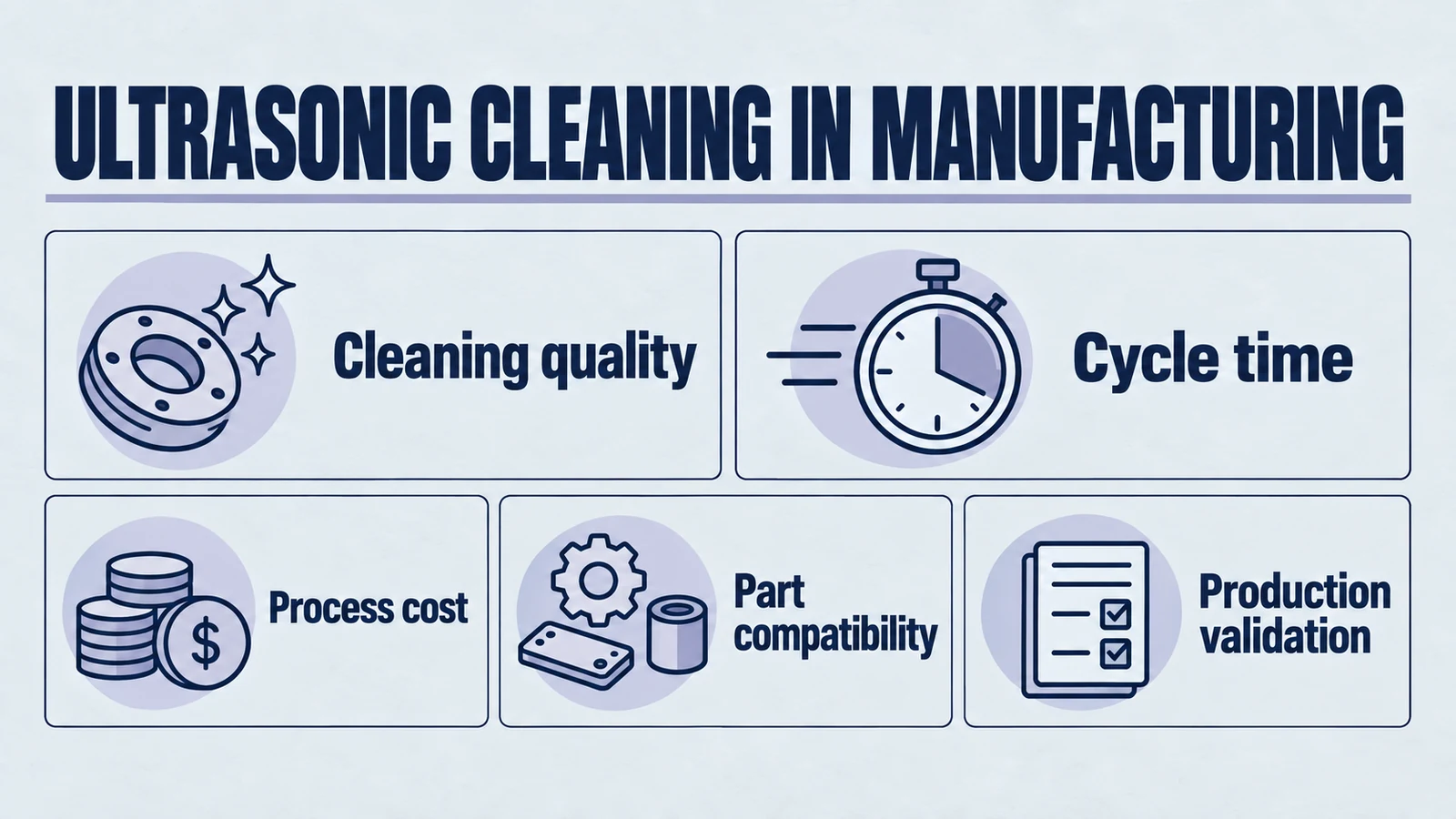
In the fast-paced and precision-driven world of modern manufacturing, cleanliness is more than just a standard—it is a competitive advantage. Ultrasonic cleaning technology has emerged as a powerful solution for achieving the highest levels of cleanliness while improving efficiency, reducing costs, and supporting sustainable manufacturing practices. This article explores the strategic advantages of ultrasonic cleaning technology and why it has become an essential tool in industries ranging from aerospace to medical device production.
1. Superior Cleaning Performance
Unlike traditional cleaning methods, ultrasonic cleaning harnesses high-frequency sound waves—typically between 20 kHz and 80 kHz—to create microscopic cavitation bubbles in a cleaning solution. These bubbles implode with tremendous force, dislodging contaminants from even the smallest crevices and intricate geometries.
Key benefits:
Product path for this search intent
Match the article topic to the right YJ Piezo product page
Use this article when the risk is supplier selection, engineering support, validation evidence, integration reliability, and whether the manufacturer can scale from sample to production. For "Strategic Advantages of Ultrasonic Cleaning Technology in Modern Manufacturing", the practical value is in turning the topic into a measurable selection or sourcing decision.
- Ultrasonic Transducer Supplier Hub
OEM sourcing and engineering collaboration
- PZT Material Supplier Hub
Material control and grade selection
- Piezoelectric Ceramics
Ceramic manufacturing and custom shapes
- Removes microscopic particles, oils, grease, and polishing compounds.
- Cleans complex parts such as threaded components, blind holes, and delicate assemblies.
- Achieves consistent results without manual scrubbing.
In industries like electronics manufacturing or surgical instrument production, where even trace contaminants can compromise performance or safety, ultrasonic cleaning ensures parts meet or exceed stringent cleanliness standards using our HJ-3528B transducers for stable acoustic fields.
2. Enhanced Efficiency and Throughput
Modern ultrasonic cleaning systems are designed for high-volume production environments. By cleaning multiple components simultaneously, manufacturers can significantly reduce process times.
Efficiency gains include:
- Shorter cycle times compared to manual or spray cleaning.
- Consistent cleaning quality across all parts.
- Ability to integrate into automated production lines.
For example, automotive manufacturers can process hundreds of precision-engineered parts in minutes, ensuring rapid turnaround without sacrificing quality using HJ-3828 or HJ-3840 for larger tanks.
3. Cost Savings Over Time
While the initial investment in ultrasonic cleaning equipment may be higher than basic manual cleaning setups, the long-term savings are substantial.
Cost-saving factors:
- Reduced labor costs due to minimal manual intervention.
- Lower consumption of cleaning solvents.
- Extended lifespan of parts and tools due to non-abrasive cleaning.
For many manufacturers, these savings not only offset the initial investment but also contribute to improved profitability.
4. Environmentally Friendly Operations
Sustainability is a growing priority for modern manufacturers, and ultrasonic cleaning aligns perfectly with eco-friendly goals.
Environmental benefits:
- Significantly reduced chemical usage compared to solvent-based cleaning.
- Lower water consumption.
- Minimal waste generation.
Many systems use biodegradable cleaning solutions, making it easier for companies to comply with environmental regulations and improve their sustainability metrics.
5. Versatility Across Industries
Ultrasonic cleaning technology is adaptable to a wide range of industries, each with its unique cleaning challenges.
Key applications:
- Aerospace: Cleaning turbine blades, fuel injectors, and hydraulic components.
- Medical devices: Cleaning compatible instruments before the required validated disinfection or sterilization process. Follow the device’s reprocessing instructions.
- Electronics: Removing flux, solder residues, and dust from circuit boards.
- Automotive: Degreasing engine parts and cleaning fuel injection components.
This versatility ensures that ultrasonic cleaning remains a go-to solution for precision manufacturing sectors, utilizing systems from HJ-5025 arrays for robust cavitation fields to compact HJ-3528B units for benchtop applications.
6. Precision Without Damage
Ultrasonic cleaning can damage incompatible coatings, structures or components despite avoiding a scrubbing brush. Qualify the chemistry, acoustic field, temperature, runtime and load against material/device instructions before claiming compatibility.
Why this matters:
- Maintains dimensional integrity of high-precision components.
- Protects sensitive surfaces and finishes.
- Reduces reject rates in quality control.
7. Improved Compliance and Quality Assurance
Many industries operate under strict cleanliness and safety regulations. Ultrasonic cleaning offers a reliable way to meet and exceed these standards.
Examples of compliance benefits:
- Meeting ISO, finished-device regulatory, and aerospace cleanliness standards.
- Achieving repeatable, documented cleaning results.
- Supporting traceability in quality assurance programs.
Conclusion: A Strategic Edge in Modern Manufacturing
Ultrasonic cleaning technology is no longer just a maintenance tool—it is a strategic asset. By delivering superior cleaning performance, improving efficiency, reducing operational costs, supporting sustainability, and protecting product integrity, ultrasonic cleaning positions manufacturers for success in an increasingly competitive market.
Companies that invest in advanced ultrasonic cleaning systems are not only ensuring product quality but also strengthening their market position. In a world where precision, speed, and reliability define success, ultrasonic cleaning technology offers a clear path forward.
Compare technologies in our transducer comparison guide and learn about quality impacts on cleaning outcomes.
Engineering decision notes
OEM integration and supplier qualification
Use this article when the risk is supplier selection, engineering support, validation evidence, integration reliability, and whether the manufacturer can scale from sample to production. For "Strategic Advantages of Ultrasonic Cleaning Technology in Modern Manufacturing", the practical value is in turning the topic into a measurable selection or sourcing decision.
YJ Piezo combines direct project coordination with ceramic manufacturing support, so procurement and engineering teams can evaluate material control, application review, sample validation, and production consistency together.
Selection checks
- Ask whether the supplier controls ceramic manufacturing or only assembles purchased elements.
- Review sample policy, inspection records, engineering response quality, and production lead-time stability.
- Compare suppliers and integration paths by validation evidence, not only by unit price and datasheet similarity.
Failure risks
- A low-price sample can pass early tests but fail when batch variation, thermal load, or assembly stress appears.
- A supplier without material control may not explain why impedance, capacitance, or resonance drift occurs.
- Weak RFQ information leads to quotes that are fast but not technically comparable.
RFQ details
- What application, operating environment, and failure cost should the supplier design around?
- Which sample tests and outgoing records are required before pilot production?
- What customization, MOQ, tooling, and delivery constraints must be known before quotation?
Relevant YJ Piezo pages
- Ultrasonic Transducer Supplier Hub
OEM sourcing and engineering collaboration
- PZT Material Supplier Hub
Material control and grade selection
- Piezoelectric Ceramics
Ceramic manufacturing and custom shapes
Application FAQ
- How should an OEM compare piezoelectric suppliers?
- Compare material control, engineering support, test evidence, customization ability, sample policy, and batch consistency. Unit price matters, but only after the technical risk is understood.
- What makes an RFQ technically useful?
- A useful RFQ includes application, dimensions, target frequency, electrical limits, duty cycle, operating medium, environment, expected quantity, required reports, and current failure or replacement context.