
Ultrasonic Flow Meter Transducers: How Non-Invasive Flow Measurement Works
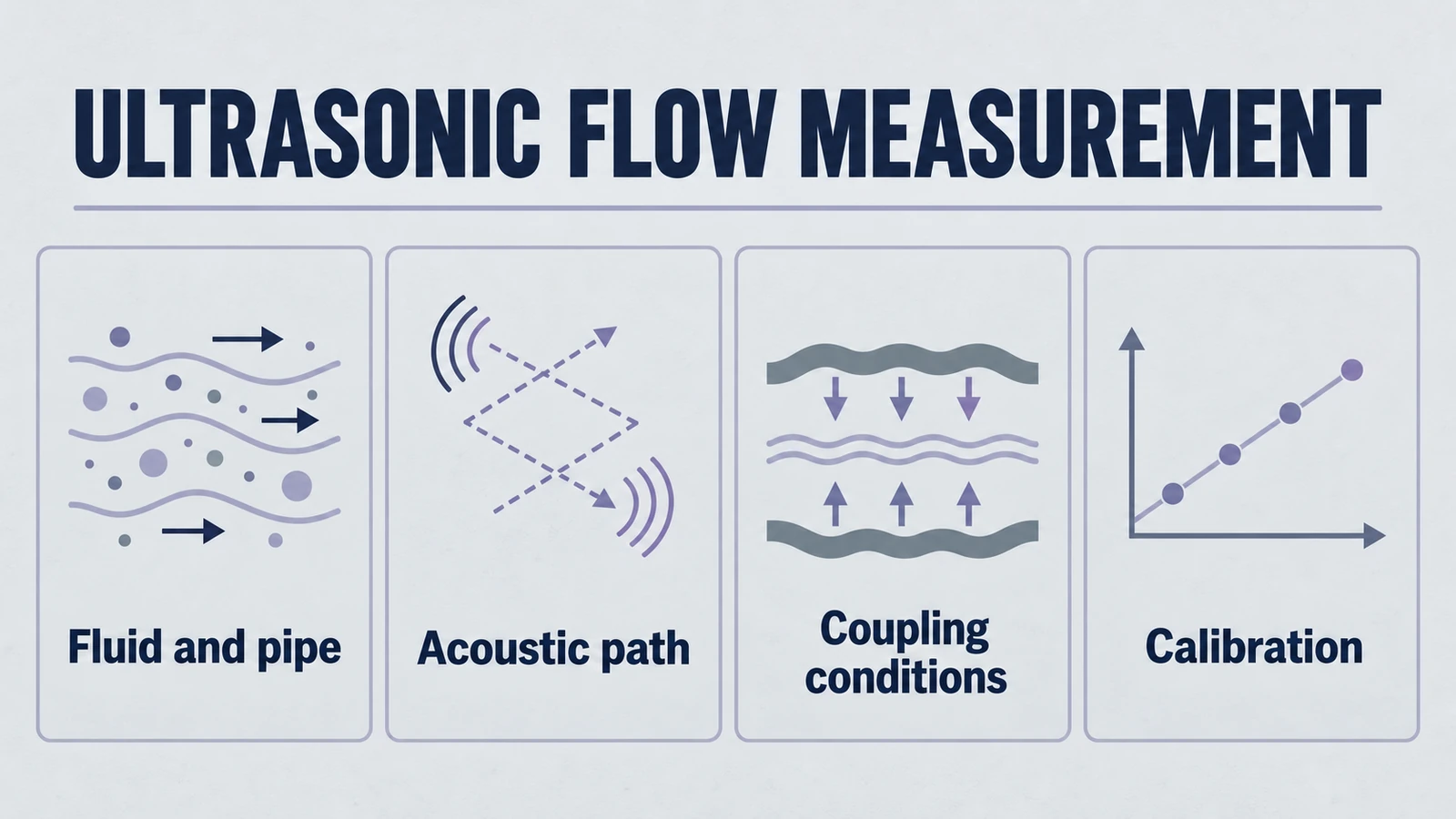
Ultrasonic flow meter transducers support non-invasive flow measurement across diverse industries. Unlike traditional mechanical meters, ultrasonic technology can measure fluid flow without interrupting the pipeline, reducing moving parts and supporting lower maintenance in suitable installations.
Understanding Ultrasonic Flow Meter Transducers
Ultrasonic flow measurement can use bidirectional transit-time differences or Doppler frequency shifts. These are distinct methods, selected for the fluid, path and measurement conditions. A complete meter combines transducers, electronics, geometry and calibration.
Our HJ-2825/1M Flow Measurement Transducer represents cutting-edge technology in this field, operating at 1.0 MHz frequency for precise industrial flow measurement applications.
Product path for this search intent
Match the article topic to the right YJ Piezo product page
Use this article when sensor performance depends on target distance, beam angle, housing material, liquid behavior, or false echo control. For "Ultrasonic Flow Meter Transducers: How Non-Invasive Flow Measurement Works", the practical value is in turning the topic into a measurable selection or sourcing decision.
- Ultrasonic Sensors
Distance, level, and detection sensor portfolio
- Flow Measurement Transducers
Bubble and flow-related ultrasonic sensing paths
- Air Acoustic Transducers
Air-coupled transducers for range and presence detection
Transit-Time vs. Doppler Ultrasonic Flow Measurement
Transit-Time Flow Measurement: Ideal for clean fluids, this method measures the difference in travel time between pulses sent in the flow direction and those sent against it. The fluid velocity is derived from this time differential, making it highly accurate for clean liquids such as water, oil, and chemicals.
Doppler Flow Measurement: Effective for liquids containing suspended solids or gases, Doppler measurement calculates flow rate based on frequency shifts of reflected ultrasonic waves. These shifts occur due to particles or bubbles within the fluid, making Doppler flow meters perfect for wastewater and slurry applications.
For specialized gas flow applications, our HJGF-200KH Gas Flow Transducer provides reliable 200 kHz frequency monitoring for industrial gas systems.
Components and Installation of Ultrasonic Flow Sensors
For a reciprocal transit-time path, the relevant transducer pair normally exchanges transmitting and receiving roles to measure upstream and downstream travel. Doppler and other arrangements use their own architecture. Follow the selected meter’s installation and calibration requirements.
- Clamp-on Transducers: Mounted externally on pipes, these transducers require no pipe modification, ensuring a non-intrusive and cost-effective setup.
- Inline Transducers: Integrated directly into the pipe system, providing enhanced measurement accuracy due to direct fluid contact.
The HJ-2112/1M Flow Measurement Transducer offers exceptional precision with its narrow 6° beam angle, making it ideal for focused measurement applications.
Choosing between clamp-on and inline installations depends on application-specific factors, such as accuracy requirements, fluid type, and installation environment.
Advantages of Ultrasonic Flow Sensors
Non-Invasive Measurement
Ultrasonic sensors eliminate direct contact with the fluid, significantly reducing wear and tear. This feature ensures prolonged lifespan, minimal maintenance, and reduced downtime.
High Accuracy and Reliability
Modern ultrasonic flow sensors offer excellent accuracy, typically within ±1% of measured value. This precision makes them suitable for critical applications like chemical processing, water management, and petroleum refining.
Wide Application Range
From clean water distribution networks to industrial waste monitoring, ultrasonic sensors handle a wide spectrum of applications, demonstrating versatility in diverse operational environments.
Applications Across Industries
Water Management and Distribution
Ultrasonic sensors are extensively utilized in municipal water systems to monitor distribution efficiency, detect leaks, and manage consumption effectively. For bubble detection in water systems, consider our specialized Ultrasonic Bubble Detection Sensor.
Oil and Gas Industry
In petroleum processing, ultrasonic flow meters accurately measure flow rates in pipelines, ensuring efficient and appropriate transport of oil and gas products.
Chemical Processing
Chemical industries benefit from the corrosion-resistant and contamination-free measurement capabilities of ultrasonic sensors, maintaining process integrity and compliance with safety standards.
HVAC Systems
Ultrasonic flow sensors play a crucial role in HVAC systems by optimizing energy consumption through precise control of heating and cooling fluids.
Marine and Underwater Applications
For specialized underwater flow measurement, our Deep Water Transducer CS-220KH and Submersible Transducer HJ-200KH-P provide reliable performance in marine environments.
Best Practices for Maximizing Sensor Performance
Proper Installation and Alignment
Ensuring correct alignment and proper coupling of transducers is critical. Misalignment or poor contact may significantly degrade measurement accuracy.
Regular Calibration and Maintenance
Periodic calibration helps maintain sensor accuracy over extended periods, mitigating potential inaccuracies caused by environmental changes or sensor aging.
Selection Based on Fluid Properties
Understanding fluid characteristics, such as viscosity, presence of solids or bubbles, and temperature extremes, is essential for selecting the appropriate ultrasonic flow measurement method and transducer configuration.
For comprehensive information about piezoelectric ceramics used in ultrasonic transducers, explore our detailed guide on What are Piezoelectric Ceramics.
Technical Specifications Comparison
| Model | Frequency | Beam Angle | Application |
|---|---|---|---|
| HJ-2112/1M | 1.0 MHz | 6° | Precision Flow Measurement |
| HJ-2825/1M | 1.0 MHz | 8° | Industrial Flow Monitoring |
| HJGF-200KH | 200 kHz | 12° | Gas Flow Detection |
Conclusion
Ultrasonic flow meter transducers represent a useful option in flow measurement technologies, offering non-invasive installation and lower mechanical wear in suitable applications. By understanding and applying these transducers correctly, industries can support operational efficiency, compliance workflows, and maintenance planning.
Whether you need precision flow measurement solutions for industrial applications or specialized transducers for unique environments, choosing the right ultrasonic flow sensor technology is crucial for optimal performance and long-term reliability.
Explore our complete range of ultrasonic transducers or contact our technical team for personalized recommendations based on your specific application requirements.
Engineering decision notes
Ultrasonic sensing and detection
Use this article when sensor performance depends on target distance, beam angle, housing material, liquid behavior, or false echo control. For "Ultrasonic Flow Meter Transducers: How Non-Invasive Flow Measurement Works", the practical value is in turning the topic into a measurable selection or sourcing decision.
YJ Piezo treats ultrasonic sensing as an acoustic interface problem: transducer frequency, beam shape, housing, drive electronics, and target environment are reviewed together.
Selection checks
- Define target range, dead zone, beam angle, and mounting geometry before choosing the sensor family.
- Check the medium, target surface, temperature swing, foam, vapor, and side-wall risk.
- Separate detection repeatability from ideal lab accuracy when the sensor will operate in a tank, tube, or moving line.
Failure risks
- A sensor can pass bench distance tests and still fail in tanks with foam, agitation, vapor, or narrow geometry.
- Changing only frequency without reviewing beam angle and mounting can increase false echoes.
- Ignoring housing material or sealing requirements can shorten lifetime in washdown or chemical environments.
RFQ details
- What is the minimum and maximum detection distance?
- Is the target liquid, solid, sheet material, air flow, or a moving object?
- What temperature, humidity, IP rating, and output signal does the system require?
Relevant YJ Piezo pages
- Ultrasonic Sensors
Distance, level, and detection sensor portfolio
- Flow Measurement Transducers
Bubble and flow-related ultrasonic sensing paths
- Air Acoustic Transducers
Air-coupled transducers for range and presence detection
Application FAQ
- What makes an ultrasonic sensor page useful for procurement?
- It should connect range, beam angle, output signal, housing, mounting, and environmental limits to a concrete use case. A model name alone is not enough for reliable supplier comparison.
- Which information speeds up an ultrasonic sensor RFQ?
- Send the target material, distance range, installation geometry, output interface, temperature range, IP rating, and whether the application involves foam, vapor, liquid, or moving objects.