
Why PVDF Often Outperforms PVC in Corrosive Chemical Tank Monitoring
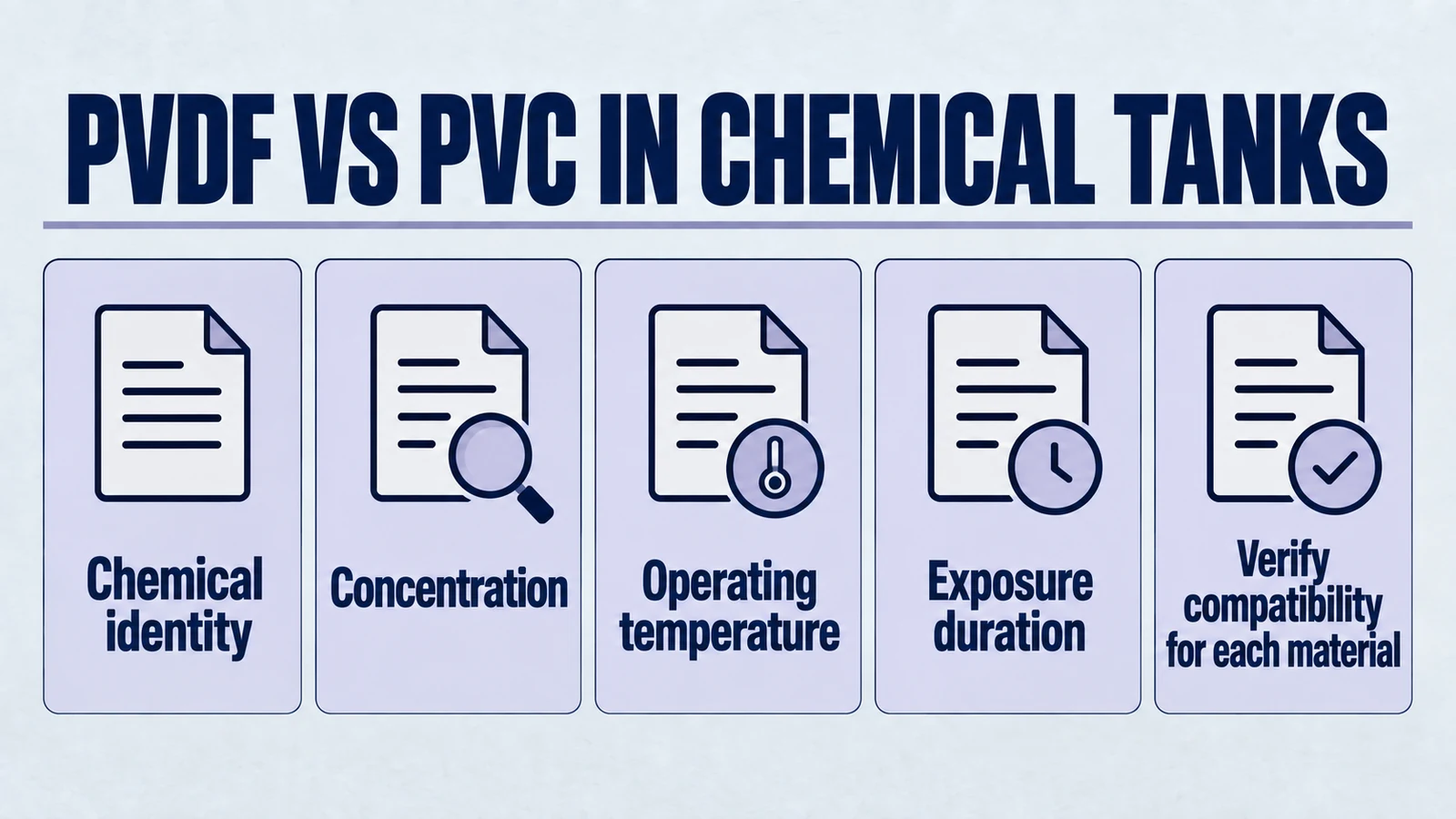
1. Introduction: The Intersection of Material Science and Industrial Reliability
In the precision-demanding world of industrial instrumentation, the selection of material for acid tank level monitoring is not merely a matter of hardware compatibility—it is a foundational decision that dictates operational safety, measurement accuracy, and long-term asset integrity. As modern process industries, from semiconductor manufacturing to heavy chemical synthesis, strive for zero-downtime operations and integration into the Industrial Internet of Things (IIoT), the limitations of legacy infrastructure have become increasingly glaring. Among the most critical yet frequently overlooked components in this infrastructure is the humble level sensor, specifically the acoustic window material that stands between sensitive piezoelectric electronics and the harshest chemical environments on Earth.
For decades, Polyvinyl Chloride (PVC) has served as the workhorse of the chemical industry. Its low cost, ease of fabrication, and moderate chemical resistance made it the default choice for piping, valves, and sensor housings in water treatment and mild chemical applications. However, the industrial landscape has shifted. The chemicals used today—highly concentrated sulfuric acid (H₂SO₄), fuming hydrochloric acid (HCl), and aggressive oxidizing blends—far exceed the reliable performance envelope of amorphous thermoplastics like PVC. The failure of a level sensor in these environments is not a trivial maintenance event; it represents a blind spot in process control that can lead to severe overfills, pump cavitation, environmental non-compliance, and significant financial losses due to unplanned downtime.
This guide explains why Polyvinylidene Fluoride (PVDF) is often selected for PVDF ultrasonic sensors in corrosive environments. It covers organic chemistry, polymer physics, and acoustic engineering to explain the molecular structure behind PVDF's chemical resistance. It also contrasts PVDF with PVC degradation mechanisms in oxidizing acids and volatile vapors, then reviews how piezoelectric and impedance properties affect signal clarity and vapor penetration.
Product path for this search intent
Match the article topic to the right YJ Piezo product page
Use this article when sensor performance depends on target distance, beam angle, housing material, liquid behavior, or false echo control. For "Why PVDF Often Outperforms PVC in Corrosive Chemical Tank Monitoring", the practical value is in turning the topic into a measurable selection or sourcing decision.
- Ultrasonic Sensors
Distance, level, and detection sensor portfolio
- Flow Measurement Transducers
Bubble and flow-related ultrasonic sensing paths
- Air Acoustic Transducers
Air-coupled transducers for range and presence detection
Finally, we will contextualize these scientific advantages within the specific technical capabilities of the Ultranova1 Ultrasonic Sensor, illustrating how Yujie Piezo’s strategic utilization of high-performance fluoropolymers delivers a decisive Return on Investment (ROI) through reduced maintenance, enhanced safety, and superior chemical compatibility ultrasonic performance. This is not merely a product comparison; it is a roadmap for upgrading industrial sensory infrastructure to meet the demands of the modern chemical age.
2. The Hostile Environment: Thermodynamics and Chemistry of Acid Storage
To understand the necessity of high-performance materials like PVDF, one must first appreciate the adversary: the chemical storage tank environment. Monitoring the level of concentrated acids is among the most challenging tasks in process automation due to the synergistic effects of chemical aggression, thermal fluctuation, and vapor density dynamics. The conditions within a bulk storage tank are not static; they are a dynamic equilibrium of liquid phase, vapor phase, and thermal energy that aggressively attacks any material attempting to measure it.
2.1 The Oxidizing Fury of Sulfuric Acid (H₂SO₄)
Sulfuric acid is the "king of chemicals," a substance so vital to industrial economy that its production volume is often used as a barometer for a nation's industrial strength. However, its utility comes with extreme reactivity.
- Chemical Compatibility: The PVC repeat unit contains carbon, hydrogen and chlorine, not oxygen; extracting water from its backbone is not a valid explanation of its degradation. Assess the exact resin, acid concentration, temperature, stress and exposure using identified material data and complete-assembly tests. Strong acid does not establish one universal failure mechanism for every PVC formulation.
- Exothermic Dilution: The storage of sulfuric acid also presents thermal challenges. Sulfuric acid is highly hygroscopic; it absorbs moisture from the atmosphere. When water (even atmospheric humidity) mixes with concentrated sulfuric acid, the reaction is violently exothermic. A level sensor mounted at the top of a tank is often exposed to these localized temperature spikes during filling operations or humid weather. If the material's heat deflection temperature is exceeded, the sensor face can warp, altering the acoustic beam angle and causing measurement drift. PVC, with a relatively low softening point, is particularly vulnerable to these thermal excursions.
2.2 The Volatile Threat of Hydrochloric Acid (HCl)
While sulfuric acid attacks through direct contact and dehydration, Hydrochloric Acid (HCl) poses a different, more insidious threat: extreme volatility.
- Vapor Phase Aggression: Hydrochloric acid is technically a solution of hydrogen chloride gas in water. It fumes profusely at ambient temperatures, creating a dense, corrosive vapor cloud (HCl gas) in the tank's headspace. These vapors are not merely acidic; they are composed of small, highly mobile molecules that can permeate into micropores of materials that would otherwise be resistant to the liquid acid.
- The Permeation Mechanism: For a sensor housing, the danger is not just surface corrosion but permeation. HCl molecules can diffuse through the amorphous regions of a polymer matrix. Once they penetrate the outer shell of a sensor, they can condense on the internal electronics, corroding copper traces, silver solder joints, and piezoelectric elements. This leads to "phantom" failures where the sensor looks externally intact but functions erratically or dies completely. Materials with low crystallinity, like standard PVC, are essentially sieves for HCl vapor over long exposure periods.
- Acoustic Attenuation: Beyond chemical attack, the HCl vapor cloud presents an acoustic challenge. The speed of sound in HCl vapor differs from that in air. As the concentration of vapor changes with temperature and tank level, the transit time of the ultrasonic pulse shifts, leading to measurement errors. Furthermore, these heavy vapors absorb ultrasonic energy—a phenomenon known as attenuation—weakening the signal before it even reaches the liquid surface. Overcoming this requires a sensor with high acoustic efficiency and a frequency optimized for vapor penetration, a factor heavily influenced by the transducer material itself.
3. Material Science Deep Dive: The Molecular Architecture of PVC vs. PVDF
The distinction between Polyvinyl Chloride (PVC) and Polyvinylidene Fluoride (PVDF) is not a matter of brand preference; it is a fundamental difference in atomic engineering. The behavior of these plastics in acid is pre-determined by their bond energies, crystal structures, and polymerization methods. Understanding material properties is essential for selecting the right sensor components, whether for flow measurement or industrial cleaning applications.
3.1 Polyvinyl Chloride (PVC): The Vulnerable Giant
PVC is the product of the polymerization of vinyl chloride monomer (VCM). Its widespread use stems from its versatility; it can be made rigid (uPVC) for pipes or flexible for tubing by adding plasticizers. However, this versatility is its Achilles' heel in aggressive chemical monitoring.
3.1.1 The Weakness of the C-Cl Bond
The polymer backbone of PVC consists of carbon atoms with alternating hydrogen and chlorine atoms. The Carbon-Chlorine (C-Cl) bond is polar and relatively bulky.
- Bond Energy: The dissociation energy of the C-Cl bond is approximately 330 kJ/mol. While stable under normal conditions, this energy barrier is low enough to be overcome by the chemical potential of strong oxidizers or thermal stress.
- Dehydrochlorination: The primary degradation mechanism of PVC is "dehydrochlorination." When exposed to heat, UV light, or acidic catalysts (like H⁺ ions from sulfuric acid), the polymer expels a molecule of hydrogen chloride (HCl). This creates a double bond (C=C) in the carbon chain.
- The Domino Effect: The formation of one double bond weakens the adjacent bonds, causing a "zipper" reaction where adjacent HCl molecules are expelled, creating long sequences of conjugated double bonds (polyenes).
- Visual and Physical Failure: These polyenes absorb light, causing the yellowing and blackening seen on degraded sensors. Physically, this cross-linking and chain scission dramatically reduce the mechanical flexibility of the material, leading to embrittlement and micro-cracking.
3.1.2 The Plasticizer Problem
Standard PVC is often compounded with plasticizers (like phthalates) and thermal stabilizers (often metal salts like lead, tin, or calcium/zinc) to make it processable. In an Acid tank level monitoring scenario:
- Leaching: Acids and solvents can extract these plasticizers. As the plasticizer leaves the matrix, the free volume decreases, causing the material to shrink and crack.
- Stabilizer Consumption: The acid reacts with the metal stabilizers (e.g., converting Calcium Carbonate fillers into Calcium Chloride), effectively eating the "immune system" of the plastic. Once the stabilizers are consumed, rapid degradation ensues.
3.2 Polyvinylidene Fluoride (PVDF): The Fluorinated Shield
PVDF is a semi-crystalline fluoropolymer produced by the polymerization of vinylidene fluoride (VDF). It sits in the same high-performance family as PTFE (Teflon), but with superior mechanical strength and creep resistance.
3.2.1 The Thermodynamics of the C-F Bond
The defining feature of PVDF is the Carbon-Fluorine (C-F) bond.
- Bond Energy: The C-F bond is the strongest single bond in organic chemistry, with a dissociation energy of approximately 485 kJ/mol. This is nearly 45% stronger than the C-Cl bond in PVC. Breaking this bond requires energy levels simply not present in standard chemical storage environments.
- Electronegativity and Shielding: Fluorine is the most electronegative element in the periodic table (3.98 Pauling scale). It holds its electrons extremely tightly. In the PVDF structure, the fluorine atoms form a dense, electron-rich cloud around the carbon backbone. This is known as "steric shielding." Because the fluorine atoms are small and tightly packed, they physically block reactant molecules (like acid protons or oxygen radicals) from reaching the carbon skeleton.
- Result: PVDF is chemically inert. Chemical compatibility depends on PVDF grade, concentration, temperature, time, stress and the complete assembly. Use an applicable resistance chart and component tests; no universal immunity to every listed exposure is established.
3.2.2 Crystallinity and Permeation Resistance
Unlike PVC, which typically has low crystallinity (mostly amorphous), PVDF is highly semi-crystalline (typically 50-60%).
- The Crystal Barrier: Crystalline regions in a polymer are areas where chains are folded into tightly packed, ordered lamellae. These regions are essentially impermeable to gases.
- Impact on HCl Monitoring: In an environment saturated with HCl vapor, the amorphous regions of PVC allow gas diffusion. In PVDF, the high crystallinity forces gas molecules to take a tortuous path, altering permeation rates. Permeation, seals and service life still require grade-, temperature- and exposure-specific data; crystallinity alone does not establish gas-tightness or a years-versus-months lifetime.
3.2.3 Hydrophobicity and Surface Energy
Ultrasonic sensors rely on a clean face to transmit and receive sound.
- PVC: Has higher surface energy and can be wetted by many liquids, especially if surface degradation has begun. Acid droplets may spread out, forming a film that attenuates the signal.
- PVDF: Is naturally hydrophobic (low surface energy). Condensation and acid splashes bead up and roll off. This "self-cleaning" effect is crucial in fuming acid tanks where condensation is inevitable. A dry sensor face means a clear signal path.
3.3 Comparative Chemical Resistance Matrix
| Chemical Environment | Concentration | Temp (°C) | PVC Performance | PVDF Performance | Failure Mechanism (PVC) |
|---|---|---|---|---|---|
| Sulfuric Acid (H₂SO₄) | 10-50% | 20 | Excellent (A) | Excellent (A) | N/A |
| Sulfuric Acid (H₂SO₄) | 93-98% | 20 | Poor (C) | Excellent (A) | Dehydration/Carbonization (Charring) |
| Sulfuric Acid (H₂SO₄) | 93-98% | 60 | Fail (D) | Good (A/B) | Rapid oxidative degradation & softening |
| Hydrochloric Acid (HCl) | 37% (Conc.) | 20 | Good (A) | Excellent (A) | N/A |
| Hydrochloric Acid (HCl) | 37% (Conc.) | 60 | Caution (B) | Excellent (A) | Vapor permeation & swelling |
4. Acoustic Physics: The Hidden Advantage of PVDF Transducers
While chemical resistance is the defensive attribute of the sensor, acoustic performance is the offensive attribute. The ability to generate, transmit, and receive ultrasonic pulses determines the sensor's accuracy and reliability. Here, PVDF holds a surprising advantage over the traditional PZT (Lead Zirconate Titanate) ceramics often housed in PVC shells: Impedance Matching. For more on how geometry affects sensor performance, see our piezoelectric ceramics geometry guide.
4.1 The Physics of Acoustic Impedance (Z)
Ultrasonic sensing is analogous to optical sensing, but with sound waves. When a sound wave encounters a boundary between two materials (e.g., the sensor face and the air in the tank), a portion of the energy is transmitted, and a portion is reflected. The efficiency of this transmission is governed by the Acoustic Impedance (Z) of the materials.
The Mismatch Problem: To measure the level in a tank, the sensor must transmit sound into the air (or vapor space).
- Impedance of Air (Z_air): ~400 Rayl (extremely low).
- Impedance of PZT Ceramic (Z_pzt): ~30,000,000 Rayl (extremely high).
When a PZT ceramic tries to push sound into air, the impedance mismatch is massive. It is like trying to throw a ping-pong ball by hitting it with a sledgehammer; most of the energy stays in the sledgehammer. The Transmission Coefficient (T) is very low. To compensate, ceramic sensors require high driving voltages and complex "matching layers" (often epoxy or composites) to bridge the gap. These matching layers are potential weak points for delamination in acid environments.
4.2 The PVDF Solution: A Better Acoustic Match
Appropriately processed and poled PVDF film can be an active piezoelectric material. A sensor’s PVDF housing or protective face, however, does not establish that it uses an active PVDF-film transducer. Confirm the active element, poling, electrodes and acoustic construction for the exact model.
- Impedance of PVDF (Z_pvdf): ~2,500,000 Rayl.
The Advantage: PVDF's impedance is nearly an order of magnitude lower than PZT ceramic. It is much closer to the impedance of water and air.
- Efficient Coupling: A much higher percentage of the acoustic energy is naturally transmitted from the PVDF element into the air/vapor space. This requires less brute-force power and results in a cleaner signal.
- Construction: Housing material alone does not establish a monolithic active element, absence of adhesive, loaded Q, ring-down or immunity to chemical failure. Request the exact construction and validated chemical/thermal exposure limits of the complete sensor.
4.3 Damping, Resolution, and the "Blind Zone"
In Acid tank level monitoring, especially in smaller dosing tanks (Day Tanks), the Blind Zone (or Dead Zone) is a critical specification. This is the distance in front of the sensor where it cannot measure.
- Ceramic (PZT) Behavior: Ceramics are stiff and have a high "Q-factor" (Quality factor). They ring for a long time. To dampen them, manufacturers add heavy backing materials. Even then, standard ultrasonic sensors often have blind zones of 25-30cm.
- PVDF Behavior: Polymers naturally have high internal mechanical damping (low Q-factor). A PVDF transducer stops vibrating almost instantly after the drive signal is cut.
- Result: This allows for extremely short blind zones. The Ultranova1, leveraging PVDF technology, boasts a blind zone of < 10cm.
- Operational Benefit: In a 1-meter tall acid dosing tank, a 30cm blind zone (common in legacy sensors) wastes 30% of the tank's usable capacity. Operators cannot fill the tank past the blind zone without losing the signal. The PVDF sensor allows for significantly higher fill levels, optimizing chemical logistics.
4.4 Frequency Selection and Vapor Penetration
The acoustic frequency of the sensor is another critical variable. The Ultranova1 operates at 200 kHz. Why is this specific frequency chosen for chemical monitoring?
- Vapor Penetration: Acid vapors (like HCl) have different viscosity and thermal properties than air, causing higher attenuation of sound waves. 200 kHz offers enough energy density to punch through the vapor layer of standard storage tanks (2-5m range) without being absorbed as quickly as MHz signals.
- Turbulence Rejection: Chemical tanks are often agitated or filled rapidly, creating a turbulent liquid surface. A 200 kHz wavelength is short enough (~1.7mm) to reflect effectively off the small ripples and facets of a turbulent surface, whereas longer wavelengths might scatter unpredictably.
- Beam Angle: Higher frequencies allow for tighter beam angles from smaller sensors. The Ultranova1 has a beam angle of roughly 8-10°. This narrow beam is crucial in tanks with internal obstructions like ladders, mixers, or heating coils, ensuring the sensor measures the liquid level, not the tank infrastructure.
5. Economic Analysis: The High Cost of "Low Cost" Sensors
When procuring instrumentation, the focus is often on the initial purchase price. PVC sensors are undeniably cheaper than PVDF sensors upfront. However, a Total Cost of Ownership (TCO) analysis reveals that in corrosive applications, the "cheap" sensor is the most expensive option.
5.1 The Cost of Downtime
In the chemical and process industries, downtime can be a major part of the real sensor cost.
- Chemical Manufacturing: Unplanned downtime cost depends on line value, product inventory, cleanup requirements, and restart complexity.
- Scenario: A PVC sensor on a hydrochloric acid tank fails due to vapor permeation. The automated filling system faults out. The line stops.
- Estimated Cost: The cost should be calculated from the site's own downtime and recovery data.
- Sensor Cost Difference: The purchase-price difference is often only one part of the decision.
The comparison is still important: PVDF can be justified when chemical compatibility reduces maintenance events and unplanned replacement risk.
5.2 Environmental and Safety Liability
Acid tanks are regulated assets. An overflow caused by a sensor failure (e.g., a "frozen" reading from a corroded sensor telling the pump the tank is empty when it is full) can lead to:
- Regulatory exposure: Chemical releases can trigger reporting, cleanup, and enforcement costs depending on the jurisdiction and site permit conditions.
- Cleanup Costs: Neutralizing and cleaning a sulfuric acid spill is labor-intensive and hazardous.
- Personnel exposure: Every maintenance interaction with an acid tank creates exposure that must be managed. A longer-life sensor material can reduce maintenance frequency when it is compatible with the chemical, temperature, and installation geometry.
6. The Solution: Yujie Piezo Ultranova1 Ultrasonic Sensor
The theoretical advantages of PVDF are realized in the Ultranova1 Ultrasonic Sensor. This product is not a generic sensor retrofitted for chemicals; it is engineered from the ground up for the specific challenges of the corrosive environment.
6.1 Integrated Material Design
The Ultranova1 utilizes a PVDF housing and acoustic face. This is a critical distinction. Some manufacturers use a PVC sensor and coat it with a thin layer of PTFE spray. These coatings are prone to scratching and pinhole defects. The Ultranova1 uses solid PVDF.
Benefit: Even if the sensor is scratched during installation, the material underneath is still acid-resistant. It is protection through-and-through.
6.2 Optimized Acoustic Specifications
- Frequency: 200 kHz. As discussed, this strikes the perfect balance for vapor penetration and high resolution in tanks up to 5m deep.
- Drive Voltage: Confirm the exact sensor variant’s rated supply and interface. Low supply voltage plus an unspecified barrier does not establish intrinsic-safety compatibility. Hazardous-area use requires matching complete equipment/circuit documentation and installation assessment.
- Capacitance: Optimized for matching with standard industrial transmitter circuits, ensuring easy integration into existing PLC/SCADA systems.
6.3 Environmental Hardening
The sensor is sealed to prevent vapor ingress. The PVDF construction allows the sensor to maintain its beam geometry and performance across the full industrial temperature range (up to typical tank limits of 80°C, with the material capable of much higher).
7. Comparative Analysis: Ultrasonic vs. Radar in Acid Tanks
A common question in the industry is: "Why not just use Radar?" Radar (Guided Wave or Non-Contact) is an excellent technology, but for many acid applications, PVDF Ultrasonic remains the superior choice for specific reasons.
7.1 The Dielectric Constant Issue
Radar works by reflecting microwaves off the surface of the liquid. The strength of the reflection depends on the Dielectric Constant (ε) of the liquid.
- Conductive Acids: Strong acids like H₂SO₄ have high dielectric constants and reflect radar well.
- Hydrocarbons/Solvents: Many chemicals stored in tank farms have low dielectric constants (ε < 2). Radar signals pass right through them, reflecting off the bottom of the tank instead.
- Ultrasonic Advantage: Ultrasonic sensors work on density differences. They reflect off any liquid surface, regardless of dielectric electrical properties. This makes the Ultranova1 a universal solution for a plant that might switch a tank from acid to solvent.
7.2 The Near-Field Problem (Cost & Complexity)
- Radar Blind Zones: Radar sensors also have near-field blocking distances.
- Cost: A corrosion-resistant Radar sensor (made of Hastelloy or PFA-lined) typically costs 5x to 10x more than a PVDF ultrasonic sensor.
- Application Fit: For huge storage silos (20m+ tall), Radar is king. But for the vast majority of day tanks, dosing skids, and intermediate bulk containers (IBCs) which are under 5m, Radar is overkill and cost-prohibitive. The Ultranova1 fits this "sweet spot" of the market—delivering high performance at a fraction of the cost of Radar.
8. Conclusion: A Practical Upgrade Path
The shift from PVC to PVDF in chemical compatibility ultrasonic sensing is not a trend; it is a correction of a long-standing industrial engineering oversight. The aggressive nature of sulfuric and hydrochloric acids, combined with the zero-tolerance for downtime in modern manufacturing, renders PVC obsolete for wetted instrumentation.
PVDF offers a scientifically proven trifecta of benefits:
- Thermodynamic Stability: The C-F Carbon-Fluorine bond renders it impervious to acid attack, preventing the charring and cracking that kills PVC.
- Acoustic Superiority: Its impedance match with air (Z) and high damping characteristics allow for clearer signals, better vapor penetration, and significantly more usable tank capacity through reduced blind zones.
- Vapor Barrier: Crystallinity can affect permeability, but qualify the resin, seals, temperature, exposure and measured permeation; it does not guarantee complete exclusion of HCl gas.
For the yujiepiezo.com customer, the Ultranova1 Ultrasonic Sensor turns the material science of fluoropolymers into a practical operational advantage. By choosing PVDF where the chemical, temperature, and installation conditions support it, buyers can reduce wetted-part risk and improve the maintainability of chemical handling processes.
Why does PVDF outperform PVC? Because in the microscopic war against corrosion, the Ultranova1 is armored with the strongest bond in organic chemistry.
| Parameter | PVC (Polyvinyl Chloride) | PVDF (Polyvinylidene Fluoride) | Impact on Acid Monitoring |
|---|---|---|---|
| Bond Energy | ~330 kJ/mol (C-Cl) | ~485 kJ/mol (C-F) | PVDF resists bond breaking/charring in strong acids. |
| Crystallinity | Low (Amorphous) | High (50-60%) | PVDF blocks vapor permeation (crucial for HCl). |
| Max Temp | ~60°C | ~140°C | PVDF survives exothermic acid dilution events. |
| Degradation Mode | Dehydrochlorination (Blackening) | None (Inert) | PVC sensors fail/crack; PVDF sensors last years. |
Engineering decision notes
Ultrasonic sensing and detection
Use this article when sensor performance depends on target distance, beam angle, housing material, liquid behavior, or false echo control. For "Why PVDF Often Outperforms PVC in Corrosive Chemical Tank Monitoring", the practical value is in turning the topic into a measurable selection or sourcing decision.
YJ Piezo treats ultrasonic sensing as an acoustic interface problem: transducer frequency, beam shape, housing, drive electronics, and target environment are reviewed together.
Selection checks
- Define target range, dead zone, beam angle, and mounting geometry before choosing the sensor family.
- Check the medium, target surface, temperature swing, foam, vapor, and side-wall risk.
- Separate detection repeatability from ideal lab accuracy when the sensor will operate in a tank, tube, or moving line.
Failure risks
- A sensor can pass bench distance tests and still fail in tanks with foam, agitation, vapor, or narrow geometry.
- Changing only frequency without reviewing beam angle and mounting can increase false echoes.
- Ignoring housing material or sealing requirements can shorten lifetime in washdown or chemical environments.
RFQ details
- What is the minimum and maximum detection distance?
- Is the target liquid, solid, sheet material, air flow, or a moving object?
- What temperature, humidity, IP rating, and output signal does the system require?
Relevant YJ Piezo pages
- Ultrasonic Sensors
Distance, level, and detection sensor portfolio
- Flow Measurement Transducers
Bubble and flow-related ultrasonic sensing paths
- Air Acoustic Transducers
Air-coupled transducers for range and presence detection
Application FAQ
- What makes an ultrasonic sensor page useful for procurement?
- It should connect range, beam angle, output signal, housing, mounting, and environmental limits to a concrete use case. A model name alone is not enough for reliable supplier comparison.
- Which information speeds up an ultrasonic sensor RFQ?
- Send the target material, distance range, installation geometry, output interface, temperature range, IP rating, and whether the application involves foam, vapor, liquid, or moving objects.