Yujie HJ-4012/3M 3MHz Ultrasonic Beauty Transducer
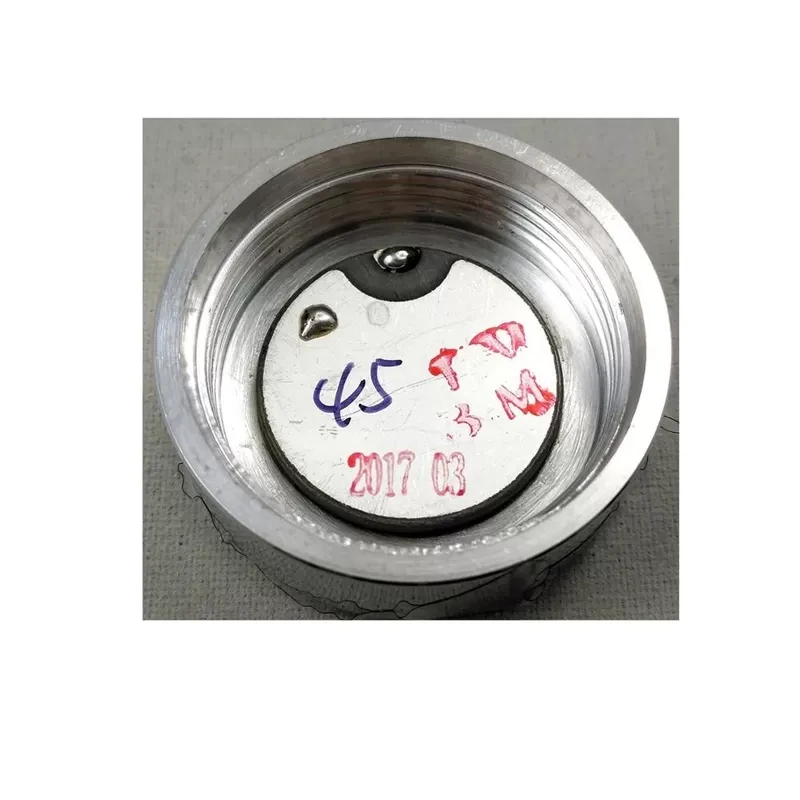
The Yujie HJ-4012/3M is a 3.0 MHz ultrasonic transducer engineered for medical cosmetic equipment that needs a balanced facial-treatment profile. With 7000 pF capacitance and low resistance, it fits OEM programs aimed at facial rejuvenation, wrinkle reduction, and mainstream clinic-grade aesthetic devices.
Features & Applications
Technical Specifications
Each product is organized for procurement review: core performance, fit and mounting, operating limits, integration notes, and RFQ-ready supply terms.
Application Fit
- •Facial rejuvenation and anti-aging treatment devices
- •Medical aesthetic clinics and professional cosmetic platforms
- •Precision skincare equipment and wrinkle-reduction heads
- •Beauty spa systems and premium personal-care tools
Features
- ✔3 MHz program for balanced penetration and mainstream facial treatment profiles
- ✔7000 pF capacitance for stronger ultrasonic output than the 1 MHz variant
- ✔Low resistance for efficient energy conversion and clinic-grade performance
- ✔Suited to facial rejuvenation, wrinkle reduction, and targeted skincare systems
- ✔Good balance point for aesthetic clinics and premium home-use platforms
Applications
- •Facial rejuvenation and anti-aging treatment devices
- •Medical aesthetic clinics and professional cosmetic platforms
- •Precision skincare equipment and wrinkle-reduction heads
- •Beauty spa systems and premium personal-care tools
Need Engineering Support for HJ-4012/3M?
Send target treatment depth, applicator size, duty cycle, housing constraints, and annual demand to receive a matched recommendation.
Engineering Links
Browse the wider product family and compare adjacent models.
Read the matching guide or engineering article for this product family.
Request Specifications & Pricing for HJ-4012/3M
Get detailed datasheets, OEM pricing, and lead time for the HJ-4012/3M. Standard evaluation MOQ typically starts from 10 pcs for validated catalog builds. Available documents typically include outgoing frequency / impedance test data, batch inspection records, and integration guidance for OEM driver matching.
How to Choose 1 MHz vs 3 MHz vs 5 MHz
HJ-4012/3M sits in the middle of the family. Use it when the device needs a balanced facial treatment profile rather than the deeper reach of 1 MHz or the shallow high-frequency window of 5 MHz.
- HJ-4012/1M (1 MHz): Body-care tools, deeper facial massage, and OEM programs that need stronger subsurface coupling. Use this when the applicator must push energy deeper without moving to a larger stack.
- HJ-4012/3M (3 MHz): General facial treatment platforms, wrinkle-reduction routines, and all-purpose aesthetic heads. Choose this when you need the most flexible middle ground between depth and surface precision.
- HJ-4012/5M (5 MHz): High-frequency beauty heads for superficial tightening, precision anti-aging, and sensitive facial areas. Use this when tighter thermal control and surface-focused treatment matter more than deeper reach.
Why 3 MHz Is the Balanced Clinic Choice
3 MHz is usually the safest choice when an OEM platform needs to cover mainstream facial rejuvenation without drifting too far toward deep tissue therapy or ultra-shallow precision work. If the treatment brief shifts toward deeper coupling, move to HJ-4012/1M. If it shifts toward fine-line work and superficial energy delivery, move to HJ-4012/5M.
Engineering Links
Key Specifications
Performance
| Model | HJ-4012/3M |
|---|---|
| Frequency | 3.0 MHz |
| Capacitance | 7000 pF |
| Resistance | ≤6 Ω |
| Application Type | Medical Treatment, Cosmetic, Massage |
Mechanical
| RFQ Guidance | Mechanical envelope and bonding structure can be adjusted to match the device head, handle, or applicator stack. |
|---|
Operating Limits
| RFQ Guidance | Driver power, duty cycle, and thermal limits are confirmed against the finished beauty-device architecture. |
|---|
Integration
| RFQ Guidance | Cable, connector, housing fit, and treatment-head interface are usually finalized during OEM integration review. |
|---|
Procurement
| MOQ / Sample Policy | Standard evaluation MOQ typically starts from 10 pcs for validated catalog builds. |
|---|---|
| Sample Lead Time | Engineering samples are commonly ready in 5-10 working days after applicator and driver requirements are confirmed. |
| Production Lead Time | Typical production lead time is 3-5 weeks depending on quantity, bonding stack changes, and private-label packaging needs. |
| Customization Scope | Available OEM options usually include frequency window, capacitance / impedance target, mounting geometry, cable interface, and bonding stack adjustments. |
| Available Documents & Reports | Available documents typically include outgoing frequency / impedance test data, batch inspection records, and integration guidance for OEM driver matching. |