
Common Problems and Solutions in Piezoelectric Transducer Design
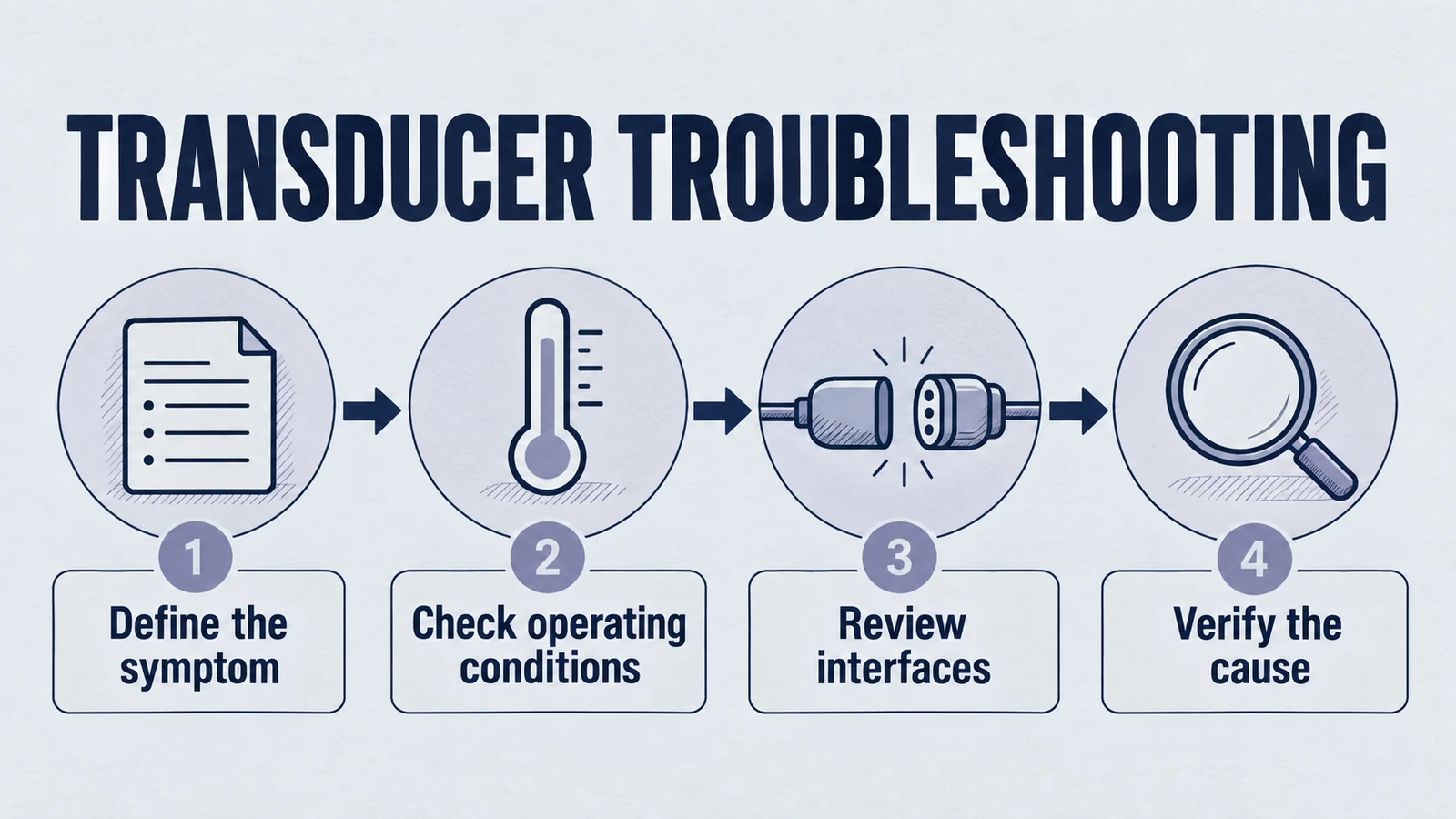
Designing a piezoelectric transducer is a multifaceted engineering endeavor that involves a delicate balance of physical, electrical, and acoustic parameters to achieve optimal performance. Whether intended for advanced medical ultrasound systems, high-precision industrial sensing platforms, or actuators in automation equipment, the success of any piezo transducer design hinges on deep technical knowledge and careful consideration of trade-offs between sensitivity, bandwidth, mechanical durability, manufacturability, and thermal resilience. In this comprehensive guide, we explore the most frequently encountered problems in piezo transducer design and present robust, field-tested solutions supported by both theoretical understanding and real-world application.
1. Material Selection Challenges
Problem:
Selecting the most appropriate piezoelectric material is a foundational step in any transducer design. However, the diversity of materials and the varying performance characteristics they offer often create confusion and missteps. The wrong choice can result in poor transduction efficiency, narrow bandwidth, unstable performance over time, or environmental unsuitability.
Product path for this search intent
Match the article topic to the right YJ Piezo product page
Use this article when the choice is not just a shape, but a material tradeoff between sensitivity, loss, coupling, stability, and operating field. For "Common Problems and Solutions in Piezoelectric Transducer Design", the practical value is in turning the topic into a measurable selection or sourcing decision.
- PZT Material Hub
Material grades and application tradeoffs
- Piezoelectric Ceramics
Shapes and ceramic manufacturing options
- PZT Material Supplier Hub
Material control, grade selection, and sourcing support
Solution:
Engineers must evaluate a combination of critical material parameters:
- Electromechanical coupling coefficient (k): Describes the specified mode’s reversible electromechanical coupling; output efficiency and receiving sensitivity also depend on losses, loading and readout.
- Dielectric constant: Affects signal amplitude and impedance matching; high values may help reduce drive voltage requirements.
- Curie temperature: The threshold above which the piezo material loses its polarization. Essential for determining application suitability under thermal stress.
- Mechanical quality factor (Qm): Governs damping and bandwidth characteristics, influencing signal clarity and resolution.
While PZT (lead zirconate titanate) remains the dominant material due to its proven versatility and excellent performance-to-cost ratio, designers must consider alternatives such as:
- Bismuth titanate for high-temperature environments,
- KNN (potassium sodium niobate) and other lead-free ceramics for environmentally sensitive or regulatory-compliant applications.
Custom materials may also be engineered for niche applications, blending proprietary dopants to adjust specific properties like permittivity, hardness, or coupling behavior. For detailed specifications, explore our comprehensive piezoelectric materials guide.
2. Impedance Matching and Signal Loss
Problem:
Without proper impedance matching, significant portions of the electrical signal can reflect back toward the source, rather than transferring effectively into mechanical motion. This mismatch results in decreased system efficiency, reduced signal clarity, and unwanted thermal buildup.
Solution:
- Acoustic matching layers: Apply one or more intermediary materials with carefully calculated acoustic impedance values to bridge the mismatch between the piezoelectric element and the propagation medium (e.g., human tissue, liquid, air).
- Electrical matching networks: Design passive L-C (inductor-capacitor) networks to minimize voltage reflection and maximize power delivery.
- Full-spectrum simulation: Perform advanced frequency-domain modeling to analyze impedance characteristics across the desired bandwidth and preempt potential mismatches.
Employing vector network analyzers during the prototype phase helps verify theoretical impedance models against real-world performance. Understanding factors affecting piezoelectric sensor sensitivity can also help optimize impedance matching strategies.
3. Bandwidth Limitations
Problem:
Narrow bandwidth restricts a transducer's functional versatility, making it unsuitable for applications that demand wide frequency response such as diagnostic imaging, sonar, or material inspection.
Solution:
- Low-Q geometries: Use physical designs and material combinations that naturally allow wider frequency distribution.
- Composite ceramics: Incorporate 1-3 piezo composites or multilayer configurations that combine mechanical strength with wideband performance.
- Damping techniques: Introduce controlled loss mechanisms using specific backing materials or viscoelastic polymers to absorb excessive vibrational energy and smooth the frequency response.
Additionally, bandwidth can be extended through signal processing techniques, though these should complement—not replace—hardware-level optimizations. Learn more about the science behind ultrasonic transducers for frequency response optimization.
4. Mechanical Resonance and Structural Failures
Problem:
Mechanical resonance can distort signal fidelity or even lead to serious structural failures under high power conditions. Improper mounting, poor housing design, or overdriven excitation can exacerbate these issues.
Solution:
- Finite Element Analysis (FEA): Use simulation tools to map out stress, strain, and vibrational modes throughout the transducer body.
- Stiffening strategies: Structural bracing or housing changes modify stiffness and mode shape; they can shift resonance but do not inherently add damping. Evaluate stiffness, damping and mass separately.
- Symmetry and tolerance control: Ensure even force distribution and precise alignment during assembly to prevent uneven wear or crack propagation.
Prototyping with physical strain gauges or laser vibrometry allows early detection of resonant vulnerabilities. For industrial applications, explore our ultrasonic welding transducers that demonstrate robust mechanical design principles.
5. Thermal Management Issues
Problem:
Piezoelectric elements are susceptible to performance degradation or depolarization at elevated temperatures, especially during continuous or high-power operation. Poor thermal design can shorten device lifespan or introduce operational drift.
Solution:
- High-temperature ceramics: Use materials with elevated Curie temperatures for harsh environments.
- Thermal isolation: Identify whether heat enters from outside or is generated internally. Isolation may reduce external heat transfer but can impede removal of self-heating; validate conduction, cooling and operating temperature for the assembly.
- Active cooling: For high-duty-cycle transducers, design systems that include heat sinks, thermal vias, or even liquid cooling loops where appropriate.
- Temperature monitoring: Integrate thermistors or other sensing components to provide real-time thermal feedback and implement protective shutoff mechanisms.
Understanding emerging trends in piezoelectric technology can help identify new thermal management solutions and materials.
6. Miniaturization Constraints
Problem:
As modern electronics trend toward miniaturization, designing high-performance piezo transducers within ever-smaller footprints poses serious constraints in terms of output power, assembly precision, and signal-to-noise ratio.
Solution:
- Microfabrication techniques: Utilize advanced deposition methods such as screen printing, sol-gel processing, or thin-film sputtering to enable compact geometries.
- High-energy-density materials: Select advanced piezo formulations that maintain performance metrics even in reduced volumes.
- Integration with MEMS: Combine piezo technology with micro-electromechanical systems to build hybrid sensing or actuation modules.
Advanced packaging solutions, including flip-chip bonding and chip-scale encapsulation, help maintain performance without increasing footprint. For miniaturized applications, consider our beauty device transducers that demonstrate compact high-performance design.
7. Adhesive and Bonding Issues
Problem:
Transducer components are often joined using adhesives, and improper bonding can introduce undesirable damping, misalignment, acoustic impedance mismatches, or long-term delamination due to environmental stressors.
Solution:
- Acoustically transparent adhesives: Choose bonding agents that do not degrade signal transmission and have minimal internal damping.
- Thermomechanical compatibility: Match the coefficient of thermal expansion (CTE) of the adhesive with adjoining materials to prevent delamination.
- Cleanroom assembly protocols: Employ stringent environmental controls during bonding to minimize contamination or void formation.
- Non-destructive evaluation: Use techniques such as ultrasonic C-scan or acoustic microscopy to validate bond integrity without damaging prototypes.
Follow our design tips for ultrasonic transducer projects for best practices in assembly and bonding procedures.
Design Process Optimization
Beyond addressing specific technical challenges, successful piezo transducer design requires a systematic approach:
- Requirements analysis: Define clear performance specifications including frequency range, power handling, environmental conditions, and reliability targets
- Multi-physics simulation: Use coupled electrical-mechanical-thermal modeling to predict performance before prototyping
- Iterative prototyping: Build and test multiple design variants to validate theoretical predictions
- Manufacturing considerations: Design for reproducibility and cost-effectiveness in production
For complex applications, partnering with experienced manufacturers can provide valuable insights. Learn about strategic advantages of OEM partnerships and our OEM manufacturing capabilities.
Quality Assurance and Testing
Robust testing protocols are essential for validating piezo transducer design:
- Electrical characterization: Measure impedance, capacitance, and electromechanical coupling across temperature and frequency ranges
- Acoustic performance testing: Verify frequency response, beam patterns, and acoustic output using specialized measurement systems
- Environmental stress testing: Subject prototypes to temperature cycling, humidity, vibration, and shock tests
- Long-term reliability assessment: Conduct accelerated aging tests to predict operational lifespan
Understanding how to choose a reliable supplier is crucial for obtaining consistent, high-quality components that meet design specifications.
Application-Specific Considerations
Different applications require tailored approaches to piezo transducer design:
- Medical devices: Focus on material-contact validation, low-power operation, and precise beam control. Explore advantages of piezoelectric sensors in medical devices
- Industrial automation: Emphasize ruggedness, high-power handling, and environmental resistance. See our custom piezo actuator solutions
- Underwater applications: Design for pressure resistance and corrosion protection. Check our underwater transducers
- Flow measurement: Optimize for accuracy and long-term stability in fluid environments. Explore our flow detection systems
Future Trends and Innovations
The field of piezo transducer design continues to evolve with new technologies and approaches:
- Advanced materials: Development of new piezoelectric compositions with enhanced properties
- Additive manufacturing: 3D printing techniques for complex geometries and integrated designs
- Smart transducers: Integration of sensors and signal processing for adaptive behavior
- AI-assisted design: Machine learning algorithms for optimization and performance prediction
Stay informed about future developments in piezoelectric technology to leverage emerging opportunities in transducer design.
Conclusion
Designing piezoelectric transducers is a technically demanding yet deeply rewarding process that lies at the intersection of physics, engineering, and material science. By proactively addressing the most common design challenges—ranging from material selection and impedance matching to thermal management and miniaturization—engineers can deliver transducers that meet rigorous performance standards while maintaining manufacturability and durability.
Through a disciplined, data-driven design process and a commitment to continuous testing and refinement, high-performance piezo transducer solutions can be realized for virtually any application—from diagnostic tools to industrial automation systems.
At Yujie Technology, we combine decades of experience in piezo transducer design with advanced manufacturing capabilities to deliver custom solutions that meet the most demanding specifications. Whether you need prototype development, design optimization, or volume production, our team is ready to support your project from concept to completion.
Ready to optimize your piezo transducer design? Contact our engineering team for expert consultation and custom development services. Explore our comprehensive range of piezoelectric products and advanced materials to support your design requirements.
Engineering decision notes
PZT material and ceramic selection
Use this article when the choice is not just a shape, but a material tradeoff between sensitivity, loss, coupling, stability, and operating field. For "Common Problems and Solutions in Piezoelectric Transducer Design", the practical value is in turning the topic into a measurable selection or sourcing decision.
YJ Piezo coordinates PZT ceramic projects with manufacturing support, so material formulation, sintering, polarization, electrode process, and outgoing inspection can be reviewed against the final application.
Selection checks
- Separate sensing needs from high-power actuation needs before comparing d33 or coupling values.
- Check dielectric loss, Qm, Curie temperature, aging behavior, and operating field against the real duty cycle.
- Confirm whether the application needs standard PZT grades or a custom formulation and geometry.
Failure risks
- Choosing only the highest d33 can create heat, drift, or depolarization risk in power ultrasonics.
- A ceramic that performs well in free measurement can fail once bonded, clamped, or loaded.
- Material substitutions without batch testing can change capacitance, resonance, and system tuning.
RFQ details
- Is the part used for sensing, actuation, atomization, cleaning, welding, or measurement?
- What field strength, temperature, duty cycle, and mechanical load will the ceramic see?
- Which values must be controlled: d33, capacitance, resonance, impedance, Qm, or dimensional tolerance?
Relevant YJ Piezo pages
- PZT Material Hub
Material grades and application tradeoffs
- Piezoelectric Ceramics
Shapes and ceramic manufacturing options
- PZT Material Supplier Hub
Material control, grade selection, and sourcing support
Application FAQ
- Is the highest d33 always the best PZT choice?
- No. High d33 can be useful for sensitivity, but high-power ultrasonic systems often need lower loss, higher Qm, better thermal stability, and safer operation under field and stress.
- What makes PZT material selection different from catalog buying?
- The right PZT choice depends on geometry, load, drive field, duty cycle, temperature, and inspection targets. A catalog value is only useful when it is tied to the final assembly conditions.