
Non-Destructive Testing (NDT) with Ultrasonic Transducers: Improving Safety
Non-destructive testing (NDT) is a critical process used across various industries to assess the integrity of materials, components, and structures without causing any damage. Among various NDT methods, ultrasonic testing stands out for its precision, reliability, and efficiency. In this article, we will explore how ultrasonic transducers enhance the safety and effectiveness of non-destructive testing, focusing on their applications, benefits, and how industries leverage these powerful sensors.
What is Ultrasonic Non-Destructive Testing?
Ultrasonic non-destructive testing involves the use of high-frequency sound waves transmitted into materials to detect internal flaws, measure thickness, and evaluate material properties. Central to this process are ultrasonic NDT transducers, specialized sensors that generate and receive ultrasonic pulses. These piezoelectric sensors convert electrical signals into mechanical vibrations, transmitting them through a medium and converting the echoes back into electrical signals for analysis.
How Ultrasonic NDT Transducers Work
The operation of an ultrasonic testing sensor is straightforward yet highly sophisticated:
- Pulse Generation: The transducer sends out a high-frequency ultrasonic wave through the material being tested.
- Wave Propagation: These ultrasonic waves travel through the material until they encounter a boundary or defect.
- Reflection: Upon encountering a discontinuity or boundary, such as cracks, voids, or interfaces, the waves are reflected back toward the transducer.
- Signal Reception and Interpretation: The transducer receives these reflected signals, which are then analyzed to provide valuable insights about the internal structure and integrity of the material.
Key Applications of Ultrasonic NDT Transducers
Ultrasonic NDT transducers have a wide range of applications across different industries:
1. Aerospace Industry
Safety in aerospace relies heavily on detecting flaws in aircraft components before they pose risks. Ultrasonic testing sensors are utilized for inspecting wings, fuselage, engines, and landing gears, ensuring structural integrity and reducing the risk of severe failures.
2. Automotive Sector
In the automotive industry, ultrasonic NDT transducers assist in detecting hidden cracks and defects in engine blocks, welds, and critical components, ensuring vehicle safety and performance. Piezoelectric sensors play a crucial role in these inspection processes.
3. Oil and Gas
The harsh operational conditions in oil and gas exploration make ultrasonic testing important. Sensors are used to inspect pipelines, storage tanks, and drilling equipment for corrosion, cracks, and material degradation. High-frequency transducers are particularly valuable in these demanding environments.
4. Power Generation
Power plants, particularly nuclear and thermal, require rigorous inspections. Ultrasonic sensors efficiently detect issues like corrosion and material thinning in turbines, boilers, and pressure vessels, helping prevent costly downtime and accidents.
5. Construction and Infrastructure
Bridges, buildings, and other infrastructure components benefit greatly from ultrasonic inspections. These sensors effectively detect internal flaws in concrete, steel reinforcement, and structural supports, significantly improving public safety. Force sensors complement NDT processes in structural monitoring applications.
Advantages of Ultrasonic NDT
Using ultrasonic NDT transducers provides several critical benefits:
- Accuracy and Sensitivity: High-frequency ultrasonic waves precisely detect even minute internal flaws.
- Safety: Completely non-invasive and non-destructive, this method prevents damage to tested materials.
- Cost Efficiency: Early detection of flaws minimizes maintenance and repair costs, avoiding more extensive damage and downtime.
- Versatility: Applicable across a wide range of materials, including metals, plastics, ceramics, and composites.
- Real-time Results: Instantaneous feedback allows for quick decision-making and corrective action.
Selecting the Right Ultrasonic NDT Transducer
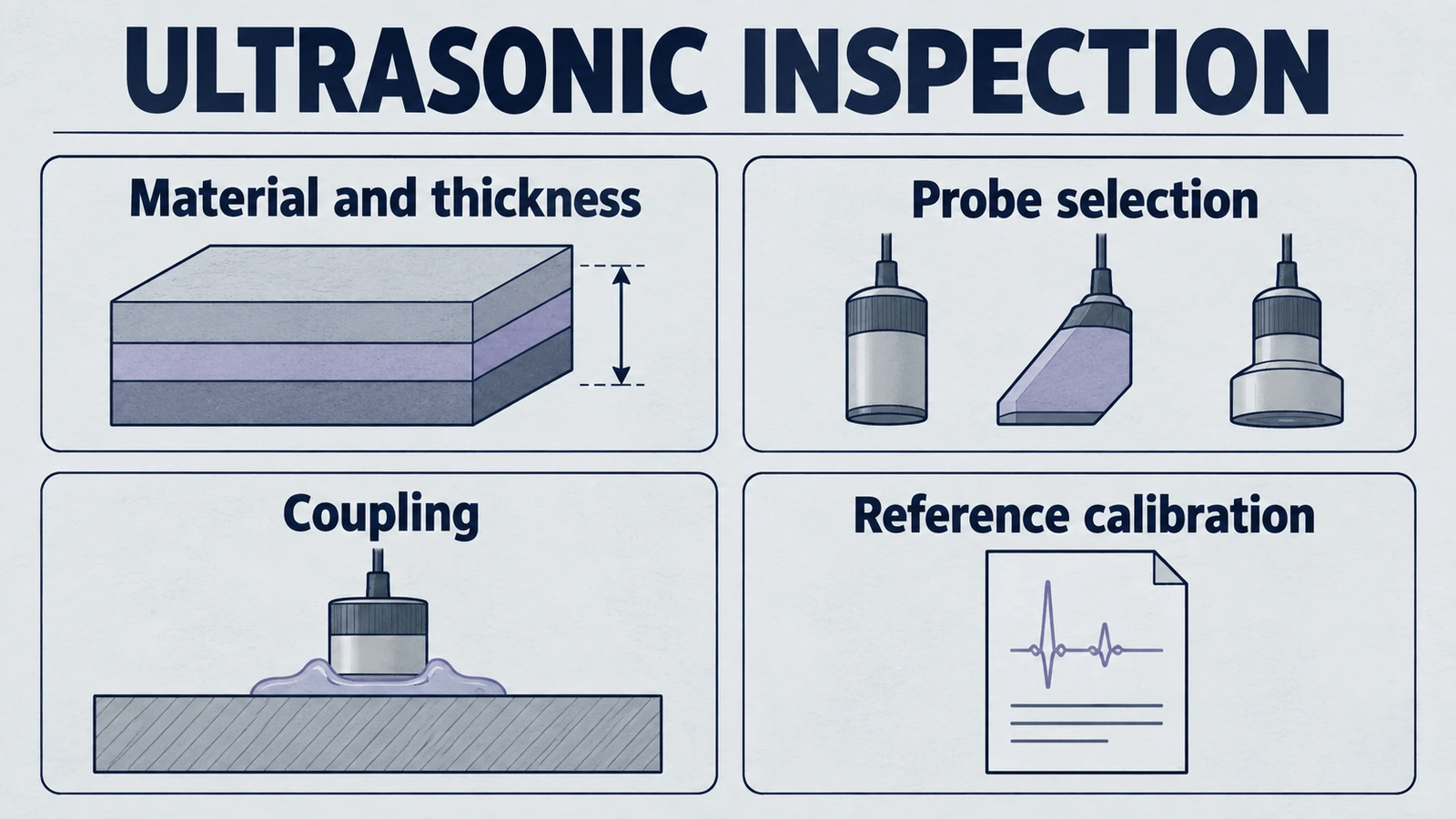
Choosing the appropriate ultrasonic testing sensor depends on several factors:
- Material Properties: Thickness, acoustic properties, and surface condition influence sensor selection.
- Inspection Requirements: Desired sensitivity, resolution, and defect size detection capabilities.
- Environmental Conditions: Operating temperature, exposure to chemicals, or abrasive conditions that require specialized transducers.
Working with a reputable manufacturer ensures the selection of high-quality, durable, and precise piezoelectric components tailored to specific applications.
Ensuring Safety and Integrity with Ultrasonic NDT
Ultrasonic non-destructive testing significantly enhances safety standards by providing reliable, precise, and non-invasive inspection capabilities. Leveraging advanced ultrasonic NDT transducers ensures early detection of defects, reduces risk, and improves operational reliability across industries.
For industries prioritizing safety, efficiency, and cost-effectiveness, adopting ultrasonic testing sensors represents a significant step forward in quality assurance and asset protection. Contact our experts to learn more about implementing ultrasonic NDT solutions for your specific application needs.
Ready to Enhance Your NDT Capabilities?
Discover our comprehensive range of ultrasonic transducers and piezoelectric sensors designed for demanding NDT applications. From cleaning transducers to marine transducers, we provide solutions that meet the highest industry standards.
Product path for this search intent
Match the article topic to the right YJ Piezo product page
Use this article when sensor performance depends on target distance, beam angle, housing material, liquid behavior, or false echo control. For "Non-Destructive Testing (NDT) with Ultrasonic Transducers: Improving Safety", the practical value is in turning the topic into a measurable selection or sourcing decision.
- Ultrasonic Sensors
Distance, level, and detection sensor portfolio
- Flow Measurement Transducers
Bubble and flow-related ultrasonic sensing paths
- Air Acoustic Transducers
Air-coupled transducers for range and presence detection
Engineering decision notes
Ultrasonic sensing and detection
Use this article when sensor performance depends on target distance, beam angle, housing material, liquid behavior, or false echo control. For "Non-Destructive Testing (NDT) with Ultrasonic Transducers: Improving Safety", the practical value is in turning the topic into a measurable selection or sourcing decision.
YJ Piezo treats ultrasonic sensing as an acoustic interface problem: transducer frequency, beam shape, housing, drive electronics, and target environment are reviewed together.
Selection checks
- Define target range, dead zone, beam angle, and mounting geometry before choosing the sensor family.
- Check the medium, target surface, temperature swing, foam, vapor, and side-wall risk.
- Separate detection repeatability from ideal lab accuracy when the sensor will operate in a tank, tube, or moving line.
Failure risks
- A sensor can pass bench distance tests and still fail in tanks with foam, agitation, vapor, or narrow geometry.
- Changing only frequency without reviewing beam angle and mounting can increase false echoes.
- Ignoring housing material or sealing requirements can shorten lifetime in washdown or chemical environments.
RFQ details
- What is the minimum and maximum detection distance?
- Is the target liquid, solid, sheet material, air flow, or a moving object?
- What temperature, humidity, IP rating, and output signal does the system require?
Relevant YJ Piezo pages
- Ultrasonic Sensors
Distance, level, and detection sensor portfolio
- Flow Measurement Transducers
Bubble and flow-related ultrasonic sensing paths
- Air Acoustic Transducers
Air-coupled transducers for range and presence detection
Application FAQ
- What makes an ultrasonic sensor page useful for procurement?
- It should connect range, beam angle, output signal, housing, mounting, and environmental limits to a concrete use case. A model name alone is not enough for reliable supplier comparison.
- Which information speeds up an ultrasonic sensor RFQ?
- Send the target material, distance range, installation geometry, output interface, temperature range, IP rating, and whether the application involves foam, vapor, liquid, or moving objects.