
Maximizing Piezo Transducer Lifespan: Maintenance Tips for Ultrasonic Equipment
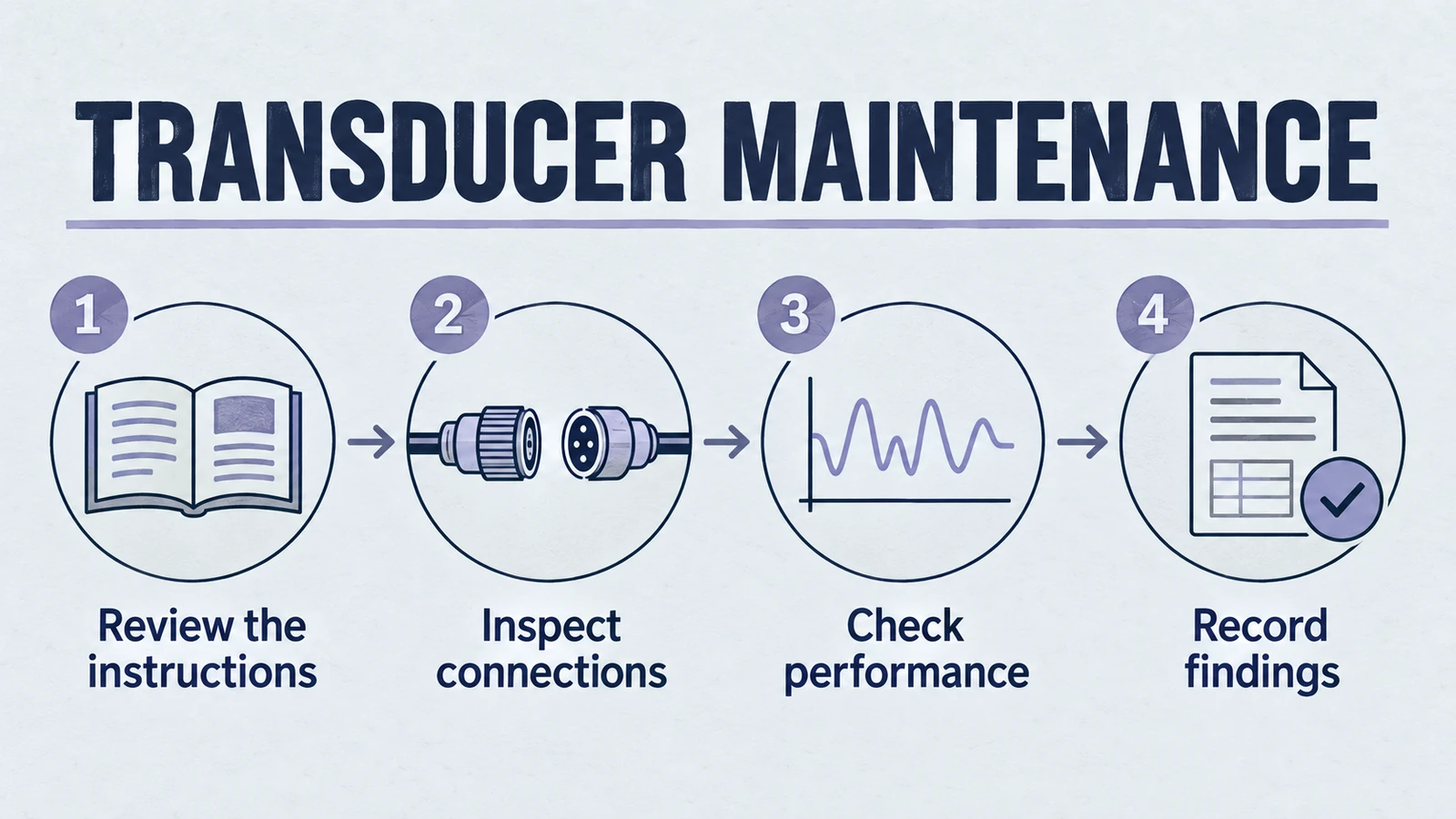
Quick answer: Piezo transducer lifespan depends most on heat, electrical overdrive, resonance mismatch, mounting stress, fluid exposure, and duty cycle. The fastest way to extend service life is to keep the transducer near its designed resonance window, prevent thermal overload, and inspect impedance or frequency drift before output visibly degrades.
For material-side durability, compare soft vs hard PZT grades and Qm, d33, and coupling values.
Piezoelectric transducers are at the heart of many ultrasonic systems, from medical imaging devices to industrial cleaning equipment. Their ability to convert electrical signals into high-frequency mechanical vibrations makes them important for precision applications. However, like all high-performance components, piezo transducers require proper care to ensure longevity and consistent performance.
This guide explores proven strategies to extend the lifespan of your piezo transducers through effective ultrasonic transducer maintenance.
Understanding the Piezo Transducer Lifespan
Product path for this search intent
Match the article topic to the right YJ Piezo product page
Use this article when the risk is supplier selection, engineering support, validation evidence, integration reliability, and whether the manufacturer can scale from sample to production. For "Maximizing Piezo Transducer Lifespan: Maintenance Tips for Ultrasonic Equipment", the practical value is in turning the topic into a measurable selection or sourcing decision.
- Ultrasonic Transducer Supplier Hub
OEM sourcing and engineering collaboration
- PZT Material Supplier Hub
Material control and grade selection
- Piezoelectric Ceramics
Ceramic manufacturing and custom shapes
The lifespan of a piezo transducer depends on several factors, including:
- Operating Environment – Exposure to excessive heat, moisture, or corrosive chemicals can accelerate wear.
- Electrical Loading – Overdriving the transducer with excessive voltage or frequency outside its design range can cause premature failure.
- Mechanical Stress – Improper mounting, vibration shock, or physical impacts can damage the ceramic elements.
- Duty Cycle – Continuous high-power operation without adequate rest periods can lead to overheating.
On average, well-maintained piezo transducers can last thousands of operating hours. Without proper care, however, their efficiency and accuracy degrade rapidly.
Essential Ultrasonic Transducer Maintenance Practices
1. Monitor Operating Conditions
Maintain the transducer within the manufacturer's specified temperature, humidity, and pressure limits. Install protective enclosures in harsh environments to shield the device from dust, water, and chemicals.
2. Prevent Electrical Overload
Ensure that the driving circuit matches the transducer's electrical characteristics, including impedance and resonance frequency. Using impedance matching networks can prevent overvoltage conditions and improve energy transfer efficiency.
3. Control Thermal Load
Excessive heat is one of the primary causes of piezo transducer degradation. Employ cooling systems—such as air or liquid cooling—for high-power ultrasonic applications. Monitor surface temperature with infrared thermometers or thermal sensors.
4. Ensure Proper Mounting and Alignment
Avoid mechanical stress by securing the transducer with correct torque values on mounting bolts. Misalignment can cause uneven stress distribution, leading to cracks in the ceramic element.
5. Schedule Regular Inspections
Conduct periodic performance checks, including:
- Measuring resonance frequency shifts
- Checking output amplitude consistency
- Inspecting for visible cracks or discoloration
Early detection of issues allows for corrective action before major failures occur.
6. Clean the Transducer Surface Carefully
Remove dirt, debris, and process residue using approved cleaning agents. Avoid abrasive materials that could scratch the surface or damage the matching layer.
7. Follow Recommended Duty Cycles
Continuous operation without breaks can cause thermal fatigue. Follow the manufacturer's recommended on/off cycles to allow the transducer to cool.
8. Avoid Cavitation Damage (in Ultrasonic Cleaning Systems)
For ultrasonic cleaners, control the liquid level and composition to reduce aggressive cavitation effects. Excessive cavitation can erode the surface of the transducer and tank. For durable, high-performance cleaning, explore our HJ-3528B cleaning transducer and HJ-3825 precision cleaner transducer.
Storage and Handling Best Practices
Even when not in use, improper storage can reduce a piezo transducer's lifespan. Store transducers in a clean, dry environment at room temperature. Avoid stacking heavy objects on top of them, and handle with care to prevent accidental drops. For portable maintenance kits and compact systems, see our HJ-300ML portable cleaning transducer.
Benefits of Proactive Maintenance
A structured ultrasonic transducer maintenance program offers several advantages:
- Extended Lifespan – Reduce replacement frequency and lower operational costs.
- Stable Performance – Maintain accuracy, sensitivity, and output power.
- Reduced Downtime – Prevent unexpected equipment failures.
- Improved Safety – Avoid hazards associated with failing ultrasonic systems.
For beauty and specialized medical devices where comfort and consistency matter, consider our HJ-4036-1M beauty transducer and HJ-7035 skincare device transducer. In welding applications that demand robust thermal management, see the HJ-6015 ultrasonic welder transducer. For measurement stability in flow systems, our HJ-2112-1M flowmeter transducer provides excellent frequency reliability. Systems monitoring can be enhanced using our ultrasonic bubble detection sensor.
Conclusion
Maximizing piezo transducer lifespan is not just about protecting an investment—it's about ensuring the reliability of the entire ultrasonic system. By following proper ultrasonic transducer maintenance practices, operators can achieve consistent performance, reduce downtime, and extend the working life of their critical components.
For tailored maintenance schedules and recommendations based on your specific ultrasonic application, contact our technical team.
Engineering decision notes
OEM integration and supplier qualification
Use this article when the risk is supplier selection, engineering support, validation evidence, integration reliability, and whether the manufacturer can scale from sample to production. For "Maximizing Piezo Transducer Lifespan: Maintenance Tips for Ultrasonic Equipment", the practical value is in turning the topic into a measurable selection or sourcing decision.
YJ Piezo combines direct project coordination with ceramic manufacturing support, so procurement and engineering teams can evaluate material control, application review, sample validation, and production consistency together.
Selection checks
- Ask whether the supplier controls ceramic manufacturing or only assembles purchased elements.
- Review sample policy, inspection records, engineering response quality, and production lead-time stability.
- Compare suppliers and integration paths by validation evidence, not only by unit price and datasheet similarity.
Failure risks
- A low-price sample can pass early tests but fail when batch variation, thermal load, or assembly stress appears.
- A supplier without material control may not explain why impedance, capacitance, or resonance drift occurs.
- Weak RFQ information leads to quotes that are fast but not technically comparable.
RFQ details
- What application, operating environment, and failure cost should the supplier design around?
- Which sample tests and outgoing records are required before pilot production?
- What customization, MOQ, tooling, and delivery constraints must be known before quotation?
Relevant YJ Piezo pages
- Ultrasonic Transducer Supplier Hub
OEM sourcing and engineering collaboration
- PZT Material Supplier Hub
Material control and grade selection
- Piezoelectric Ceramics
Ceramic manufacturing and custom shapes
Application FAQ
- How should an OEM compare piezoelectric suppliers?
- Compare material control, engineering support, test evidence, customization ability, sample policy, and batch consistency. Unit price matters, but only after the technical risk is understood.
- What makes an RFQ technically useful?
- A useful RFQ includes application, dimensions, target frequency, electrical limits, duty cycle, operating medium, environment, expected quantity, required reports, and current failure or replacement context.