
Ultrasonic Level Sensors in Industrial Tanks: Benefits and Best Practices
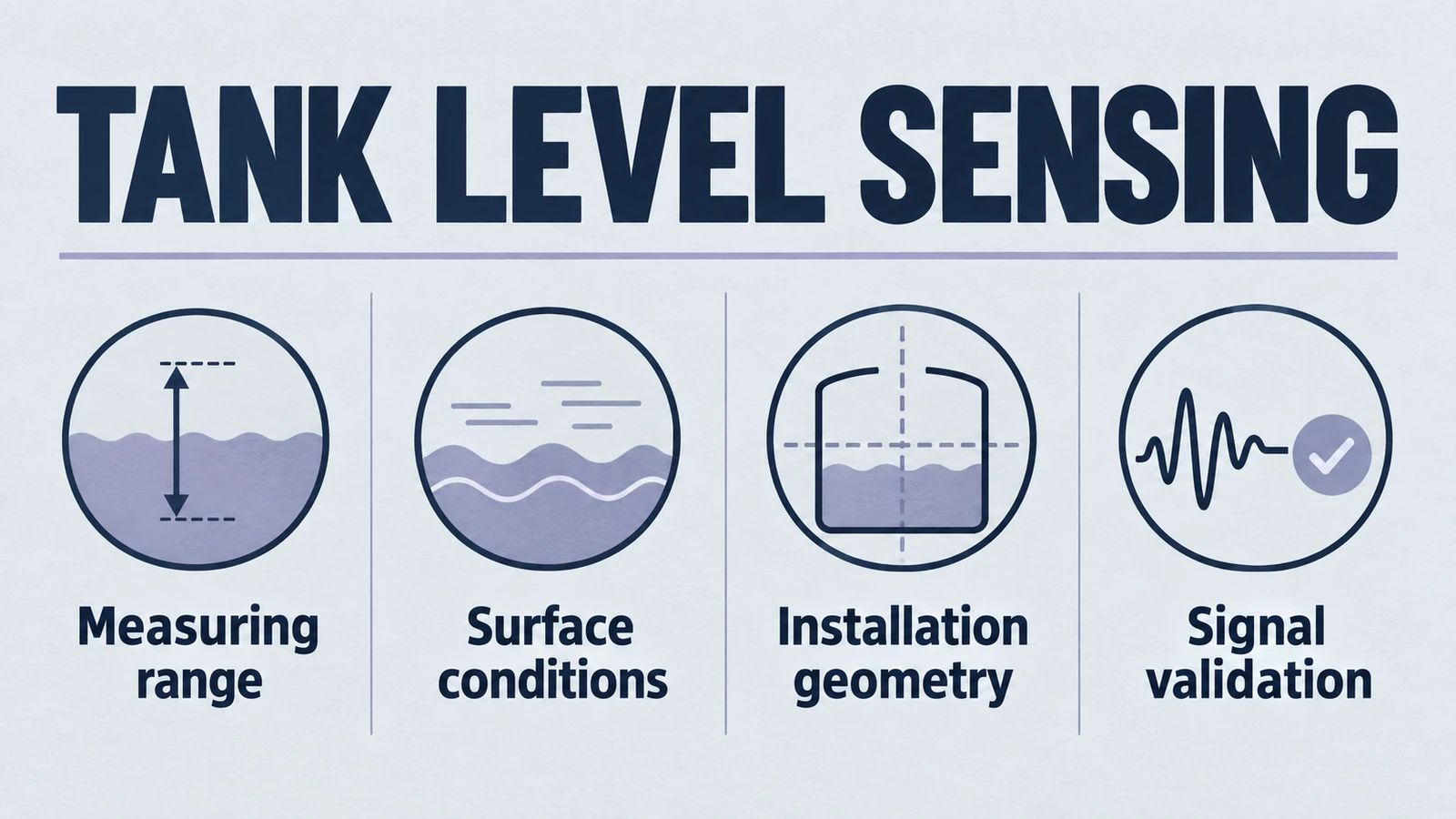
Ultrasonic level sensors have become important in modern industrial processes, especially for managing liquids and solids in various types of tanks. These sensors provide accurate, reliable measurements without contact, greatly enhancing safety, efficiency, and operational reliability. This blog will delve into the benefits of ultrasonic level sensors and outline best practices to optimize their usage in industrial tank applications.
What Are Ultrasonic Level Sensors?
An ultrasonic level sensor utilizes high-frequency sound waves to measure the distance to the surface of a liquid or solid. These sensors emit ultrasonic pulses that travel to the medium's surface and return as echoes. The sensor calculates the time between emission and reception to determine the precise level inside the tank.
Core Advantages of Ultrasonic Level Sensors
Product path for this search intent
Match the article topic to the right YJ Piezo product page
Use this article when sensor performance depends on target distance, beam angle, housing material, liquid behavior, or false echo control. For "Ultrasonic Level Sensors in Industrial Tanks: Benefits and Best Practices", the practical value is in turning the topic into a measurable selection or sourcing decision.
- Ultrasonic Sensors
Distance, level, and detection sensor portfolio
- Flow Measurement Transducers
Bubble and flow-related ultrasonic sensing paths
- Air Acoustic Transducers
Air-coupled transducers for range and presence detection
1. Non-Contact Measurement
Ultrasonic sensors do not require direct contact with the medium, significantly reducing maintenance and wear. This feature is crucial in corrosive or hazardous environments, where direct contact could damage sensors or pose safety risks. Our ultrasonic bubble detection sensors use clamp-on/through-transmission sensing, a different architecture from top-mounted tank pulse-echo ranging; validate the specific application.
2. Accuracy and Reliability
Modern ultrasonic level sensors offer exceptional accuracy, typically within ±0.25% of their measured range. Their reliability is maintained across varying conditions, ensuring consistent performance over time. The high-frequency piezoelectric transducers that power these systems are engineered for long-term stability and precision.
3. Easy Installation and Maintenance
These sensors are simple to install, calibrate, and integrate with existing control systems. Their robust design minimizes the need for regular maintenance, reducing downtime and operational costs. Industrial-grade ultrasonic transducers are built to withstand harsh conditions while maintaining optimal performance.
4. Versatile Application
Tank level ultrasonic sensors can measure a variety of materials, including liquids, granules, and bulk solids. They are suitable for use across diverse industries such as chemical processing, water and wastewater management, food and beverage production, and pharmaceuticals. The versatility of ultrasonic transducer technology extends beyond level measurement to cleaning and processing applications.
5. Enhanced Safety
By enabling remote monitoring and accurate measurements in hazardous environments, ultrasonic sensors significantly improve workplace safety. They reduce the need for manual inspections, especially in high-risk areas where personnel exposure should be minimized.
Best Practices for Optimizing Ultrasonic Level Sensors in Industrial Tanks
1. Proper Sensor Positioning
For optimal accuracy, sensors must be properly positioned away from tank walls, inlet pipes, or obstructions. Ensure the sensor is installed vertically, perpendicular to the medium's surface, to minimize signal interference and echo distortion. The mid-range frequency transducers offer excellent beam characteristics for accurate level measurement in various tank configurations.
2. Tank Configuration and Material Compatibility
Evaluate tank configurations and material compatibility carefully. Reflective surfaces or irregular tank shapes can cause measurement errors. Ensure the sensor's range matches the tank's dimensions, and consider using signal processing features to enhance accuracy. Different piezoelectric ceramic materials can be selected based on specific frequency and power requirements.
3. Environmental Considerations
Environmental factors such as temperature, pressure, humidity, and dust can influence sensor performance. Selecting sensors with built-in compensation features or additional environmental controls (like protective covers) helps maintain reliable operation under challenging conditions. Submersible-grade transducers demonstrate the robust design principles needed for harsh environments.
4. Regular Calibration and Testing
Routine calibration and testing of sensors ensure ongoing accuracy and reliability. Create a regular schedule for system checks and calibration adjustments, aligning with industry standards or manufacturer recommendations. The precision of piezoelectric ring elements makes them ideal for calibration-critical applications.
5. Proper Wiring and Grounding
Ensuring proper wiring and grounding of ultrasonic sensors is essential to avoid electrical interference and false readings. Use shielded cables and robust grounding techniques to minimize electromagnetic interference that could affect the sensitive piezoelectric components within the sensor.
6. Integration with Control Systems
Integrating ultrasonic sensors with automated control systems, SCADA (Supervisory Control and Data Acquisition) systems, and IoT platforms significantly enhances process efficiency and predictive maintenance capabilities. This integration provides real-time monitoring and actionable insights, improving decision-making and operational responsiveness. Advanced flow monitoring transducers can complement level sensors for comprehensive tank management.
Selecting the Right Ultrasonic Level Sensor Technology
The choice of ultrasonic level sensor technology depends on your specific application requirements:
- Frequency Selection: Lower frequencies (40 kHz) penetrate dust and vapor better, while higher frequencies (230 kHz) provide better resolution for precise measurements.
- Power Requirements: High-power transducers are suitable for large tanks or challenging conditions, while lower power options work well for smaller applications.
- Material Selection: Choose from various piezoelectric ceramic shapes and compositions based on environmental conditions and performance requirements.
Industry Applications and Case Studies
Tank level ultrasonic sensors are successfully deployed across various industries:
- Chemical Processing: Monitor corrosive liquids and maintain safety protocols
- Water Treatment: Track water levels in reservoirs and treatment tanks
- Food & Beverage: Ensure hygienic monitoring of ingredient tanks
- Oil & Gas: Manage fuel storage and prevent overflow incidents
- Pharmaceuticals: Maintain precise control over critical liquid levels
Conclusion
Ultrasonic level sensors represent a powerful tool for industrial tank management, providing precise, reliable, and appropriate measurement solutions. By adhering to best practices such as proper positioning, environmental consideration, regular maintenance, and system integration, industries can fully leverage the capabilities of ultrasonic technology to enhance productivity, safety, and cost-effectiveness.
With ongoing advancements in piezoelectric sensor technology, ultrasonic sensors continue to evolve, offering even greater potential for industrial process optimization. Whether you need precision detection sensors or flow measurement solutions, the right ultrasonic technology can transform your tank management operations.
Partner with Ultrasonic Sensor Experts
For optimal results with tank level ultrasonic sensors, partner with experienced manufacturers who understand the nuances of piezoelectric technology. Yujie Technology offers comprehensive solutions from component selection to system integration, ensuring your ultrasonic level measurement system delivers reliable, long-term performance.
Ready to optimize your tank level monitoring system? Contact our experts today to discuss your specific requirements and explore our range of ultrasonic sensor solutions.
Engineering decision notes
Ultrasonic sensing and detection
Use this article when sensor performance depends on target distance, beam angle, housing material, liquid behavior, or false echo control. For "Ultrasonic Level Sensors in Industrial Tanks: Benefits and Best Practices", the practical value is in turning the topic into a measurable selection or sourcing decision.
YJ Piezo treats ultrasonic sensing as an acoustic interface problem: transducer frequency, beam shape, housing, drive electronics, and target environment are reviewed together.
Selection checks
- Define target range, dead zone, beam angle, and mounting geometry before choosing the sensor family.
- Check the medium, target surface, temperature swing, foam, vapor, and side-wall risk.
- Separate detection repeatability from ideal lab accuracy when the sensor will operate in a tank, tube, or moving line.
Failure risks
- A sensor can pass bench distance tests and still fail in tanks with foam, agitation, vapor, or narrow geometry.
- Changing only frequency without reviewing beam angle and mounting can increase false echoes.
- Ignoring housing material or sealing requirements can shorten lifetime in washdown or chemical environments.
RFQ details
- What is the minimum and maximum detection distance?
- Is the target liquid, solid, sheet material, air flow, or a moving object?
- What temperature, humidity, IP rating, and output signal does the system require?
Relevant YJ Piezo pages
- Ultrasonic Sensors
Distance, level, and detection sensor portfolio
- Flow Measurement Transducers
Bubble and flow-related ultrasonic sensing paths
- Air Acoustic Transducers
Air-coupled transducers for range and presence detection
Application FAQ
- What makes an ultrasonic sensor page useful for procurement?
- It should connect range, beam angle, output signal, housing, mounting, and environmental limits to a concrete use case. A model name alone is not enough for reliable supplier comparison.
- Which information speeds up an ultrasonic sensor RFQ?
- Send the target material, distance range, installation geometry, output interface, temperature range, IP rating, and whether the application involves foam, vapor, liquid, or moving objects.