
Unlock Precision Automation: The MRR1 Ultrasonic Sensor Solution
The Invisible Advantage in Industrial Sensing
In the rapidly evolving landscape of Industry 4.0, the margin for error has vanished. Whether you are managing complex logistics conveyor systems or monitoring critical liquid levels in chemical processing, the reliability of your data defines your operational efficiency. Enter the MRR1 Ultrasonic Sensor, a high-frequency precision instrument engineered by Yujie Piezoelectric Technology to solve the detection challenges that stall traditional sensors.
While optical sensors struggle with transparent surfaces and mechanical switches wear out, the MRR1 utilizes advanced ultrasonic acoustics to deliver consistent, non-contact measurements. It is not just a sensor; it is the reliable "digital eye" your automated systems need to navigate a dynamic physical world. Our extensive range of ultrasonic sensors demonstrates our commitment to precision industrial sensing.
Why the MRR1 Stands Out
Product path for this search intent
Match the article topic to the right YJ Piezo product page
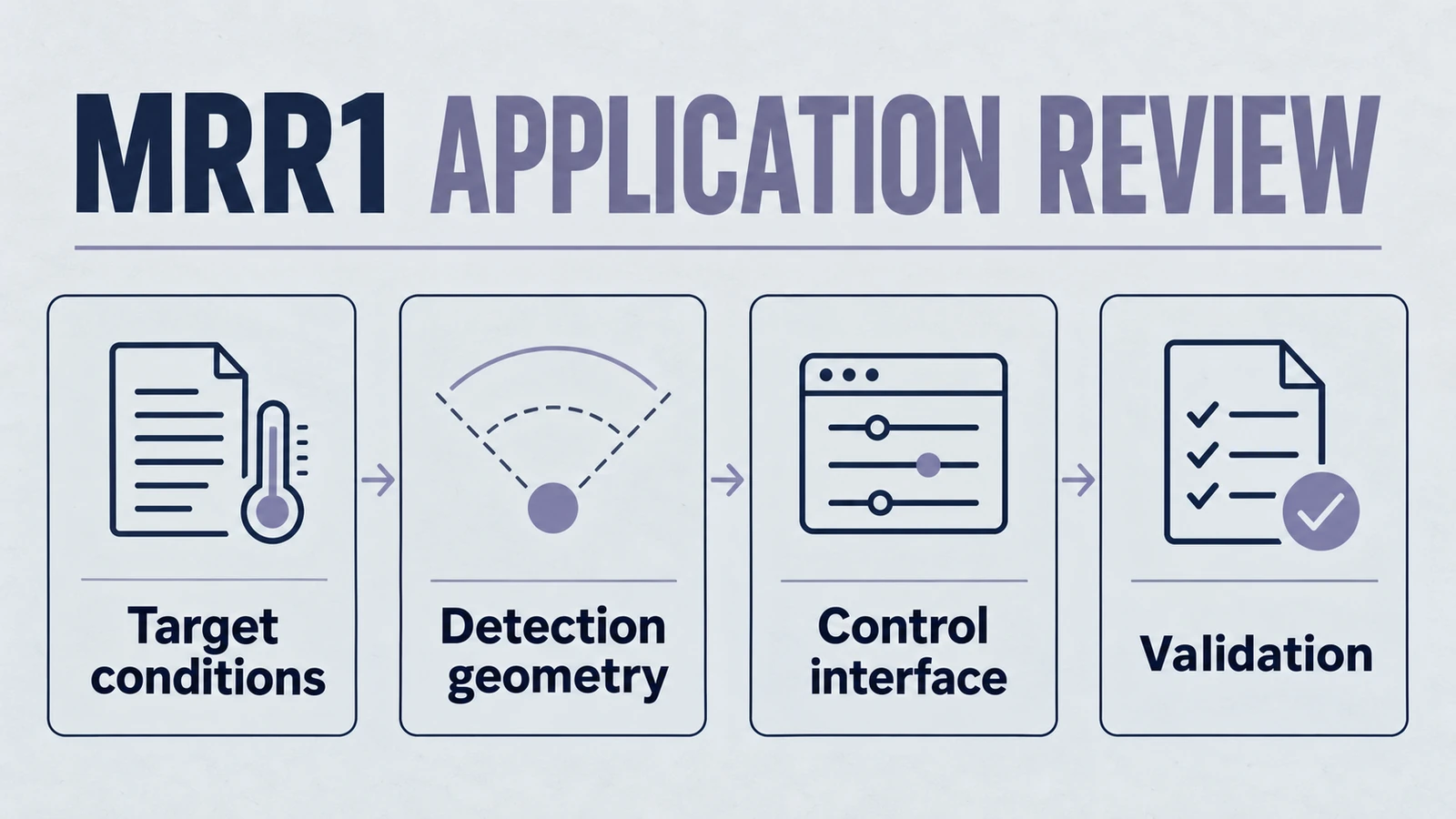
Use this article when sensor performance depends on target distance, beam angle, housing material, liquid behavior, or false echo control. For "Unlock Precision Automation: The MRR1 Ultrasonic Sensor Solution", the practical value is in turning the topic into a measurable selection or sourcing decision.
- Ultrasonic Sensors
Distance, level, and detection sensor portfolio
- Flow Measurement Transducers
Bubble and flow-related ultrasonic sensing paths
- Air Acoustic Transducers
Air-coupled transducers for range and presence detection
The MRR1 is designed for versatility and durability, packing high-end performance into a compact industrial housing. Built upon advanced PZT piezoelectric technology, this sensor represents the pinnacle of ultrasonic sensing innovation.
1. Superior Resolution with 200kHz Technology
Unlike standard 40kHz sensors that cast a wide, clumsy net, the MRR1 operates at a high frequency of 200kHz. This higher frequency generates a shorter wavelength, allowing the sensor to detect smaller objects and resolve finer details with millimeter-level precision.
- Repeatability: Listed ±0.1% of full scale; verify variant and test conditions
- Resolution: Up to 0.11mm at maximum sensing range
- Blind Zone: Minimized to just 100mm, enabling effective measurement in tight spaces
This exceptional performance is achieved through carefully engineered piezoelectric ceramic elements that form the heart of every MRR1 sensor unit.
2. Uncompromising Durability (IP67)
Industrial environments are unforgiving. Dust, moisture, and washdowns are part of the daily routine. The MRR1 features a robust IP67-rated housing, ensuring it remains completely dust-tight and can withstand immersion in water. Whether mounted on a dusty agricultural hopper or a wet food processing line, the MRR1 performs without degradation.
This durability makes the MRR1 ideal for applications similar to those served by our industrial ultrasonic cleaning systems, where harsh conditions are the norm rather than the exception.
3. Smart Connectivity
Ready for modern integration, the MRR1 series offers versatile output options including UART TTL, ensuring seamless communication with microcontrollers, PLCs, and IoT gateways. Its fast response time (approx. 125ms) makes it ideal for real-time monitoring applications where every millisecond counts.
Learn more about the science behind ultrasonic transducers and how signal processing enables such rapid response times.
Key Applications: Where the MRR1 Excels
Transparent Object Detection
One of the greatest challenges in packaging and manufacturing is detecting clear materials. Glass bottles, PET plastic trays, and clear protective films are invisible to many photoelectric sensors. The MRR1 solves this physics problem effortlessly.
Sound waves reflect off solid surfaces regardless of optical transparency, making the MRR1 the common choice for clear film detection and glass bottle counting on high-speed lines. This capability complements our acoustic transducer solutions designed for specialized detection applications.
Non-Contact Liquid Level Monitoring
For small tanks, medical reservoirs, or chemical dosing systems, contact sensors pose a risk of contamination and corrosion. The MRR1 provides a non-contact solution, measuring the level of liquids—from water to corrosive acids—without ever touching the surface.
With a sensing range of 100mm to 1000mm, it is perfectly sized for header tanks and dosing vessels. For specialized liquid detection needs, explore our flow measurement solutions and bubble sensor selection guide.
Robot Navigation and Collision Avoidance
Autonomous Mobile Robots (AMRs) and AGVs require reliable near-field detection to navigate warehouses safely. The MRR1's compact form factor and high-resolution "short-range" detection make it an excellent virtual bumper, detecting obstacles that might be missed by long-range LiDAR, ensuring smooth and appropriate autonomous operation.
Understanding how piezoelectric sensors compare to traditional sensing methods helps engineers select the optimal solution for robotic applications.
The Yujie Difference: Engineered Customization
When you choose the MRR1, you are not just buying a component; you are leveraging nearly three decades of material science expertise. Since 1996, Yujie Piezoelectric Technology has specialized in the formulation and manufacturing of piezoelectric ceramics.
Unlike assemblers who rely on generic off-the-shelf components, we manufacture the core piezoelectric elements inside the MRR1 ourselves. This vertical integration allows us to strictly control the resonant frequency and sensitivity of every unit.
Furthermore, our OEM/ODM capabilities mean we can tailor the MRR1 architecture—adjusting beam angles, housing materials, or connector types—to fit your specific machine design. Learn more about the strategic advantages of partnering with an OEM piezoelectric manufacturer.
Technical Specifications Overview
The MRR1 series delivers industrial-grade performance across all key parameters:
- Operating Frequency: 200kHz high-frequency ultrasonic
- Detection Range: 100mm - 1000mm
- Resolution: Listed 0.11 mm; this is not an absolute-accuracy guarantee
- Repeatability: Listed ±0.1% of full scale; verify conditions
- Response Time: ~125ms
- Protection Rating: IP67 (dust-tight, water immersion resistant)
- Output Interface: UART TTL digital communication
- Operating Temperature: Industrial range for harsh environments
For detailed specifications on our complete sensor lineup, visit our ultrasonic sensors product page.
Ready to Upgrade Your Sensing Strategy?
Don't let transparent objects or harsh environments blind your automation. Experience the precision of high-frequency ultrasonic technology with the MRR1 sensor solution.
Whether you need standard units or custom configurations, our engineering team is ready to support your project from concept to production. Explore our complete range of ultrasonic sensors and piezoelectric solutions.
Contact Yujie Piezoelectric Technology today to request a datasheet, quote, or consultation for your custom application.
Engineering decision notes
Ultrasonic sensing and detection
Use this article when sensor performance depends on target distance, beam angle, housing material, liquid behavior, or false echo control. For "Unlock Precision Automation: The MRR1 Ultrasonic Sensor Solution", the practical value is in turning the topic into a measurable selection or sourcing decision.
YJ Piezo treats ultrasonic sensing as an acoustic interface problem: transducer frequency, beam shape, housing, drive electronics, and target environment are reviewed together.
Selection checks
- Define target range, dead zone, beam angle, and mounting geometry before choosing the sensor family.
- Check the medium, target surface, temperature swing, foam, vapor, and side-wall risk.
- Separate detection repeatability from ideal lab accuracy when the sensor will operate in a tank, tube, or moving line.
Failure risks
- A sensor can pass bench distance tests and still fail in tanks with foam, agitation, vapor, or narrow geometry.
- Changing only frequency without reviewing beam angle and mounting can increase false echoes.
- Ignoring housing material or sealing requirements can shorten lifetime in washdown or chemical environments.
RFQ details
- What is the minimum and maximum detection distance?
- Is the target liquid, solid, sheet material, air flow, or a moving object?
- What temperature, humidity, IP rating, and output signal does the system require?
Relevant YJ Piezo pages
- Ultrasonic Sensors
Distance, level, and detection sensor portfolio
- Flow Measurement Transducers
Bubble and flow-related ultrasonic sensing paths
- Air Acoustic Transducers
Air-coupled transducers for range and presence detection
Application FAQ
- What makes an ultrasonic sensor page useful for procurement?
- It should connect range, beam angle, output signal, housing, mounting, and environmental limits to a concrete use case. A model name alone is not enough for reliable supplier comparison.
- Which information speeds up an ultrasonic sensor RFQ?
- Send the target material, distance range, installation geometry, output interface, temperature range, IP rating, and whether the application involves foam, vapor, liquid, or moving objects.